Get Full Government Meeting Transcripts, Videos, & Alerts Forever!
Get email alerts on the Infrastructure topic
No spam. Unsubscribe anytime.
Duluth council directs study of downtown skywalk system; work to include public outreach and accessibility review
Summary
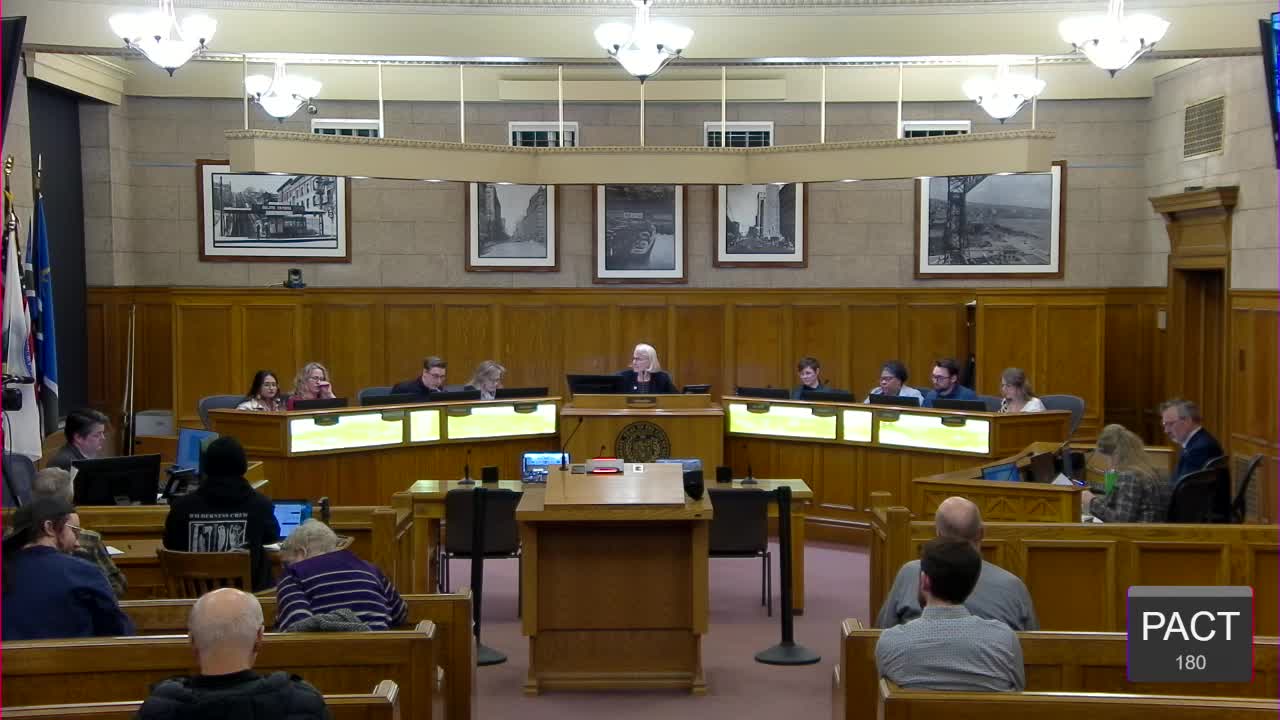
The Duluth City Council voted unanimously to instruct the city administration to evaluate the long‑term future of the downtown public skywalk system, directing staff to pursue a study that will incorporate public comment, accessibility stakeholders and downtown property owners.
The Duluth City Council voted unanimously to instruct the city administration to evaluate the long‑term future of the downtown public skywalk system, directing staff to pursue a study that will incorporate public comment, accessibility stakeholders and downtown property owners.
Councilor Forsman, the lead author of the resolution, told the council the measure grows out of a 2022 downtown task force report that recommended assessing the skywalk system. “Our downtown is essentially two walking systems, the one outside and the one inside,” Forsman said during debate, urging the city to “explore what can be done differently.” The council approved the resolution on a 9‑0 vote.
The resolution calls for administration to work with council members and community partners on a scope of work and to return findings and recommendations. Forsman said the study’s timeline—laid out in the resolution as six months—was intended to allow findings in time for fall and budget season, though he acknowledged six months would be aggressive and that the mayor originally proposed the schedule.
Councilors stressed a range of possible outcomes and emphasized that closure of any portion of the system would be an extreme and not automatic result of the study. ‘‘Closure is the most extreme potential outcome of a study like this,’’ Forsman said, and noted the council has approved investments in the Northwest Passage of the system earlier in the same meeting.
Councilor Mayo said the focus should include beautification, lighting and public art to enhance the user experience, rather than simply constricting access. “I believe our focus really should be on beautification, lighting, public art restoration, things we can do to enhance the Skywalk experience, instead of maybe locking it down,” Mayo said.
Councilor Randolph, whose district includes large portions of the skywalk, called the system “a vital downtown asset” built beginning in 1977 and urged a collaborative working group that includes all downtown stakeholders. Other councilors asked that the disabilities commission, Vibrant Streets and accessibility advocates be included in the scope of work.
The resolution also notes any consulting contract that exceeds $50,000 would require a separate council vote, and Forsman said public input and stakeholder collaboration would guide recommendations. Some councilors said they expected staff time and modest consultant support will be required and that any significant consulting expense would come back to council for approval.
The council and administration did not identify a final funding source in the resolution; Forsman said if the study produced prioritized recommendations, a separate discussion about funding would follow.
Votes at a glance
- Resolution to evaluate the long‑term future of the downtown public skywalk system: Moved by Councilor Forsman; seconded by Councilor Randolph. Vote: 9‑0, approved. (Study timeline: six months as proposed; consulting contracts >$50,000 require additional council approval.)
- Ordinance authorizing conveyance of certain real property in the Gary New Duluth neighborhood to Joto LLC for $4,620: Moved by Councilor Nephew; seconded by Councilor Kennedy. Vote: 9‑0, adopted.
- Approval of minutes and consent agenda (including one‑year funding agreement for downtown outreach specialist): Votes: 9‑0, approved.
What’s next
The administration will develop a detailed scope and timeline in consultation with the authors and stakeholders; if consulting support is needed and costs exceed $50,000, the council must separately vote on that contract. Councilors indicated they expect public outreach and multiple opportunities for community input as the study proceeds.