Get Full Government Meeting Transcripts, Videos, & Alerts Forever!
Get email alerts on the Energy Policy topic
No spam. Unsubscribe anytime.
Senate debates bill allowing large power contracts outside standard regulation; substitute expected
Summary
Senators debated Senate Bill 132, which would allow regulated utilities to negotiate individual contracts with large power customers within Rocky Mountain Power's service area while seeking to shield existing ratepayers from cost impacts. Sponsors said a substitute is being drafted and the bill was advanced to third reading for further work.
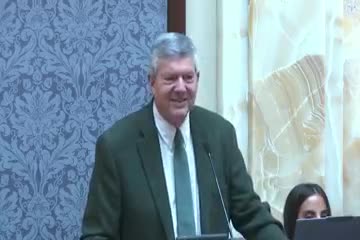
Senators debated changes to state electric utility law on Feb. 14 as the Senate took up first substitute Senate Bill 132, described by sponsor Senator Bridal as a framework to allow large power customers to negotiate contracts in ways not covered by the standard public-utility regulatory framework.
Supporters said the bill would let Rocky Mountain Power negotiate with large load customers in its service territory and would create protections so those new contracts do not shift costs to existing retail ratepayers. Senator Bridal told the Senate the bill aims to "make sure there is a definite wall between our current customers and rate base," and said a substitute bill was being drafted so all members could review final language before a final vote.
Questions from other senators focused on the bill's scope and which utilities would be affected. Senator Winterton asked whether electric cooperatives and municipally owned utilities were affected; Bridal said the bill as drafted exempts cooperatives and municipal utilities and applies only in the Rocky Mountain Power service footprint. Senator Milner said she supported moving the measure forward to allow further work, emphasizing the need to protect residential customers while allowing the state to pursue large-energy users.
Sponsor remarks and floor discussion repeatedly described the bill as an evolving compromise; Bridal said the substitute would be circulated and the body given time to review it before final action. The Senate voted to read the substitute bill for a third time; the roll call on that motion recorded 22 yea votes, 1 nay vote and 6 senators absent.
The bill remains subject to further amendment; sponsors asked colleagues to review the substitute when it is posted and indicated they would return with final language before final passage.