Get Full Government Meeting Transcripts, Videos, & Alerts Forever!
Get email alerts on the Guardianship Supported Decision Making topic
No spam. Unsubscribe anytime.
House passes measure to clarify guardianship rights, add supported decision-making agreements
Summary
The Utah House approved HB 3 34 to specify which rights can be waived under guardianship, require clearer court findings and to create a supported decision-making option; the bill passed 70–1.
The Utah House of Representatives on Feb. 20 approved House Bill 3 34, which revises the state guardianship framework to list which rights can and cannot be waived, requires clearer court findings in guardianship proceedings and creates a statutory process for supported decision‑making agreements. Representative Nelson Abbott sponsored the bill.
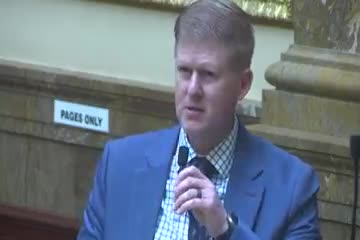
Supporters said the measure gives courts, families and guardians clearer tools to tailor guardianships. “We go through and carefully list the rights that can be waived and the rights that cannot be waived,” Representative Nelson Abbott said, adding the bill also “sets up supported decision making” as a less‑restrictive option that can allow an individual to retain some decisionmaking authority while receiving help in specific areas.
The bill’s nut graf: advocates and lawmakers described the legislation as aimed at balancing protection for people deemed incapacitated with preservation of personal autonomy where possible. Under the bill, judges must record which specific rights are removed and which are retained when appointing a guardian, and older guardianships are grandfathered to avoid retroactive disruption.
Key provisions and debate
- Waivable and nonwaivable rights: The bill enumerates rights that a court may remove under a guardianship and expressly lists core rights that cannot be waived, such as the right to be treated with dignity and the right to periodic court review. Abbott said the change resolves prior uncertainty about which rights could be limited.
- Supported decision‑making: HB 3 34 establishes a formal supported decision‑making agreement, described by proponents as similar to a power of attorney but narrower — allowing a supporter to assist with specific tasks (for example, accompanying someone to medical appointments) without stripping the person of all legal authority.
- Procedure and notice: The bill requires notice to an existing guardian if a supported decision‑making agreement is created for a person who already has a guardian, and provides a timeline for the guardian to object.
Lawmakers’ questions focused on whether the bill would complicate or weaken future guardianship proceedings. Representative John Hawkins, who said he voted against the measure in committee but later supported it, asked whether the bill would impose extra burdens on those seeking guardianships. Abbott said medical evaluations would need to address the enumerated rights so judges can make clearer, itemized findings on the form used in court.
Representative Matt MacPherson asked whether the bill would weaken protections; Abbott answered that it is designed to clarify, not lessen, the current protections and to provide more precise information to judges when making decisions. Several members with personal or family experience in the disability community voiced support, saying the bill fills an intermediate option between full guardianship and no guardianship.
Amendments and votes
An amendment that clarified cross‑references to related guardianship bills was adopted on the House floor before final passage. The House approved HB 3 34 by a recorded voice/hand vote of 70 in favor and 1 opposed.
What the bill does not do
The bill does not eliminate guardianships or automatically change existing court orders; older guardianships were left in place unless revisited by a court. It also does not supply specific statutory thresholds for every possible factual scenario — judges will continue to evaluate medical evidence and individual circumstances when entering or modifying guardianships.
Next steps
HB 3 34 passed the House and will be transmitted to the Utah Senate for consideration.