
Senator introduces resolution asking congressional delegation to review unemployment rules for nine‑month school support staff
Get AI-powered insights, summaries, and transcripts
Sign Up Free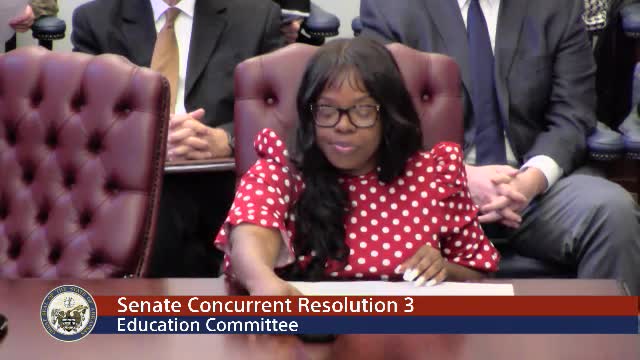
Summary
A senator presented a resolution asking the congressional delegation to examine the reasonable-assurance clause in federal unemployment rules that often leaves nine‑month educational support staff without benefits during summer months; the measure received questions about fiscal impact and did not receive a second in committee.
A senator presented a resolution asking the congressional delegation to study whether federal unemployment rules should be amended so educational support professionals on nine‑month contracts—such as bus drivers, custodians and cafeteria staff—can receive unemployment benefits during the summer.
The presenter said the reasonable-assurance clause in federal unemployment law often leaves these employees without benefits during summer months, contributing to financial strain for families. "Providing unemployment benefits to them during the summer offers so much needed financial security for these families and these employees," the presenter said, noting that some hourly school employees who work for private companies are eligible for unemployment while school employees on nine‑month contracts often are not.
Senator Sullivan asked whether the resolution had considered the fiscal impact on Arkansas taxpayers. The sponsor said she was open to studying that impact and suggested the Department of Labor and Regulation could help gather relevant data. Committee members also asked whether teachers commonly work in the summer; the sponsor said the focus was on educational support staff, who have fewer summer employment options than some teachers.
When the chair asked for the committee’s will, members did not second the resolution, and the chair noted there was no second. The resolution therefore did not move forward in the committee at this meeting.