Get Full Government Meeting Transcripts, Videos, & Alerts Forever!
Get email alerts on the Workforce Education topic
No spam. Unsubscribe anytime.
Committee advances bill allowing Northwest Technical Institute to hire presidents with industry experience
Summary
The committee approved a House bill that lets Northwest Technical Institute appoint a president with an industry background rather than requiring an education background; higher-education officials described the institute’s vocational programs and the board appointment process.
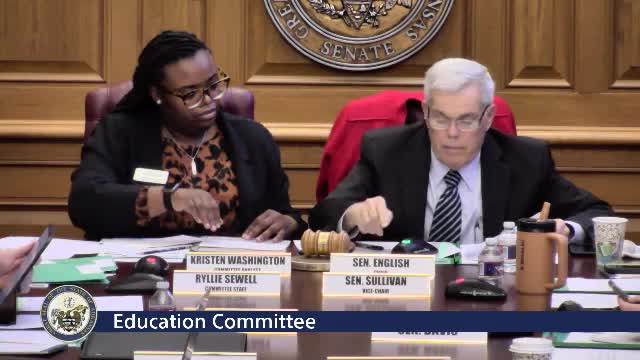
The Senate Education Committee voted to advance House Bill 1133, which amends hiring qualifications for the Northwest Technical Institute to permit presidents with industry experience rather than requiring an education background.
A senator presented the bill as Representative Unger’s measure from the House and said it would allow Northwest Technical Institute to appoint a president from industry. Ken Wharton, identified in the hearing as a commissioner in higher-education administration, told the committee that Northwest Technical Institute is the last of the state’s VOTECs established in the 1950s–1970s and maintains clock‑hour technical programs such as automotive, diesel mechanics and HVAC. Wharton said an ammonia refrigeration training program that has struggled to come online should be operational within about six months.
Senator Bridal asked why the bill adds a new section to existing code rather than amending current language and whether the statutory framework already allowed hiring an industry‑experienced candidate. Wharton said in his view the department typically seeks the most qualified applicant now but that the change signals the institution and its industry partners want explicit recognition that industry qualifications should be considered.
Committee members clarified that the Northwest Technical Institute is governed by a gubernatorially appointed board, that the board sets minimum and preferred qualifications for candidates, and that those qualifications are vetted by state higher-education officials before returning to the governor and board for final hiring.
With no further questions and no public comment recorded, the committee moved the bill and approved it by voice vote.