Get Full Government Meeting Transcripts, Videos, & Alerts Forever!
Get email alerts on the Historic Marker Dedication topic
No spam. Unsubscribe anytime.
Jacksonville officials and family dedicate historic marker for Johnny May Chappelle
Summary
Jacksonville officials, members of the Chappelle family and community leaders on a Friday morning during Black History Month unveiled a historic marker honoring Johnny May Chappelle, a 35-year-old Black mother of 10 who was shot and killed on March 23, 1964.
Jacksonville officials, members of the Chappelle family and community leaders on a Friday morning during Black History Month unveiled a historic marker honoring Johnny May Chappelle, a 35-year-old Black mother of 10 who was shot and killed on March 23, 1964.
Mayor Donna Deegan called the memorial “long overdue” and said it is intended to both remember Chappelle’s life and encourage the city to work toward “unity and justice for all of our citizens.”
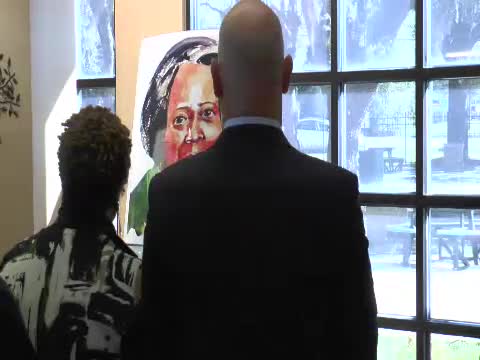
The marker, placed outside a social center near the site of the 1964 killing, includes family-supplied material and a new painting of Chappelle created by Pablo Rivera. Council member Rockman Johnson and Council member Nick Howland were credited by speakers for leading the effort in city government. Johnson said the city also produced a digital asset, hosted by the Jacksonville Public Libraries and accessible by a QR code on the marker, so the story is available beyond the local community.
“I believe it will also serve as a reminder that the best path forward for our city is one of unity and justice for all of our citizens,” Mayor Deegan said.
Shelton Chappelle, Johnny May Chappelle’s son, addressed the crowd and thanked elected officials and the community for the memorial. Shelton said the city’s action “means more than words can express” and described his effort to keep his mother’s memory alive over decades.
Speakers at the ceremony recounted details from the original case: on March 23, 1964, Chappelle was shot while walking home after buying ice cream; she died before reaching the hospital. Speakers said key evidence in the murder investigation was lost or mishandled, the person convicted served three years, and that family members later filed a civil lawsuit that kept the case in public view. Those historical details were presented by local officials and family members during remarks.
Nick Howland, who described himself as a history enthusiast, framed the dedication as part of a broader local and national civil-rights history. “What happened across King’s Road to Johnny May Chappelle is American history,” Howland said, noting that the Civil Rights Act was signed months after the 1964 killing.
The ceremony drew multiple elected officials and public figures, and several speakers emphasized that remembering Chappelle’s story should prompt continued attention to present-day needs in neighborhoods such as the Moncrief Corridor, where speakers raised questions about crime, schools and infrastructure.
Organizers said the marker and the associated digital material aim to preserve the family’s account and the community’s memory of the event for future generations.
No formal legislative or appropriations action was taken at the dedication; speakers indicated the city council previously approved steps that allowed the marker to be installed.