Get Full Government Meeting Transcripts, Videos, & Alerts Forever!
Get email alerts on the Prison Security topic
No spam. Unsubscribe anytime.
Chester County Prison board authorizes full enclosure of outdoor recreation yards
Summary
The Chester County Prison Board of Inspectors voted to authorize construction of fenced enclosures over all outdoor recreation yards, following consultant presentations and staff recommendation favoring a fully enclosed "prevention" design to reduce escapes and contraband risk.
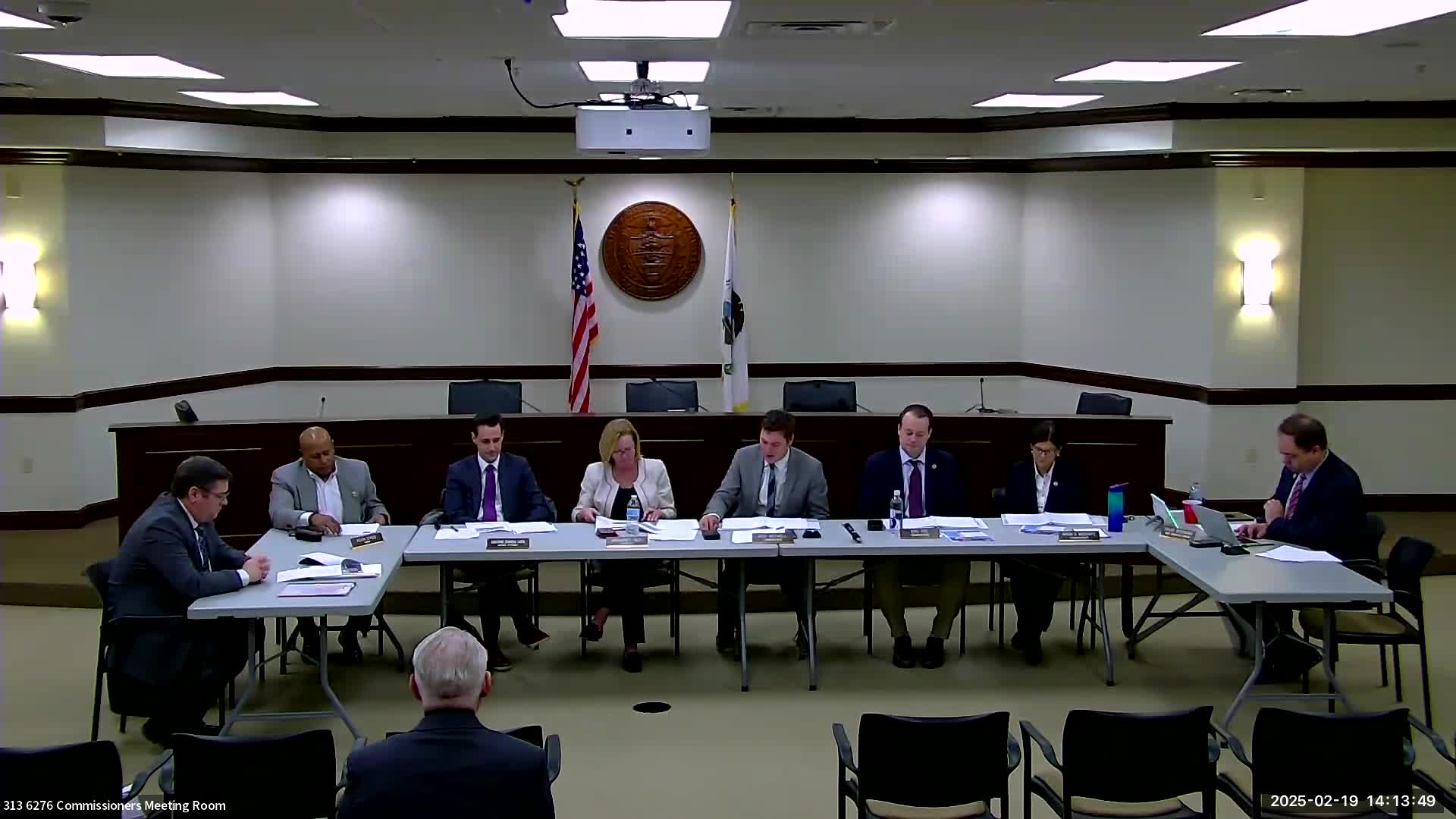
The Chester County Prison Board of Inspectors on Feb. 19 authorized construction of enclosures over all outdoor recreation yards at Chester County Prison after a multi-month design review and a recommendation from Warden Gordon Holland.
The action followed a presentation from a consultant identified as Anthony of Buka, who described three approaches considered: (1) deterrence (raising perimeter fence height and adding non-climb fabric and razor ribbon), (2) prevention (fully enclosing the yards with a perimeter structure and overhead fabric or ceiling that prevents climbing), and (3) full individual outdoor cells that would isolate inmates. Anthony told the board the prevention option is commonly used, allows more yard activity and provides a high level of security at a cost higher than deterrence but lower than full enclosure in individual cells.
Warden Gordon Holland told the board he and his command staff favored the prevention option to limit escapes and contraband introduction while preserving yard activity and giving the facility flexibility to designate yards by security level for future programming needs. Holland noted the change would also give staff operational flexibility in emergencies and for specialized populations such as mental-health or MAT (medication-assisted treatment) groups.
Board members asked technical and safety questions during the discussion, including how the existing razor ribbon fencing would be handled, visibility through the fence fabric, the height of existing observation towers, and a risk that a high overhead enclosure could be used for self-harm. The consultant said the existing razor ribbon could be moved upward or held in stock; stainless-steel razor ribbon has a long service life and could be retained as supply. He estimated typical fence solutions would use a lower, see-through mesh for the bottom 7 feet and a non-climb fabric for the upper 7 feet, with perimeter towers or interior camera coverage for observation. He and the warden discussed anticipated fence heights in the 16–18-foot range for the prevention design and trade-offs involving sight lines and the need for camera coverage.
Board members also asked about procurement controls. Staff said subcontracting can be restricted in the county's bid documents so the county retains control of who performs key parts of the work. After discussion a motion to authorize construction of the prison yard enclosures (the board-approved prevention-style enclosure approach) was made, seconded and approved by voice vote with no named oppositions recorded.
The board did not adopt a firm project cost figure during the discussion on Feb. 19; the consultant described relative cost levels (deterrence lowest, prevention higher, full individual enclosures highest) but did not provide a specific bid amount. Warden Holland indicated the recommendation considered current security needs and anticipated future programmatic requirements.
The board asked staff to use the county procurement process to control subcontracting and contract quality. No further timeline or contract amounts were specified at the meeting.