Get Full Government Meeting Transcripts, Videos, & Alerts Forever!
Get email alerts on the Alcohol Delivery topic
No spam. Unsubscribe anytime.
Senate committee approves bill to allow third‑party delivery of beer and wine
Summary
The Senate City, County & Local Affairs Committee voted to pass Senate Bill 98, which would permit third‑party companies to deliver beer and wine and create a permit and training regime for delivery drivers overseen by the state Alcoholic Beverage Control agency.
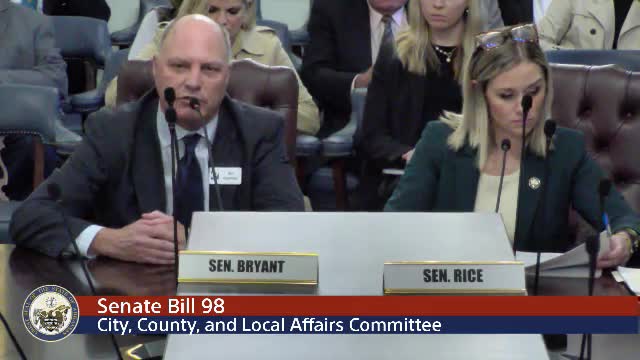
At a meeting of the Senate City, County & Local Affairs Committee, members voted to pass Senate Bill 98, a measure that would allow third‑party companies to deliver beer and wine to consumers and establish a state permit and training requirements for those delivery services.
The bill’s sponsor, Senator Davis, said the measure places regulatory requirements on the delivery stage that mirror in‑store safeguards and gives the Alcoholic Beverage Control (ABC) agency authority to set and enforce rules. "So there is accountability all throughout throughout this bill," Davis said during closing remarks.
Opponents, including independent package store owners, urged the committee to reject the bill, arguing it shifts liability away from local retailers and could reduce on‑site accountability. "This bill aims to fix something that isn't broken," said John Crow, owner of 107 Liquor in Sherwood and president of the United Beverage Retailers of Arkansas. Crow told the committee that liquor stores already carry out age checks and that existing retail delivery has not produced ABC violations in Arkansas.
Retail and delivery companies supporting the bill said states that initially adopted delivery without rules later added controls similar to those in SB 98. Michael Lindsey, director of public affairs and government relations for Walmart, said Oregon initially allowed delivery without sufficient checks but later enacted permit and signature requirements. "This bill brings all those rules and regulations and requirements that that it's a customer to face in our store and puts it at a front doorstep as well," Lindsey said, describing required ID checks, signature and scan processes and ABC oversight for training and permits.
Committee discussion focused on who holds liability at each step of the transaction. Testimony described two scenarios: the retailer can complete delivery with its employee, keeping liability until the point of handoff to a customer; or a retailer can transfer the order to a third‑party platform, in which case the third party would hold delivery liability under the bill’s framework. Sponsor Davis noted the bill prohibits issuing a third‑party delivery permit to holders in the manufacturing or wholesale tiers and emphasized that permits can be revoked for noncompliance.
Supporters argued that permitting third‑party delivery meets growing consumer demand and can create local jobs tied to fulfillment and delivery. Opponents warned that large platforms with centralized distribution and high‑volume routes could undercut independent stores and that delivery drivers paid by the stop could be less likely to wait for an in‑person ID check.
The committee approved the bill on a voice vote; no roll‑call tally was recorded in the transcript.