Get Full Government Meeting Transcripts, Videos, & Alerts Forever!
Get email alerts on the Maternal Health topic
No spam. Unsubscribe anytime.
Senate committee advances 'Healthy Moms, Healthy Babies' package to boost maternal care and Medicaid coverage
Summary
The committee approved legislation to unbundle prenatal/delivery/postpartum payments, expand remote monitoring and cover doulas and community health workers. Sponsors say the bill addresses a maternal health crisis; opponents flagged a provision shortening the malpractice statute-of-limitations window for birth-related injuries.
A bipartisan package dubbed the "Healthy Moms, Healthy Babies Act" won committee approval after a lengthy presentation and limited debate. Sponsors said the bill addresses Arkansas’ maternal-health challenges by increasing hospital reimbursements for labor and delivery, expanding coverage for remote monitoring and doulas, and speeding eligibility for pregnant women on Medicaid.
Senator (presenter) told the committee the bill was developed with the Department of Human Services, the Department of Health and other stakeholders and reflected recommendations in the governor’s budget. The legislation would unbundle reimbursement for prenatal care, delivery and postpartum care; raise labor-and-delivery payments (the governor proposed a roughly 70% increase in those rates); add presumptive Medicaid eligibility for pregnant women; and authorize coverage for blood-pressure and continuous‑glucose monitoring and remote ultrasound reimbursement when medically necessary. The bill also would allow Medicaid coverage for doulas and community health workers and expand home-visitation services for pregnant and postpartum women.
Committee members asked about cost. Sponsors said the governor’s proposed state share is $13 million, which would be supplemented by federal matching funds to produce roughly $45 million in total program resources, according to DHS testimony and the governor’s budget presentation.
The bill also contains a provision that would shorten the age threshold used in certain malpractice‑related timing provisions. Trial lawyer George Wise of the Brad Hendricks law firm opposed that change, saying it would prevent many parents from filing malpractice suits on behalf of children whose birth-related injuries — such as brain injury or deafness — sometimes manifest or are fully understood only after age five or later. "If this is reduced from 11 to 5 ... That’s going to limit the cases that we can take and recoup money for DHS," Wise said, noting that many affected infants are covered by Medicaid and that private counsel often recovers funds for state health programs in malpractice suits.
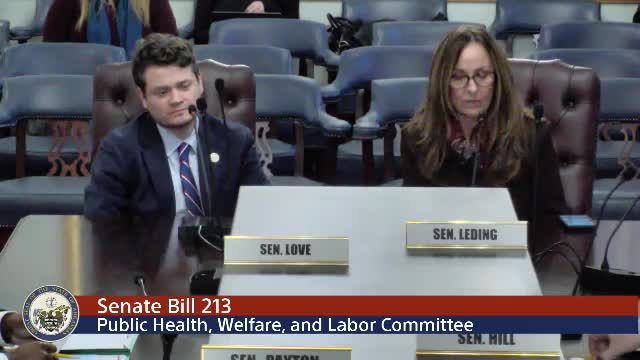
Senator Love told the chair she supported nearly all parts of the bill but objected to the lowered malpractice threshold, saying she is personally experiencing uncertainty about a child’s long-term prognosis and preferred the current statutory window. That reservation was recorded during the committee’s discussion.
After discussion, the committee passed the bill by voice vote. Committee supporters said the package aims to keep obstetric services available in rural hospitals by increasing payments and using targeted monitoring to prevent complications; opponents focused on the malpractice‑statute change and asked for revisions.
Next steps: The bill proceeds to the full Senate. Sponsors said they would continue to coordinate with DHS and the Department of Health on fiscal and implementation specifics, including the details of remote-monitoring reimbursement, doula and community health worker credentialing and provider-payment changes.