Get Full Government Meeting Transcripts, Videos, & Alerts Forever!
Get email alerts on the Professional Licensing topic
No spam. Unsubscribe anytime.
Senate committee approves state-run massage licensing exam after hours of testimony and debate
Summary
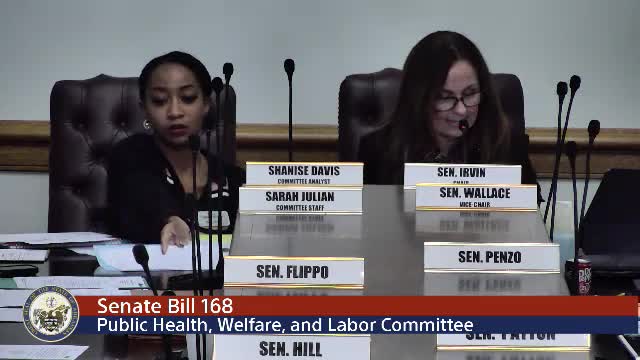
Senators on the Public Health, Welfare and Labor Committee on Monday voted to advance Senate Bill 168, which would authorize Arkansas to offer a state-developed licensing exam for massage therapists instead of the national MBLEX exam.
Senators on the Public Health, Welfare and Labor Committee on Monday voted to advance Senate Bill 168, which would authorize Arkansas to offer a state-developed licensing exam for massage therapists as an alternative to the national MBLEX exam.
The bill’s sponsor, Senator Terry Rice, D‑District 5, told the committee the measure is intended to expand the state’s pool of licensed massage therapists and make licensure more affordable for students and rural residents. "I want everyone to have affordable massage therapy that is currently lacking personnel," Rice said during his presentation.
Supporters said a state exam could be cheaper for candidates and better tailored to Arkansas education requirements. Julie Eckert, a master massage therapist who helped draft the bill’s recommendations, described the national exam as “computer adaptive,” saying that format sometimes yields unexpectedly difficult sets of questions and higher costs for retakes. "These graduates have already spent $7,000 to $10,000 for their school, and now they pay to take the exam," Eckert said, urging a lower-cost state alternative.
Opponents — including massage-school owners, practicing therapists and the Federation of State Massage Therapy Boards, which sponsors the national exam — urged caution. Several witnesses said the MBLEX is the current national standard, kept current through a large question bank and frequent maintenance. "Lowering the standard will not help our state," said Michelle Christian, a massage-therapy educator and school owner in Conway. She and others said a state-run test would be costly to create and maintain and risk fragmenting portability of credentials between states.
Bud Cummins, an attorney representing the Federation of State Massage Therapy Boards, told the committee the federation administers the national exam at no cost to Arkansas and warned the state exam could undermine quality and public safety. He also raised concerns about illicit massage businesses and human‑trafficking risks in the industry, citing recent enforcement actions in Arkansas.
Committee members questioned how the Department of Health would run and maintain a new exam, who would pay for development and whether the bill should set a fee cap. Proponents said the ad hoc committee that developed the state-exam plan estimated an initial candidate fee around $75, but they acknowledged the bill does not fix a permanent fee in statute and that administrative details would be worked out in contract and rulemaking.
After more than an hour of public testimony and questions, the committee took a voice vote. The chair called "ayes have it," and the motion to pass was recorded as approved.
What the bill does: authorizes the Arkansas Department of Health to administer a state massage-therapy licensure exam and to contract with a third party to operate it; establishes exam content domains tied to Arkansas law and practice; allows candidates to choose the state exam instead of the national MBLEX. The bill does not set a fixed candidate fee in statute. It preserves the option for individuals to take the national exam if they prefer portability to other states.
Opponents asked the legislature to delay or amend the bill to spell out (1) who will build and maintain the question bank, (2) how frequently questions will be reviewed and updated, and (3) a limit on candidate fees. Proponents said they will work with the Department of Health and stakeholders on those implementation details.
The committee’s approval sends SB 168 to the full Senate for further consideration.