Get Full Government Meeting Transcripts, Videos, & Alerts Forever!
Get email alerts on the Mn Housing Federal Risks topic
No spam. Unsubscribe anytime.
Minnesota Housing warns HUD staffing cuts and payment glitches could disrupt federal programs supporting 34,000 units
Summary
Minnesota Housing Commissioner Jennifer Ho briefed the committee on federal funding streams, program risks including staff reductions at HUD and recent drawdown glitches, and reported 2023‑24 dispersal and commitment figures for state appropriations and agency programs.
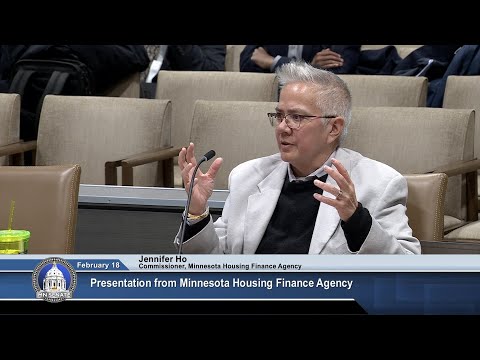
Commissioner Jennifer Ho, commissioner of Minnesota Housing, told the Senate Committee on Housing and Homelessness Prevention that federal program uncertainties, HUD staffing reductions and a recent payment‑system glitch have the potential to disrupt programs Minnesota Housing administers or depends on.
Ho presented the agency's funding mix and noted that federal funds represent the largest share of program activity. She said Minnesota Housing administers project‑based rental assistance that touches about $250,000,000 a year and serves approximately 34,000 privately owned HUD‑assisted units. "By far, the largest line item that we touch is that we're the administrator for 34,000 units of privately owned, HUD assisted, project based rental assistance," Commissioner Ho said.
Ho flagged two near‑term federal risks: an expiring continuing resolution (Congressional CR) that, as of the hearing, was set to expire March 6, and reductions in HUD staffing. She told the committee that some HUD contacts have left the agency; in one instance the administrator for a Section 811 contract appeared to no longer be employed at HUD, which created a need to locate a new contact at HUD to execute or renew federal contracts.
The commissioner also described a recent drawdown issue. On a routine draw to access administrative funds for HUD programs, staff expected to withdraw roughly $1.1 million but found only $124,000 in the account; HUD characterized the shortfall as a glitch and told Minnesota Housing it expected a fix within two weeks. Ho told the committee that Minnesota Housing employs more than 30 staff dedicated to administration of the HUD contract and that sustained inability to draw down administrative funds could force the agency to reconsider its role as administrator for programs that serve 34,000 households.
On state funding flows, Commissioner Ho said the agency had dispersed nearly $269,000,000 from 2023 and 2024 resources as of the week of Feb. 3 and had committed an additional roughly $620–630,000,000. She explained the difference between committed and dispersed funds: Minnesota Housing frequently commits funds in the same calendar year but disburses them over the course of project construction and closing. Ho described agency steps to oversee numerous new programs funded by the 2023 legislative session and noted that interest earnings on large appropriations have been used to offset some operating costs for multi‑year program administration.
Senators pressed the commissioner on specific items: the potential effect of proposed federal program cancellations (for example, the Green and Resilient Retrofit program), the effect of proposed rules targeting mixed‑status families, and local concerns about the time required to disperse state appropriations to housing projects. Fiscal staff provided revenue estimates for the metro‑wide sales tax that funds the Bring It Home rental assistance program; Mr. Olson (fiscal staff) told the committee Minnesota Housing's estimated transfers from the metro sales tax included about $26.6 million in FY24 and approximately $41.9 million in FY25 to the agency, with larger projected transfers in later years.
Ho closed by listing active and upcoming agency RFPs and by highlighting oversubscription: she said the Local Housing Trust Fund intent‑to‑apply attracted 66 responses requesting over $12 million against $5.8 million available; the statewide affordable housing aid tier 2 cities intent‑to‑apply had 26 requests for $5 million while only $4.5 million was available. Ho said the Bring It Home rental assistance RFP launched the same week and estimated it could serve about 5,000 households. The agency's 2024 report, which Ho previewed to the committee, showed total assistance provided in 2024 of almost $2 billion and an operating‑to‑assistance ratio of about 2.45%.
Ending: Committee members said they would continue oversight and follow up on HUD drawdown access, the effect of federal staffing reductions, and speed of state disbursements. The agency agreed to provide follow‑up details as requested.