Get Full Government Meeting Transcripts, Videos, & Alerts Forever!
Get email alerts on the Zoning topic
No spam. Unsubscribe anytime.
Kalispell council approves zoning amendment to allow pedestrian skybridges in business, health-care and public zones
Summary
On first reading the council adopted Ordinance 19-33 to amend the zoning ordinance to permit pedestrian skybridges connecting buildings in B (business), H (health-care) and P (public) zones to encroach into setback areas. The council rejected an amendment to remove business zones and discussed downtown street vitality and viewshed concerns.
The Kalispell City Council on Feb. 3 voted to approve Ordinance 19-33 on first reading to amend the Kalispell zoning ordinance and allow pedestrian skybridges that connect two buildings in business (B), health-care (H) or public (P) zones to encroach into front or side-corner setback areas, provided other code requirements are met.
Assistant Director of Development Services PJ Swanson explained the change responds to a technical issue: some zones have setbacks that would otherwise prevent a pedestrian bridge from crossing to a sidewalk or right-of-way. Swanson said construction details and clearances remain subject to building permits, site review and encroachment permits for public rights-of-way.
Swanson noted two existing skybridges in Kalispell'one connecting Glacier Bank buildings downtown on Second Street West, and another connecting county office buildings across Eleventh Street West'neither previously raised setback concerns. The proposed text amendment was prompted by Emmanuel Lutheran'which seeks a connection across Claremont to link an existing facility to a new east-side addition'and the city planning commission recommended adoption.
Council debate focused on preserving street-level vibrancy in commercial areas and protecting viewsheds. Councilor Hunter proposed an amendment to remove the business zone from the amendment and bring the question back after a work session on possible sideboards; Councilor Hunter said he worried skybridges could "take street activity off the street" and cited examples of other cities where skybridges have been criticized for reducing downtown vibrancy.
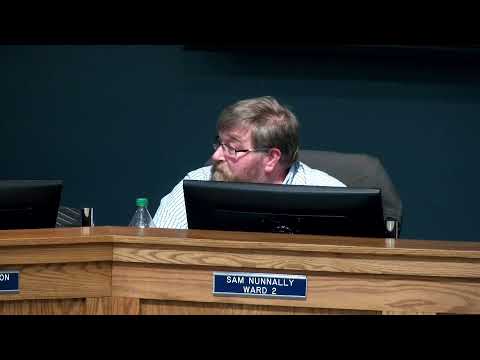
Several councilors, including Nunnally and others, countered that the amendment addresses only a technical setback issue and that skybridges are limited by building-permit, site-review and encroachment-permit processes. Staff pointed out downtown core zones (B4) do not have setbacks and that historic-district architectural review and MDT (Montana Department of Transportation) approval would apply to bridges over state highways.
A council amendment to strike the business zone failed on a roll-call vote. The original motion to adopt the ordinance as written, made by Councilor Dowd and seconded by Councilor Nunnally, passed unanimously on roll call. Mayor Johnson announced, "Finally, yes. Motion passes." Council discussion included requests to address broader skybridge policy while the city updates land-use regulations later this year in response to state law changes.
The council scheduled related work sessions: staff said a work session is planned to review the city's wastewater "use and ability" analysis, and the manager also referenced upcoming discussions tied to development and bond conduit questions related to the project. A resident, Jennifer Tipton, offered unrelated public comment about wastewater discharges but did not comment on the skybridge item.
The ordinance was taken up on first reading and forwarded with council direction; construction approval and rights-of-way encroachments will continue to follow building-permit, site-review and encroachment-permit procedures.