Get Full Government Meeting Transcripts, Videos, & Alerts Forever!
Get email alerts on the Finance Investments topic
No spam. Unsubscribe anytime.
Consultants tell Kenai council permanent funds are positioned for modest returns; council adopts 2025 investment allocation plan
Summary
Alaska Permanent Capital Management reviewed the city's permanent funds and forward-looking return assumptions, recommending no changes to the asset allocation; council adopted the city's 2025 investment allocation plan by unanimous consent.
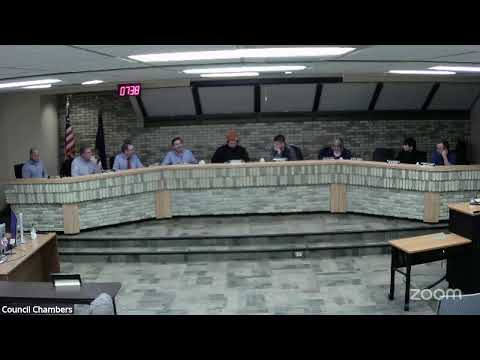
Alaska Permanent Capital Management presented a year-end review of Kenai's permanent funds on Feb. 5 and told the Kenai City Council the current portfolio is "well positioned" to meet the city's stated goals of inflation protection and distributions. The council then adopted Resolution 2025-08, the 2025 investment allocation plan, by unanimous consent.
APCM's Brandy Nikolai, chief investment officer of multi-asset strategies, told the council the permanent-fund portfolio has earned a 7.45% annualized return since APCM began managing it in September 2008 and that the firm's 10-year gross return forecast is 6.8%: "long term return gross 6.8%." She said the firm recommends no changes to the existing target allocation because it believes the mix of global equities, fixed income and alternatives provides both return potential and diversification.
The presentation covered two distinct city permanent-fund buckets: the airport land sales permanent fund and the general fund land sales permanent fund. Nikolai said the airport fund ended 2024 with a market value below its inflation-adjusted principal, which under the city's spending policy limits distributions to 3.8% until the market value exceeds the inflation-adjusted principal and the fund may revert to a 4.2% distribution rate. APCM's simulations show a roughly 36% probability the airport fund will be able to take the higher 4.2% rate within 10 years; APCM's base-case 10-year projection for the airport fund was roughly $39.9 million starting from $29.9 million.
By contrast, APCM reported the general fund land sales permanent fund had a market value above its inflation-adjusted principal at year end and a higher probability (about 78%) of taking a distribution over the next decade. APCM's 10-year projection for that account started at approximately $3.8 million and reached an estimated $5.4 million under the firm's baseline assumptions.
Bill Lierman, APCM's chief investment officer for fixed income, summarized a new custody account the firm began managing for the city in November. He said the account holds short-dated government securities with a December market value of about $32.4 million and a yield of about 4.55%. Lierman noted portfolio constraints in the city's investment policy statement that limit maturities to five years and require at least 20% of the account to mature inside one year.
Nikolai and Lierman described the near-term outlook as mixed: equity valuations are not "particularly cheap," which could weigh on returns, but global earnings forecasts and positive economic growth assumptions support expectation of positive single-digit returns rather than the double-digit gains seen in the recent rebound. Nikolai said the portfolio contains alternative investments intended to provide inflation protection and that APCM will adjust near-term positioning within the ranges allowed by the city's policy as market conditions change.
During the presentation Nikolai also announced a firm ownership succession: APCM's CEO Evan Rose is selling a majority stake to an Alaska holding company called Blue Umbrella; Nikolai said APCM staff who manage the city's accounts will remain in place and that she and Lierman will retain minority ownership.
Council action: Vice Mayor Nackson moved to adopt Resolution 2025-08, the city's 2025 investment allocation plan and benchmarks; the motion was seconded and approved by unanimous consent. The council's adoption followed the APCM presentation and final questions about short-term positioning and the custody account.
Why this matters: The permanent funds provide recurring distributions the city uses according to city code and spending policies. APCM's projections and the approved 2025 allocation set expectations for how much the city can draw from those funds and how staff and the council should plan budget and capital decisions over the coming years.
Looking ahead: APCM said it will continue to monitor market conditions and may make modest near-term adjustments within the policy ranges; staff and APCM expect to return with regular performance updates and any recommended tactical changes should conditions materially change.