Get Full Government Meeting Transcripts, Videos, & Alerts Forever!
Get email alerts on the School Food Service topic
No spam. Unsubscribe anytime.
Olentangy food service reports rising participation, operating loss and no planned price increase
Summary
District food service served a projected 3.1 million meals this year, reported higher per-meal expenses than revenue and said it will not raise student meal prices for 2025–26 thanks to a carryover balance and federal reimbursement; the department previewed menu, product and audit changes.
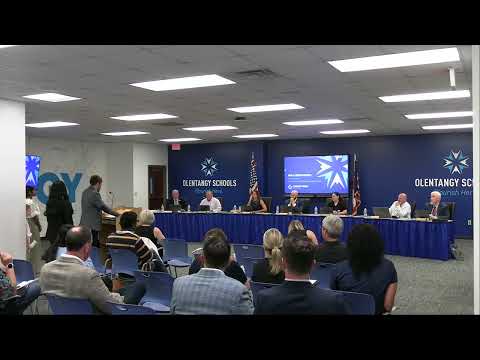
Olentangy Local School District’s food service director presented the department’s annual update at the June 12 board meeting, reporting higher participation and increased costs and outlining menu changes and compliance preparations for the coming year.
The director reported the district expects to serve more than 3.1 million meals in the 2024–25 school year — the first time the department has surpassed 3 million meals since the COVID-era universal meals — and noted average daily revenue of about $68,000 and average daily expenses near $74,000, producing a shortfall the director described as roughly $3,350 per day through March. "Currently, as of this school, we are operating at a loss of about ... $3,350 per day," the presenter said.
The district receives federal reimbursements through the National School Lunch and School Breakfast programs administered by USDA and the Ohio Department of Education and Workforce Office of Nutrition. The presenter highlighted that meal reimbursements are higher for students approved for free/reduced meals than for paid students; for example, the total per-meal revenue received for a reimbursable breakfast was cited as $2.37 versus $1.89 for a paid breakfast. The director said the state is expected to pick up reduced-price meal co-pays for a second year while the legislature finalizes the state budget.
Despite the operating shortfall, the food service director said the department will not raise lunch prices for 2025–26 because of a carryover fund balance in the food-service fund. The department also said it expects a modest federal reimbursement increase (an estimated 3%–3.8%) for next year and that it participates in a purchasing cooperative and uses USDA commodity support to limit price pressure.
Menu and product updates included new snack flavors (seasonal Doritos flavor, new Uncrustables varieties and ramen cup products), continued expansion of plant-based and vegetarian options (Impossible Burgers, plant-based chicken patty to be rolled out to middle schools), additional a la carte high-protein items under review, and piloting kid-friendly cutlery and noodle cup entrees. The director also said the department implemented new menu-planning software (HealthyPro) and a new point-of-sale system (Meal Magic) to support compliance and efficiency and that the district expects an administrative/procurement review by the Ohio Department of Education this fall.
On student eligibility, the director said direct certification for free or reduced-price meals via Medicaid has pushed the district’s free/reduced rate from about 6–7% to roughly 12–13% over the last two years and noted that if federal or state certification rules changed, some students could lose direct certification. "If they do not reapply, they can always apply based upon their income," the director said. Board members emphasized the link between food security and classroom learning.
The presentation noted continuing workforce and supply challenges, the department’s staff structure (27 on-site kitchens, about 115 food service workers, two maintenance positions and two assistant supervisors), and planned audits and training. The board asked operational questions about food costs and payment options; the director said e-checks remain fee-free while credit-card payments carry a fee passed on to users.
Ending: Board members praised staff and the department’s incorporation of student feedback. No board action was required for the update; several consent items approving personnel and procurement were later approved as part of the consent agenda.