Get Full Government Meeting Transcripts, Videos, & Alerts Forever!
Get email alerts on the Education Finance topic
No spam. Unsubscribe anytime.
Olentangy board warns state budget changes could cut local school funding
Summary
Board members and the superintendent flagged provisions in the state budget and other pending bills — including a proposed "clawback" and limits on levies — that they say would reduce state aid and restrict local revenue options for Olentangy Local Schools.
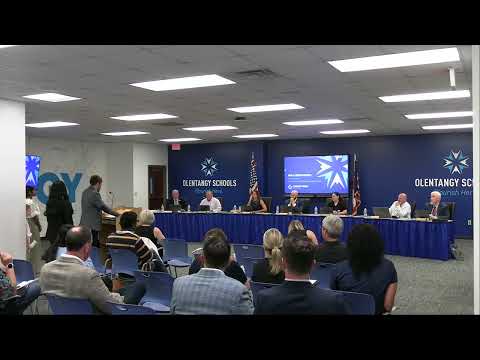
The Olentangy Local School District Board of Education used its June 12 meeting to highlight provisions in the Ohio biennial budget and related bills that board members and district leaders say could cut or limit school funding.
Board President Mister Lester and Superintendent Mister Meyer said the chamber of bills under consideration in Columbus — notably the versions of House Bill 96 and the separate proposals grouped under House Bill 335 — contain measures that could both limit state funding increases and restrict districts’ ability to raise local revenue. "The clawback would result in Olentangy having to return a whole bunch of money, you know, upwards of $90,000,000 or so," Mister Lester said, describing a provision first proposed in earlier drafts of the budget.
Mister Meyer explained specifics and the possible local effects. He said the Senate’s budget plan keeps base funding near current levels and relies on supplements — such as a growth supplement and a performance supplement — rather than the larger increases the House considered. The combination, he said, would leave the district "still well, well, well below what it costs us to educate kids." He urged residents to contact state legislators as the conference committee finishes work.
Board members and the superintendent pointed to several draft provisions they said would reduce local flexibility. Among them: limiting the ability to levy replacement levies after Jan. 1, 2026; prohibiting renewal-plus-increase ballot language in many cases; requiring districts to report carryover percentages on ballot language; and reducing the forecasting horizon the state requires districts to submit. The superintendent said the Senate version also would bar districts with a general-fund carryover equal to or greater than 100% from asking voters for new operating levies.
Board members said those restrictions, combined with modest or flat state funding, would place more of the education funding burden on local taxpayers and make future levies harder to pass. "The challenge with the clawback...is that when the local community approves money for us to be able to use through levies, the clawback would take that away," Lester said. "That is a threat to public education."
Board members also contrasted state support to funding for other entities and raised equity questions about exemptions for some school types. The district said current internal forecasts (if the law were applied to June 30, 2025 figures) would show a general-fund carryover roughly 52–53% and about $194 million in cash on hand, which the board said is a multi-month operating reserve needed to bridge property-tax collection cycles.
No formal board action on state legislation was taken at the meeting; board members said they would continue to monitor the conference committee and urged community members to contact lawmakers.
Looking ahead, board members said the conference committee report is expected near June 25 but could come later, and that final changes will determine whether any of the described limitations or clawback provisions survive in the enacted budget.
Ending: The board framed the budget debate as a statewide policy choice about priorities. "Do you want to fund public schools?" Mister Lester asked. He said the district will keep updating the community as the legislature finalizes the bill.