Get Full Government Meeting Transcripts, Videos, & Alerts Forever!
Get email alerts on the Public Transportation Paratransit topic
No spam. Unsubscribe anytime.
Residents, health providers urge Abilene to fix CityLink paratransit reliability
Summary
Multiple residents and medical providers told the Abilene City Council that CityLink paratransit service has become unreliable, causing missed medical appointments and isolation for people with disabilities. Speakers urged the city to expand service, improve training and pursue on-demand options.
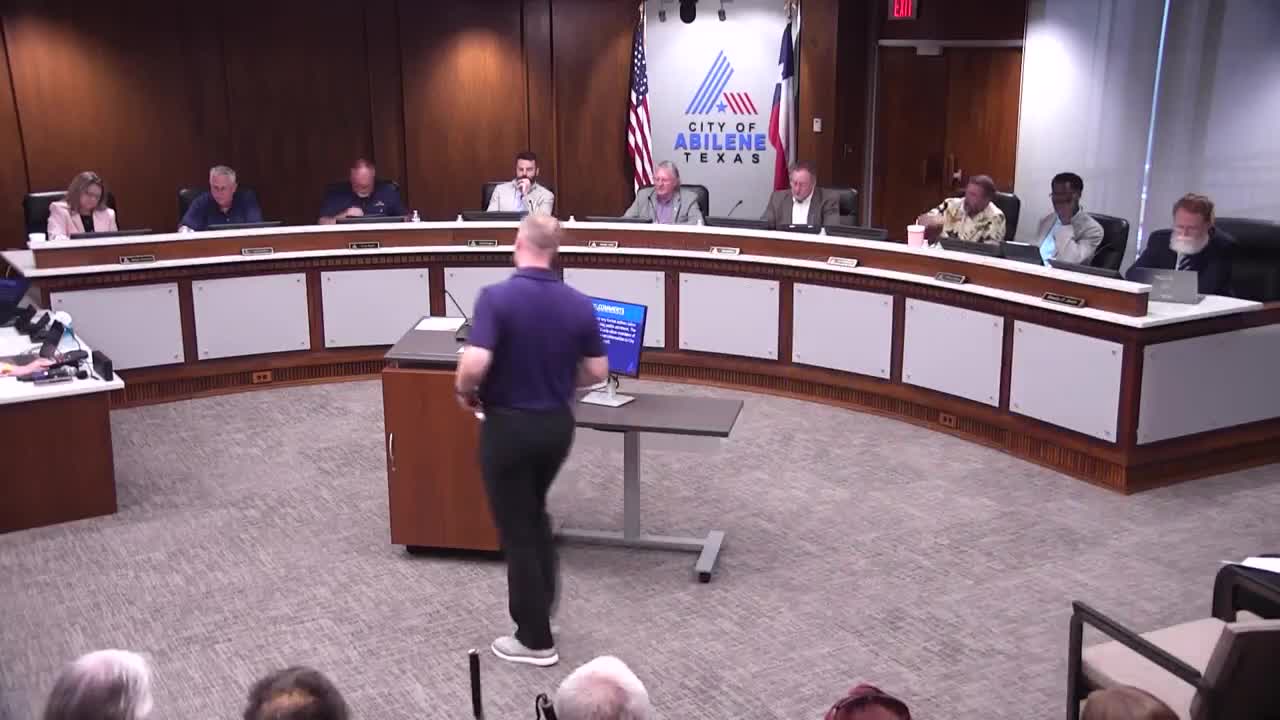
Several residents, health-care workers and disability advocates told the Abilene City Council during public comment that CityLink paratransit service has become unreliable and is harming residents who depend on it for medical care, work and daily life.
Brady Holcomb, a professor in the School of Physical Therapy at Hardin‑Simmons University, said he sees clients who rely on CityLink and sometimes prefer to drive power chairs across town because the paratransit service is slow or unavailable. "These power chairs are not designed for regular long distance travel and using them in this manner puts the individual at a risk for injury of being hit by other cars as well as becoming stranded far from home," Holcomb said.
The issue drew multiple personal accounts. Hal Houle, a resident who has used CityLink paratransit for four years, said drivers and dispatchers "work very hard," but the service often fails: pickups two hours late or missed, incorrect pickup addresses, and rides that take nearly two hours. "When you don't have access to CityLink . . . you don't have access to medical, you don't have access to banking, you don't have access to education, groceries, pharmacy," Houle said.
Leslie Homen, who said she represents a client and Disability in Action, urged the council to expand routes and hours, improve accessibility on vehicles and provide mandatory training for transportation staff. "This isn't just about disability. It's about building a more inclusive, vibrant, and economically strong city for everybody," she said.
Casey Nielsen, a dialysis social worker for Fresenius Medical Care, described clinical consequences when patients miss or are late for dialysis because of paratransit problems. "We have several patients who are dependent on CityLink to get to and from treatments. . . . Over the past 6 months . . . patients have missed treatments completely or arrived more than 2 hours late," Nielsen said, adding that missed dialysis treatments increase hospitalizations and can be fatal.
Speakers requested a transparent timeline for restoring full CityLink service and invited collaboration with local providers for education and service improvements. Joanne Fluke, chair of the mayor's board for people with disabilities, said paratransit service had declined in the last year and that the city is preparing to resume full service soon, but repeated problems have left vulnerable residents isolated.
Council members did not take formal action during the public-comment period. Several callers asked for clearer public information about service restore plans and for the city to engage directly with disability advocates and health-care providers to develop solutions.
Looking ahead, speakers urged the council to prioritize a service reliability audit, to clarify current operating limitations, and to consider alternatives including an on‑demand paratransit model and additional training for CityLink staff so residents depending on assisted transportation can keep medical appointments and remain independent.