Greene County supervisors outline phased plan to convert Green EMS into county-run system
Loading...
Summary
Town supervisors and county legislators described a multi-year plan to make EMS a county-operated service, beginning with hiring an EMS coordinator in 2026 and a phased system rollout in 2027. Officials emphasized staffing, funding and asset-transfer questions remain to be resolved.
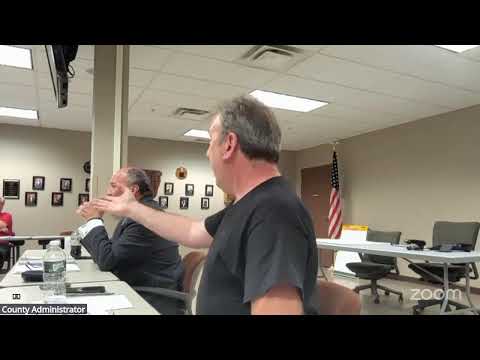
Greene County legislators and town supervisors discussed a multi-year proposal on Tuesday to transition local emergency medical services into a county-run system, beginning with a 2026 planning phase and a proposed 2027 operational rollout.
The outline — presented by Patrick, town of Casco supervisor — calls for Greene County to hire an EMS coordinator in 2026 to oversee planning and standardize purchasing, training and dispatch integration. The document proposes absorbing the existing Green EMS paramedic organization into a county agency, shifting billing and payroll to the county and phasing operational changes in 2027.
The supervisors framed the change as a way to standardize service levels across municipalities and relieve towns of operating costs. “We have unanimous unanimous agreement from the towns, that this is a direction in which we wanna go,” Patrick said.
Under the high-level timeline presented, 2026 is the planning and infrastructure year: hire an EMS coordinator, implement centralized county purchasing and a new recruitment system, and assist municipal and private EMS agencies to integrate into a computer-aided dispatch (CAD) system. For 2027 the plan describes a county-staffed ambulance network in which all ambulances would be staffed at the paramedic (ALS) level: a proposed 10-ambulance deployment with 5 in the valley, 3 on mountaintops and 2 floaters, plus supervisory “fly cars.” The presenters described pilot zones for early deployment where staffing needs are most urgent.
Financial details were discussed but not finalized. The presentation said towns have accumulated about $4,600,000 through town EMS taxes that the plan would move to county control if the transition proceeds; that transfer was described by participants as a reduction in town EMS levies and not a new county tax. Presenters said the current local funding split for some services is roughly 95% county and 5% town, and a separate figure of about $370,000 was cited in discussion as a ballpark figure for a town-level balance. One town reported an ambulance-related line-item of $617,006.18 in its budget and described local tax rates for ambulance districts near $2.07–$2.09 per $1,000 of assessed value.
Officials and EMS providers repeatedly raised staffing questions. Supervisors and paramedic staff said Greene County faces shortages of EMTs and paramedics and that a county-run model could improve recruitment and retention by offering county benefits and retirement participation. But supervisors also cautioned converting operations without a staffing plan could leave gaps. “My concern is for my patients in Greenville,” the assistant chief of Greenville Rescue said, describing worry that a transition could leave some towns without nearby ambulances during conversion.
Other operational issues discussed included asset ownership, existing bonds and leases on vehicles and equipment, and whether not-for-profit providers would transfer vehicles or require compensation. Presenters said depreciation and potential buyouts would be complex and that the incoming EMS coordinator would inventory equipment and evaluate compensation or transfers on a case-by-case basis. Participants noted some providers are non-profit organizations and that assets purchased with tax dollars pose legal and accounting questions that must be resolved.
Technology and dispatch changes were also addressed. The county discussed integrating GPS and CAD so dispatchers can see unit locations and move units dynamically. Cost estimates discussed include roughly $5,600 per rig to equip vehicles with the preferred Windows-based mobile solution (the group said an iPad/app-based option could be less costly, with cell-service iPad options cited around $350), and participants said about 20 rigs still lack the needed hardware.
Speakers described next steps as hiring an EMS coordinator (or director), negotiating employment and collective-bargaining issues, and organizing pilot deployments. No formal votes or agreements were taken at the meeting; presenters described the plan as a starting point that will require more detailed operational, financial and legal work before any legal transfer or hiring occurs.
The county and towns agreed to continue meetings and produce more detailed job descriptions and budgets; supervisors said they will also consult with providers and employees as the plan is refined.