Get Full Government Meeting Transcripts, Videos, & Alerts Forever!
Get email alerts on the Education Budget topic
No spam. Unsubscribe anytime.
Glocester residents, educators urge council to avert layoffs as schools face $1.2 million shortfall
Summary
Teachers, parents and union representatives urged the Glocester Town Council to find emergency funds or a plan after the school department said 13 instructional teacher assistants and other positions face cuts tied to about a $1.2 million budget gap.
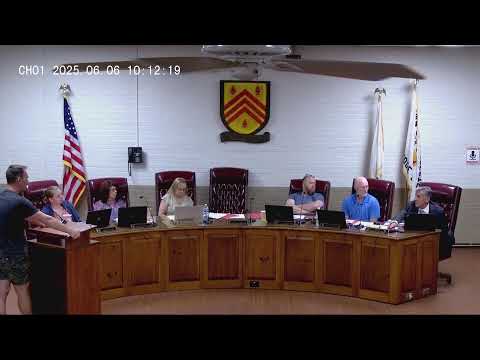
Dozens of Glocester residents, including teachers, special-education aides and parents, spoke at the town council meeting on June 5 urging the council to act to prevent layoffs in the school district after administrators said the district faces roughly a $1.2 million shortfall for the coming fiscal year.
Teachers and parents said layoffs would reduce supports for students with disabilities, increase out-of-district placements and disrupt basic classroom operations. “Thirteen instructional teacher assistants that are being cut due to absolutely no fault of their own,” said Tasha Elderkin, a district educator and parent, listing the people affected and noting many are town taxpayers and benefit holders. “These are the 13 staffers who will no longer be there to greet your child with a smile, help them with their academics, engage with them in social interactions, and protect them from any and all harm.”
The public pleas centered on a set of long-running budget tensions between the town council and the school committee. Jason Whitford, a teacher and town employee, told the council the town’s pattern of one-time increases and use of school fund balance over many years produced a structural shortfall: “This town has the lowest cost per pupil spending in education in the state,” he said, and pointed to “out-of-district placements, bussing costs out of district” as unpredictable drivers of the budget gap.
Superintendent Renee Palazzo described how the shortfall crystallized this spring. Palazzo said she was notified in April of a roughly $500,000 gap and that after actions and a referendum the district is not expected to close the fiscal year in deficit, but the next fiscal year still shows a larger gap. “The town did not have a business manager or a finance director to manage some of the budget lines,” Palazzo said, adding she and the school committee are seeking meetings with the council to discuss possible short- and longer-term options.
Speakers repeatedly urged the council to consider temporary uses of reserve funds, loans or a voter referendum to bridge the immediate gap while leaders develop a multi-year plan. Commenters and several councilors discussed the town’s fund balance (remarks in the meeting placed it around $4.2 million) and whether using a portion for this “emergency” would create a structural deficit next year.
Union and special-education advocates described immediate student-safety and legal risks if supports are cut. Laura Babbitt, a speech and language pathologist who works with nonverbal students, said many pupils depend on teacher assistants to use communication devices and to generalize therapy skills across the school day. “If it weren’t for these teacher assistants, we wouldn’t be able to have children in our town be so successful,” she said.
Several parents warned that losing TAs would increase out-of-district placements, at a reported cost of about $100,000–$120,000 per student, potentially raising the town’s longer-term costs. Others urged civic action at the state level to address unfunded mandates and the levy cap: multiple speakers referenced a local levy cap the council says is 4 percent and described contacting the state Division of Municipal Finance about exceeding that limit.
Council members acknowledged the seriousness of the testimony, said they had tried to pursue options (including contacting the state), and urged further direct meetings with the superintendent and school committee to explore possible short-term and multi-year remedies. Council President William A. Worthy Jr. said the council had worked with the school committee during the budget cycle and attempted to pursue exceeding the levy cap but that the state response was that the situation did not qualify for an over-cap allowance. He encouraged continued dialogue and said the council could call special meetings if needed.
Speakers included local union representatives who said they would file information requests and press the state on whether the town could legally exceed the cap; Crystal Bergantine, assistant executive director of NEA Rhode Island, told the council that, in her understanding, “unless your town charter says otherwise, you are empowered to go over the cap on your own” and that the union would investigate further.
The public comment period lasted roughly an hour and a half and included more than a dozen individuals—teachers, parents, union leaders, and other residents—who asked the council for short-term relief to keep staff in place and for a longer-term revenue plan to prevent repeated shortfalls.
Votes at a glance - Motion to move agenda item 14 (open forum) earlier in the meeting: carried. - Ratify Chepachet Grange 2025 Community Service Award citations (Melissa A. Beaubier et al.): approved. - Adopt FEMA-approved “Strategy for Reducing Risks from Natural Hazards, Town of Glocester 2024” (resolution 2025-07): approved; plan available at the town clerk’s office. - Approve town council minutes (regular meeting of 05/15/2025): approved. - Amend meeting schedule (move June 19 meeting to June 26; cancel July 3 meeting): approved. - Accept resignation of Sgt. Patrick Grama (Glocester Police): acknowledged. - Authorize various personnel and operational items (comp time payout, summer recreation hires, vacation carryover for building clerk, contract extension for senior center cleaning, award of RFP 2025-04 statistical reappraisal to Catalyst, EDC contribution to place-branding campaign): approved as presented. - Motion to convene executive session under RIGL 42-46-5(a)(2) (collective bargaining/litigation, IBPO matters): moved; to be considered in closed session.
Why it matters The public testimony showed immediate and highly localized consequences of the budget gap: jobs at stake for teacher assistants, reduced services to students (especially those with disabilities), and the potential for more costly out-of-district placements. Speakers framed the problem as both a near-term emergency and the result of long-term funding choices that will require multi-year planning and potential revenue changes.
What’s next Superintendent Renee Palazzo asked to meet with the town council to discuss options and said the school department has ideas to present. Multiple speakers and councilors said they will seek more information from state officials and consider whether voter action or alternative revenue strategies are feasible. The council left the record open for discussion and scheduled follow-up at future meetings; councilors also signaled willingness to hold special meetings.
Ending Residents who addressed the council repeatedly asked for concrete, short-term commitments to keep instructional supports in classrooms when the school year begins in August, and for a collaborative, multi-year revenue and budget plan. The council and school administration agreed to meet and continue the dialogue.