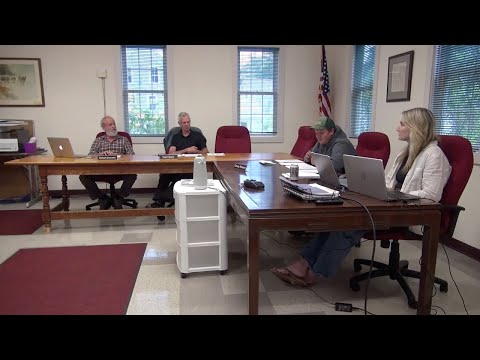
Tamworth residents press Club Motorsports on noise monitoring; board seeks better records
Loading...
Summary
Club Motorsports described its sound limits and enforcement policy at the Select Board meeting June 10, while nearby residents testified that intermittent, loud events disrupt daily life. The board asked the track to provide event calendars and to explore more continuous monitoring and record-keeping.
Club Motorsports Inc. representatives and several Tamworth residents debated the racetrack’s noise monitoring and community impacts during public comment at the Select Board meeting on June 10. Club officials described their operating hours, per-vehicle sound limits and a three-strike enforcement policy; neighbors said noise from large rental groups can be unpredictable and overwhelming at nearby homes.
The disagreement matters because residents said the sound regularly reaches houses up to several miles away and that the town’s expectation — that monitoring records be available on request under the track’s permit — has not been met. Select Board members asked Club Motorsports to provide clearer monitoring data and to share its event schedule with the town so neighbors can be notified in advance.
Jim Hohenscheid, president and CEO of Club Motorsports Inc., told the board the facility requires mufflers on vehicles and measures noise “from 50 feet from the edge of pavement” around the course. He said the club imposes a 99-decibel maximum per vehicle measured at that distance for members and reduces the limit to 92 decibels for rental groups. Hohenscheid said the club uses multiple handheld monitors positioned around the course and that it logs incidents where an individual vehicle exceeded the limit; repeated noncompliance can remove a vehicle for the day.
But residents pressed the club on continuous monitoring and public availability of data. A select board member said the club’s Army Corps of Engineers permit states monitoring data “will be kept on file and shall be made available to the town promptly upon request,” and asked why the town had received no multi-day monitoring reports after complaints. Hohenscheid said the club’s monitoring equipment does not automatically record continuous electronic files; instead staff record readings from handheld meters and maintain a daily log of vehicles found out of compliance.
Neighbor Amy Barrier described the effect at her house: “I could even hear it in my house with the windows closed. I don't think that that's an acceptable way to treat a neighbor.” She and other residents said unpredictability — not just loudness — makes it hard to plan work and daily life.
Board members asked the club to provide a full event calendar to the town administrator so the town can post or distribute dates when larger rental groups will attend. Hohenscheid said he would provide hard copies of the schedule and coordinate with town staff, and he agreed to discuss monitoring improvements with his sound engineer and to report back to the board. He also noted the club shortens operating hours from its original permit and said the club coordinates with nearby St. Andrew’s Church for special services.
The board did not make a regulatory change at the meeting. It asked the track to look into options for more comprehensive monitoring records and to provide the event schedule to the town. Select Board members said those steps would help the board respond to future formal complaints more quickly.