Get Full Government Meeting Transcripts, Videos, & Alerts Forever!
Get email alerts on the Historic Displacement Settlement topic
No spam. Unsubscribe anytime.
Portland approves $8.5 million settlement to resolve Central Albina displacement claims
Summary
The City of Portland and Prosper Portland approved an amended settlement resolving claims by survivors and descendants displaced from the Central Albina neighborhood; public testimony included both support and objections over scope and amount.
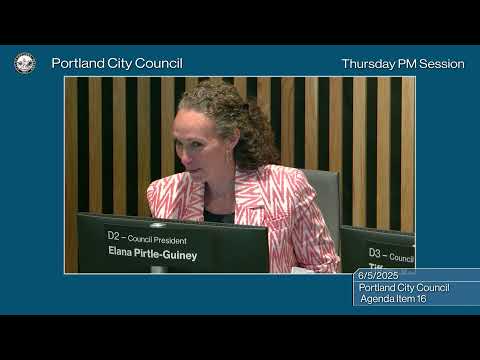
Portland City Council on Thursday approved an amended ordinance authorizing a settlement to resolve claims brought by survivors and descendants of families displaced from the Central Albina neighborhood during urban renewal in the 1950s–1970s. Council voted unanimously to amend the proposed ordinance and approve a settlement package that the council amended to total $8,500,000, consisting of $7,500,000 from the city and $1,000,000 from Prosper Portland.
The agreement resolves claims by 26 individual plaintiffs (and related organizational claims) who alleged civil-rights and related harms tied to the Emmanuel Hospital expansion and related urban-renewal acquisitions. City Attorney Robert Taylor described the vote as “an important day,” saying the settlement “is one part of what the city can do to try to right some of the wrongs that have happened in our city.”
The settlement the council approved includes a monetary payment to plaintiffs’ counsel and several nonmonetary terms negotiated by the parties. Those nonmonetary elements include the ability for eligible plaintiffs to acquire up to two vacant properties from Prosper Portland at no cost, use of the MLK Heritage Marker site up to four times a year at no cost, an annual “descendants day” proclamation for at least five years, and commitments for descendant participation and a ten-year hiring preference for positions tied to proposed Keller Auditorium renovations if those renovations proceed. Beth Woodard, senior deputy city attorney, said some nonmonetary provisions would be implemented “to the extent the Keller Auditorium renovations proceed.”
Dozens of community members and plaintiff representatives spoke during public testimony. Ed Johnson, director of litigation at the Oregon Law Center, which represented plaintiffs, urged the council to approve the settlement, saying the litigation “was never designed” to resolve every historic wrong and noting the plaintiffs had litigated the case for more than two years. Several plaintiffs and community members, including attorney Diane Wynne and plaintiff Rahsaan Mohammed, urged passage while acknowledging the settlement “doesn’t go far enough.” They described longstanding losses of homes and generational wealth stemming from the displacements.
Opponents and some community members pressed the council that the settlement excluded many other descendants and that the monetary component did not reflect the scale of losses. One public commenter calculated a regional asset loss in the tens or hundreds of millions and described the per-plaintiff share of the originally proposed figure as inadequate. Yvette Roberts and others questioned why the matter was not a class action and why many descendants were not included in the group of plaintiffs.
Council debate focused both on the adequacy of the monetary sum and on the broader obligations the city has to address systemic displacement. Councilor Loretta Smith (who introduced the amendment increasing the city’s payment) said she supported the plaintiffs’ choice to settle while acknowledging the agreement will not fully restore historic losses. Council members described the vote as a first step and discussed follow-on policy work to address the harms more broadly. City Attorney Robert Taylor told council the dollar amount could be amended and that, if council wanted further changes, staff could negotiate and return with revised terms or a new ordinance on a subsequent agenda.
Under the amendment approved by council, payment to plaintiffs’ counsel was to be wired to a designated trust account within 14 calendar days after the effective date. The settlement document includes a statement of acknowledgement (the presenters confirmed a statement of acknowledgement is included in the agreement) and a release of claims for the plaintiffs covered by the agreement. Council members and plaintiffs’ attorneys acknowledged the settlement resolves only the claims of the named plaintiffs and does not foreclose other actions by or on behalf of other descendants.
Council President (acting) and other members thanked plaintiffs, pro bono counsel, and community organizers for the work that led to the settlement. The ordinance was adopted as amended with 12 aye votes and no recorded no votes on the amended package at final passage.
The council’s actions were followed by procedural steps: council recessed into an executive session to consult with legal counsel under state law before returning to open session to complete the vote. The city and Prosper Portland committed to work on the final funding split and logistics for Prosper Portland’s $1,000,000 contribution.
The approval does not itself create the broader programs some speakers requested; multiple council members said additional, citywide planning and resources will be necessary to address displacement beyond the 26 plaintiffs covered by the settlement.