Get Full Government Meeting Transcripts, Videos, & Alerts Forever!
Get email alerts on the Education Assessment topic
No spam. Unsubscribe anytime.
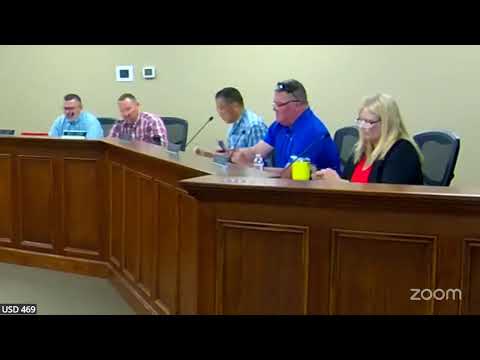
Lansing Middle School outlines professional learning community model to guide instruction and assessment
Summary
At a Lansing Board of Education meeting, Lansing Middle School staff presented its professional learning community approach, explaining common formative assessments, SMART goals and how teachers use CFA data to drive reteaching and enrichment.
Brooks, a Lansing Middle School administrator, presented the district's approach to professional learning communities and how those teams use common formative assessments to improve instruction and student learning.
Brooks described the PLC work as "a collaborative process with two end goals, and that is to improve instruction in the classroom and then also student learning at the same time." He said teams at the middle school are organized by content and grade level and use DuFour's four questions to set curriculum, assessment and responses to students who do not learn.
The presentation explained how teams set SMART goals (specific, measurable, attainable, results-oriented, time-bound), identify essential outcomes aligned to state standards and develop common formative assessments (CFAs). Brooks showed a recent example from grade-level science teams: a group that targeted a proficiency increase from 77.5% to 80% using CFAs tied to essential outcomes.
Brooks said CFAs are short, focused checks — sometimes as few as five questions — given multiple times per year (about four times is the district target). He said the primary purpose of CFAs is to provide timely information teachers can use to reteach, enrich or reassess students.
Using sample data, Brooks led the board through how teachers compare mean scores and percent of students at mastery (set at 80%) and then identify which individual outcomes and which students need targeted reteaching. He stressed that overall averages can mask gaps: "Overall, 81%, but he's still low on outcome 2," Brooks said when illustrating how a single student's aggregate score can hide a deficiency on a specific standard.
Board members asked about how the PLC/CFA process ties to curriculum adoption, vertical alignment across grades and district resources. Brooks said CFA findings are embedded in the district's GVC (curriculum documentation) and that teachers use CFA results to adjust questions and resources; revisions to curriculum documents follow from that review process.
Brooks and the board discussed how PLC evidence would be used for decisions such as curriculum renewal and for new or transferred staff to access common assessments and essential outcomes. Brooks said the district's goal is continuous improvement: "It's not just a program, but it's for continuous improvement. And then it's a collective responsibility for all the teachers to all the students that they serve."
Board members thanked Brooks and LMS staff for the level of detail in the report and noted observed declines in disciplinary incidents and improvements in chronic absenteeism as related successes. The board did not take formal action on the PLC presentation at the meeting.
The district plans to continue embedding CFAs in its curriculum documents, to provide access to assessment banks for new teachers and to use PLC data when considering curriculum renewals and targeted interventions.