Get Full Government Meeting Transcripts, Videos, & Alerts Forever!
Get email alerts on the Comprehensive Plan topic
No spam. Unsubscribe anytime.
Planning board hears ideas for sustainability, parks and zoning changes in town master plan update
Summary
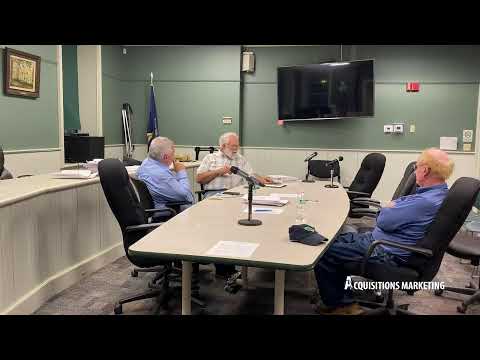
Members of the planning and environmental committees discussed sustainability concepts for Goshen's comprehensive plan update, including aggregated parkland, rooftop solar on commercial buildings, water sustainability, and limits on large commercial footprints along major corridors.
Planning and environmental committee members discussed sustainability principles to inform the town’s comprehensive plan update and future zoning changes. Topics included consolidating developer‑provided recreational funds into larger public parks, encouraging rooftop solar on commercial buildings, protecting water resources, and limiting large‑footprint commercial development along key corridors such as Route 17A and 17M.
Members suggested alternatives to many small pocket parks — for example, pooling developer park fees to develop larger, centrally located facilities on the south side of town. The committee also discussed opportunities to lease or partner with institutional landowners (for example, BOCES or other large owners) for off‑hours recreational access.
Water sustainability emerged as a prominent theme: board members said the town should be cautious about approving projects whose groundwater withdrawal cannot be recharged locally and flagged proposals seeking water beyond a site’s sustainable yield. Traffic and infrastructure capacity were discussed as additional sustainability limits to consider when evaluating large or warehouse‑type developments.
Board members asked staff to prepare options that would allow trustees and planning officials to require developers either to provide actual parkland of usable quality rather than cash in lieu, or to pool cash for larger, regional parks. They also discussed a possible town code provision that would require updated application materials when long‑dormant approvals reach pre‑set time limits.
Ending: The committee asked staff to draft specific policy options (parkland aggregation, rooftop solar requirements for large commercial roofs, water‑use thresholds and tenant‑change notification requirements) to be reviewed at future meetings and considered for inclusion in the comprehensive plan and local code revisions.