Get Full Government Meeting Transcripts, Videos, & Alerts Forever!
Get email alerts on the Public Safety Sheriff Budget topic
No spam. Unsubscribe anytime.
Board approves Santa Cruz County Sheriff-Coroner proposed $114 million budget; DNA lab, staffing and unfunded mandates highlighted
Summary
The Santa Cruz County Board of Supervisors unanimously approved the Sheriff-Coroner Office’s proposed 2025–26 budget after a presentation on staffing, capital projects including a county DNA lab, and federal/state unfunded mandates.
The Santa Cruz County Board of Supervisors unanimously approved the Sheriff-Coroner Office’s proposed 2025–26 budget, which requests roughly $114 million in total expenditures and a $74.5 million general fund contribution.
The Sheriff-Coroner, Chris Clark, presented the budget and described priorities that include operating a network of jail facilities, expanding a DNA laboratory, and completing a radio replacement project. He framed the budget around public safety services and said the department’s work ranges from patrol and investigations to jail medical and behavioral health services. “Our mission is to ensure public safety in the county,” Clark said during his presentation.
Why it matters: The sheriff’s budget is the largest single general fund recipient in the county and drives staffing and service levels in law enforcement and corrections. Changes in federal and state funding and new or expanded mandates can materially affect local costs.
Key details - Total request and general fund share: The Sheriff’s office presented total revenues of about $39 million, total expenditures near $114 million, and a general fund contribution of $74.5 million; staffing was shown as 358 funded full‑time equivalents. (Numbers presented by Monica Rocha, fiscal manager.) - New positions and projects: The budget adds 1 FTE for a property and evidence supervisor to staff the county’s new DNA laboratory (paid from the department’s DNA trust) and requests to extend 1 limited‑term coroner investigator through June 30, 2026. The sheriff described the DNA lab as “a game changer” for equity in victim services. Clark also outlined a radio replacement project to modernize analog systems and an effort to obtain National Commission on Correctional Health Care (NCCHC) accreditation for jail medical and mental‑health care. - Cost drivers and grants: Salaries and pre‑negotiated benefit increases remain the primary cost driver. The sheriff highlighted federal and state grants that support programming — RSAT, school safety funding and other grants — but cautioned those sources are volatile. He flagged an estimated $2.5 million in annual unfunded mandates linked to court security, care‑court and other recent laws. - Corrections population and medical needs: Clark said a large share of people in custody require medical or behavioral‑health care; he described challenges recruiting staff and staff on medical leave that affect operations. He reported the department continues to pursue recruitment incentives and training to reduce mandatory overtime.
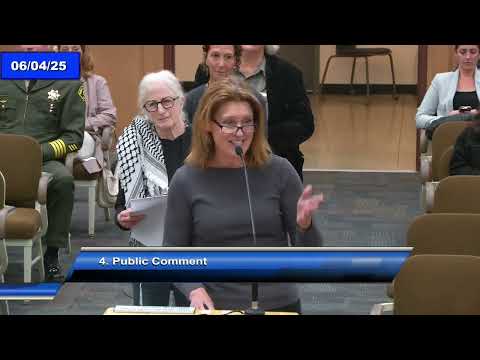
Public comment and board questions Members of the public urged the board to reallocate some general fund dollars from law enforcement to mental health and community supports. Speakers including Laura Chatham and community advocates asked the board to prioritize a living wage for mental‑health workers and to preserve funding for peer‑run services.
Supervisors asked the sheriff to explain staffing trends and the tradeoffs between corrections operations and community behavioral‑health investments. Clark described recruitment incentives, progress toward staffing the jail, and plans for a mental‑health wing and other in‑custody treatment improvements. He said the county must balance care inside custody with investments in community alternatives.
Outcome and next steps The board voted to approve the Sheriff‑Coroner budget as presented. The motion passed unanimously. The department will move forward with the positions and projects included in the FY 2025–26 package and will report back to the board as planned.