Lifetime Citizen Portal Access — AI Briefings, Alerts & Unlimited Follows
Committee recommends city code changes to limit utility shutoffs during heat and holidays
Loading...
Summary
The Governmental Operations Special Committee voted to forward an ordinance aligning Richmond’s utility disconnection rules with 2024 state law, prohibiting disconnects during extreme heat and on certain holidays and outlining customer repayment options such as PromisePay.
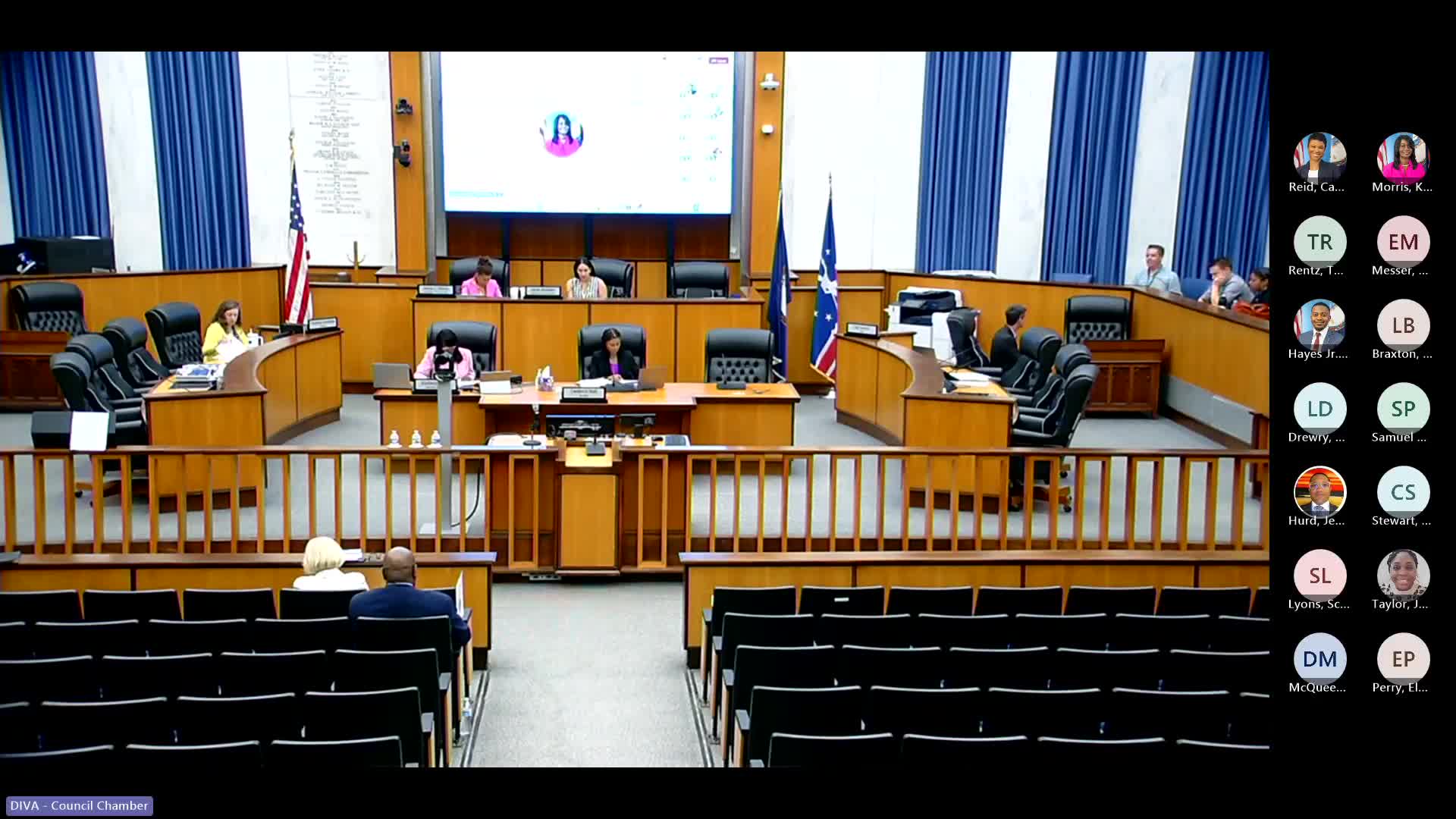
The Governmental Operations Special Committee voted to forward Ordinance 2025-1134 to City Council with a recommendation to approve, updating city code on gas, water and wastewater disconnections to align with 2024 state law (House Bill 904).
The change will prohibit disconnections during periods the city and state consider a heat risk (discussed in the meeting as a 95-degree threshold) and on days immediately before holidays; it also clarifies related city code references without changing deposit and refund provisions. Committee members voted to recommend the ordinance for approval.
Scott Morris, director of the Department of Public Utilities, told the committee the ordinance is intended to align city code with state law enacted in 2024 and that the city’s gas utility is regulated by the State Corporation Commission. Morris said the changes do not alter the city’s deposit or refund policies; they adjust code sections that govern disconnection timing and notice. “It doesn’t change the deposits or refunds associated with it. It’s only changing or modifying the aspect of the sections where it relates to disconnection,” Morris said.
Morris said the ordinance would take effect July 1 and noted the city is not currently performing disconnects following COVID-era policy changes. He said the utility intends to resume disconnects only after billing issues are resolved and that staff will publish public notifications and update internal procedures prior to reinstating the practice.
On customer repayment options, Morris described a program the utility calls PromisePay that spreads past-due balances over up to 36 months. “PromisePay is something they can go over 36 months,” Morris said, describing a sample scenario in which a $3,600 delinquency could be paid as about $100 a month over three years. He added that accounts enrolled in PromisePay receive an annotation that prevents disconnection while the payment plan is active.
The public hearing produced no speakers in support or opposition. The committee’s vote to forward the ordinance to council carried with recorded affirmative votes from Council Member Gibson and Vice Chair Abubakar.
The ordinance text cites amendments to City Code sections concerning deposits and refunds and disconnection procedures for gas, water and wastewater services; it is presented as a code update to match state statutory timelines and protections. The administration’s staff described procedural steps for implementing the new notice and disconnection rules, while also emphasizing the city’s current pause on disconnections until billing reconciliations are complete.
A Council recommendation now goes to the full City Council for final consideration; the ordinance is scheduled to be effective on July 1 if adopted.