Get Full Government Meeting Transcripts, Videos, & Alerts Forever!
Get email alerts on the Farmland Preservation topic
No spam. Unsubscribe anytime.
Orange County Land Trust urges Sullivan County to consider Hudson Valley Community Preservation Act for farmland protection
Summary
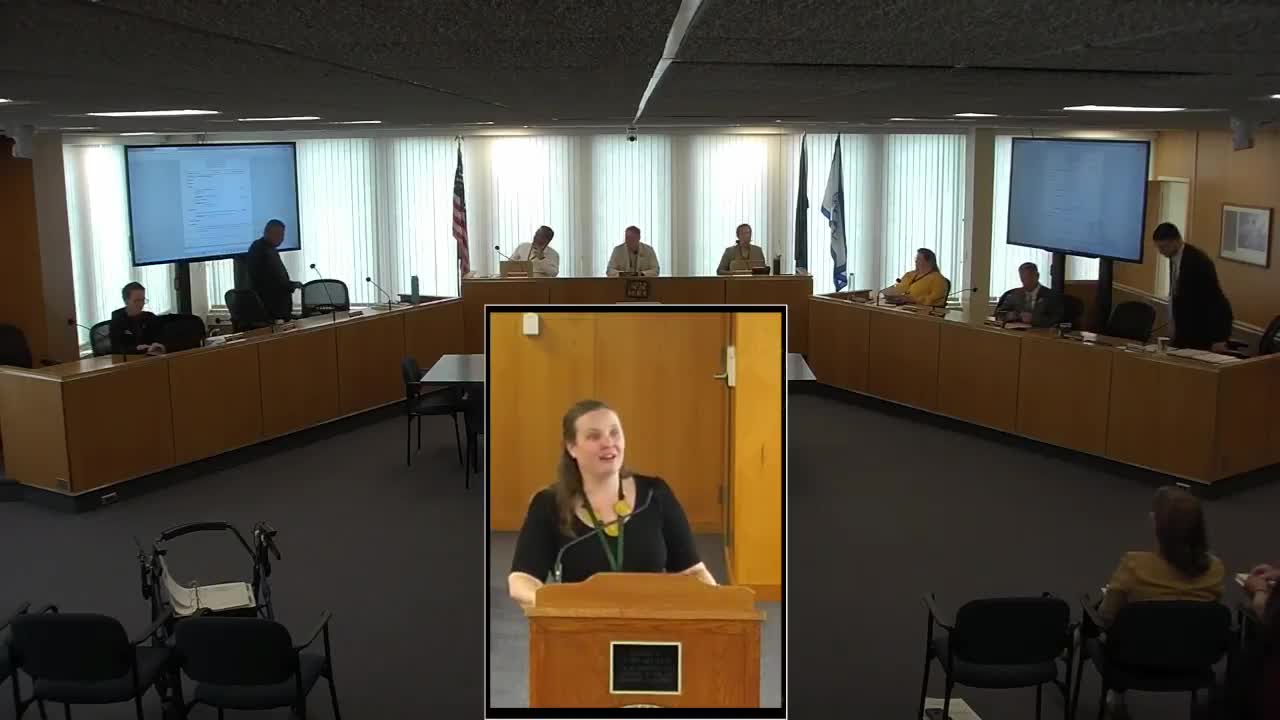
Mike Sweet of the Orange County Land Trust told the Sullivan County Legislature’s planning committee that a recent state operating-budget allocation and a county-level option under the Hudson Valley Community Preservation Act could help preserve farmland in Sullivan County.
Mike Sweet of the Orange County Land Trust told the Sullivan County Legislature’s planning committee that a recent state operating-budget allocation and a county-level option under the Hudson Valley Community Preservation Act could help preserve farmland in Sullivan County.
Sweet said the 2025 state operating budget included $75,000 to contract with the Orange County Land Trust to work on farmland preservation. He told the committee that state and federal programs will pay major shares of easement costs but typically require a local match, and that the Hudson Valley Community Preservation Act (HVCPA) offers one path for communities to generate matching funds through a voter-authorized real estate transfer tax.
The presentation outlined how farmland conservation easements work and how communities have funded local match. Sweet described easements as deeded restrictions that “run with the land,” preserving the property’s agricultural use while generally prohibiting residential subdivision. He said easements allow ongoing farm uses such as accessory buildings, agritourism, logging notifications and pond dredging with prior notice to the easement holder. He emphasized that the landowner retains title and may sell the property; the easement reduces development potential in exchange for a payment based on the difference between the land’s appraised “highest and best use” and its agricultural value.
Sweet reviewed local funding options for the required match: general municipal taxation, bonding, land-trust contributions and a locally approved real estate transfer tax under the HVCPA. He described the HVCPA as enabling a county or locality to add a real-estate transfer tax (up to 2 percent, with communities sometimes choosing lower rates) that is approved by local voters and allocated to a community preservation plan covering farmland, critical environmental resources and public access. He said that in his experience the tax is paid by buyers at closing, that local governments can apply exemptions, and that the tax revenues are collected at the county level and distributed monthly to the preservation fund.
Sweet cited Warwick, where a multi-year push for local authorization led to a community preservation fund that he said has preserved thousands of acres and generated local funds for easement matches. He said Warwick’s fund produced $18 million in revenue and that the program preserved properties he characterized as a substantially larger aggregate value; he did not attach documentary evidence for the larger valuation during his remarks. Sweet noted the HVCPA requires a county-level home-rule request and state legislative approval; after that, individual towns would still need to adopt local preservation plans and put a transfer-tax referendum to voters.
Committee members asked technical questions. A committee member asked whether a conservation easement places an encumbrance on property; Sweet replied that easements are deeded, monitored annually by the easement holder (a town or land trust) and typically restrict residential subdivision while allowing farming operations and related accessory uses. He said some easements limit large-scale commercial solar to operations that power the farm and that other activities (logging, dredging) are often permitted with notification to the holder. Sweet recommended municipalities ensure their zoning is “farm friendly” to make easements useful.
Sweet outlined next steps: the county legislature would need to pass a home-rule request authorizing state consideration of HVCPA inclusion; state legislators would sponsor the bill and, if approved in Albany, towns in Sullivan County could develop community preservation plans and put transfer-tax measures to local referenda. He said the Orange County Land Trust would return for more detailed briefings, including an August 6 presentation and an evening workshop for supervisors and town officials.
Sweet provided handouts listing jurisdictions that have adopted preservation funds and offered to connect Sullivan County staff with those municipal officials. He urged the committee to begin the home-rule conversation so towns could hold public sessions and, if they choose, bring a referendum to voters.
The presentation concluded with expressions of support from committee members and an acknowledgement that the process requires sustained local political work and a statewide legislative sponsor.
Sources: Presentation by Mike Sweet, Orange County Land Trust; committee Q&A.