Get Full Government Meeting Transcripts, Videos, & Alerts Forever!
Get email alerts on the Zoning Meeting Facilities topic
No spam. Unsubscribe anytime.
Committee advances rewrite of zoning to treat religious institutions as ‘meeting facilities,’ postpones final vote for housekeeping
Summary
Bill 60, a planning director‑initiated amendment to Hawaii County Code chapter 25, would consolidate churches, temples and community buildings under a new meeting facilities definition and add an "event" category; the committee accepted commission recommendations and postponed the ordinance to June 17 for Legislative Review Branch edits.
The Planning, Land Use and Economic Development policy committee advanced — and then postponed for technical edits — a planning director‑initiated ordinance (Bill 60) that would change Hawaii County Code chapter 25 to classify religious institutions and community buildings as “meeting facilities” and to create a separate definition for larger commercial "events."
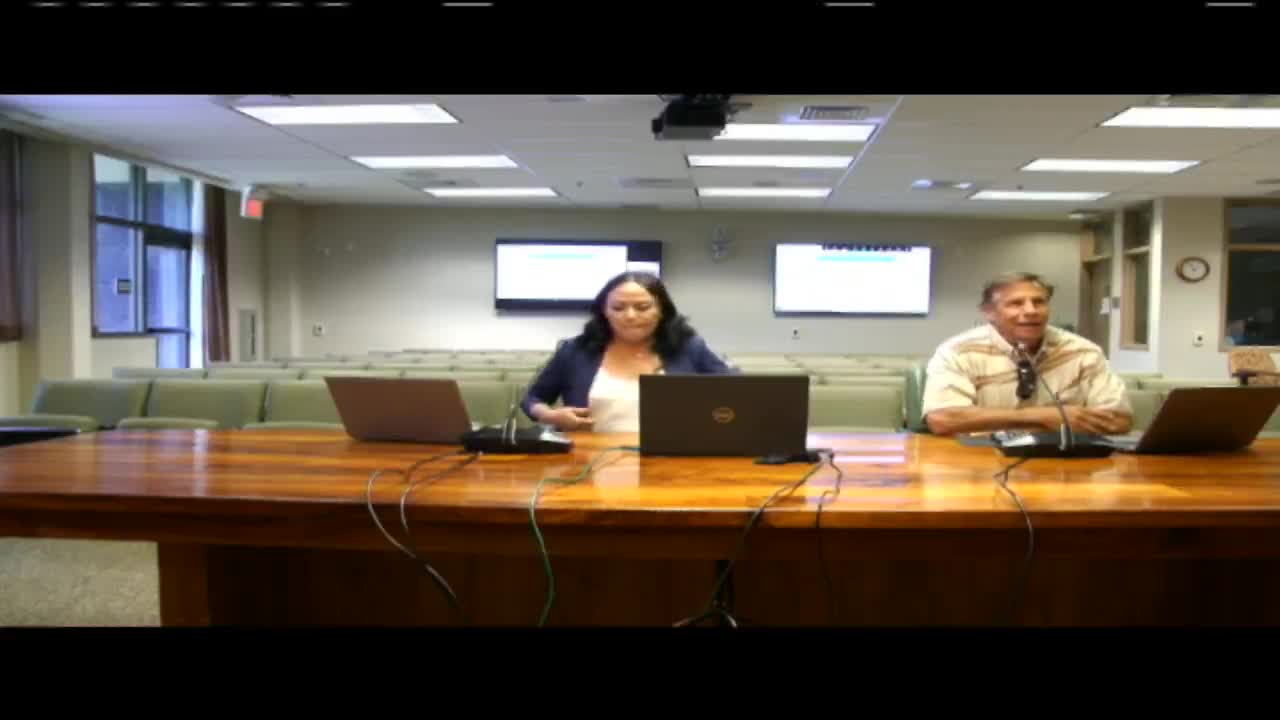
The proposal, presented by planner Tracy Lee Camaro and Planning Director Jeff Darrow, was described as an effort to correct zoning inconsistencies and ensure religious institutions receive equitable treatment under the code. Darrow said the change was prompted in part by litigation: the Shabbat Jewish Center and Rabbi Levi Gerlitzky filed suit against Hawaii County in February 2024 alleging the code treated religious uses less favorably than comparable secular uses; the U.S. Department of Justice filed a statement in the lawsuit in March 2024 asserting the county’s code may violate the Religious Land Use and Institutionalized Persons Act (RLUIPA).
Why it matters: The ordinance seeks to eliminate apparent zoning disparities by including places of worship within a revised definition of meeting facilities, creating a new “event” category (to distinguish routine facility use from large commercial gatherings) and standardizing plan‑approval criteria across zoning districts.
Key provisions and commission recommendations
Under the proposed amendments, meeting facilities would be defined to include recreational, social or multipurpose uses and explicitly list religious facilities (places of worship) among typical uses. An “event” definition would distinguish commercial or large‑scale gatherings such as weddings, receptions and concerts from routine uses. The bill establishes standardized operating criteria for meeting facilities (hours, attendance capacities), requires technical review by applicable county and state agencies, and revises permitted uses by district.
Windward and Leeward Planning Commissions both forwarded favorable recommendations with related amendments. Both commissions requested language excluding family gatherings from the meeting‑facility thresholds: the amendment reads that a meeting facility applies only to building sites that host gatherings more than two times per week with more than 25 attendees exclusive of family members.
Questions from committee members
Councilmembers and staff exchanged detailed questions about enforcement and scope. Councilmember Onishi asked what constitutes a “commercial wedding”; Planner Camar o responded that the term describes gatherings for which a fee is charged. Onishi raised enforcement concerns about weekend events, noting inspectors might not be available to observe activity occurring primarily on Saturdays and Sundays.
Councilmember Huestis asked how the change affects notification to neighbors; Tracy Lee Camar o said plan approval—triggered when activity exceeds the specified thresholds—would be posted on the Planning Department’s website and in the newspaper but would not include routine mailed notices to surrounding property owners; appeals to the Board of Appeals remain available where a planning director’s decision is alleged to be erroneous.
The planning director noted that state land‑use constraints persist: activities in the State Agricultural District would still require special permits under state law, and the recent federal litigation does not resolve state law permitting requirements.
Actions and next steps
A motion by Councilmember Inaba, seconded by Councilmember Galimba, moved Bill 60 forward with a favorable recommendation to the full council. Committee staff and the Legislative Review Branch (LRB) then identified housekeeping edits (capitalization and punctuation), and LRB recommended moving the meeting‑facility threshold language into the definition for clarity. The committee agreed to a clean‑up sweep with LRB and the department and then, by motion of Inaba, seconded by Onishi, postponed Bill 60 to the committee’s June 17 hearing to present the revised, “clean” version.
Ending
Bill 60 will return to committee on June 17 with LRB and department amendments. The county’s presentation and the transcript record show the measure was crafted to address the federal RLUIPA concerns raised in the Shabbat Jewish Center lawsuit and to standardize county zoning treatment of religious and comparable secular uses.