Get Full Government Meeting Transcripts, Videos, & Alerts Forever!
Get email alerts on the Utility Rates topic
No spam. Unsubscribe anytime.
Bullhead City staff outline multi‑year water, wastewater rate increases and a low‑income discount plan
Summary
City utilities staff proposed phased rate increases (water: 19% year one, then 14% and 14%; wastewater: 9% annually for three years) and a new Utility Assistance and Discount Program that would provide up to $20/month to eligible residential customers, using federal poverty guidelines and veteran/active duty categories.
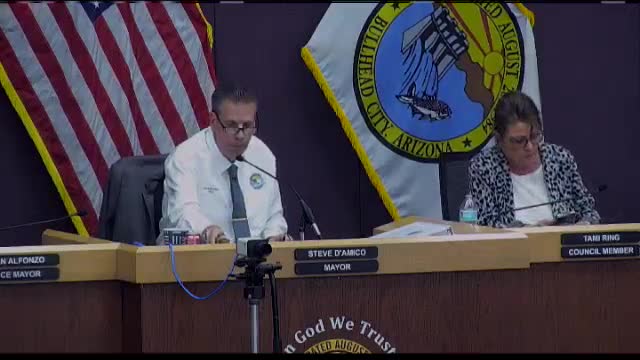
Bullhead City staff presented a proposal on June 3 to raise water and wastewater rates in a three‑year phased plan and to revive and expand customer assistance discounts for low‑income and veteran households.
City staff said the water enterprise is operating at a multi‑million dollar annual shortfall and that infrastructure needs and supply‑chain pressures — including rising material and energy costs — require rate increases alongside targeted customer assistance.
Eddie (presentation lead) summarized external market pressures and supply chain impacts, including increased material costs and tariffs that staff said have driven up project estimates. Utilities Director Mark Clark told the council the city has spent roughly $9.7 million improving the water system since it took operational responsibility from the previous private operator and that enterprise revenues must cover operations, debt, and capital improvements.
Mark Clark said the recommended schedule is a 19% water rate increase in year one, followed by 14% and 14% in the next two years; staff modeled that trajectory to move the fund toward break‑even while phasing the increases to reduce one‑year impacts. Clark said wastewater rates would rise about 9% per year for three years because that enterprise is closer to covering costs but requires funds for recent plant expansion and other capital work.
Staff provided examples of the bill impact for typical customers. Using a sample monthly household water use of 4,000 gallons, the first‑year water increase would raise an average Mohave customer’s monthly water charge by about $4.96 and a North Mohave customer by about $8.27, according to staff’s models. Staff also compared the city’s proposed rates to current and projected rates of the previous operator and nearby utilities.
To accompany the increases, staff proposed an assistance and discount program to limit the burden on the lowest‑income customers. The program would allow eligible residential customers to qualify for up to $20 per month in discounts by stacking up to two $10 credits. Categories are: (1) low‑income (eligibility based on the U.S. federal poverty guidelines), (2) active duty military (proof of current service), and (3) disabled veteran (VA documentation). City staff said the poverty guideline thresholds used in the presentation were $15,760 for a one‑person household, $22,150 for a two‑person household, $26,650 for a three‑person household and $32,150 for a four‑person household.
Staff described program administration rules: applicants must be Bullhead City utility customers with active residential accounts in their names; only one application per household is permitted; customers must reapply annually; accounts must be current to enroll; and a disconnection for nonpayment voids the discount for one year from the initial application date. Staff said they will audit enrollments periodically and expect a large increase in applications once the program is promoted.
Staff also described existing customer protections: a high‑use bill review process that can adjust charges after verified leak repair (staff said they will consider up to three months when reviewing high usage), and utility payment plans handled by customer service. Juvy Bridal and Royal (customer service staff) explained the high‑use review steps and documentation needed to receive adjustments.
Council members asked about the size and timing of additional capital borrowing shown in staff models; staff said the debt projections include planned capital projects such as drilling a new well to replace an aging Lake Mohave Highlands well and associated transmission mains. Staff noted borrowing from the city’s general fund has been used to keep the enterprise operating while rates remain below cost; repayment timing will depend on council rate decisions and future fund performance.
City staff said the tentative budget process and subsequent public hearings will provide the council opportunities to adopt the rate changes and to finalize the assistance program. No final rate ordinance was adopted at the workshop; staff requested direction and said formal council action will be required at a future meeting.
Ending: The council heard the proposals and asked follow‑up questions about project timing, borrowing costs and program eligibility. Staff said they will return with materials needed for an ordinance or formal vote after additional modeling and public outreach.