Get Full Government Meeting Transcripts, Videos, & Alerts Forever!
Get email alerts on the Paratransit Service Disruption topic
No spam. Unsubscribe anytime.
Kenosha paratransit provider notifies county, says it will end service in June
Summary
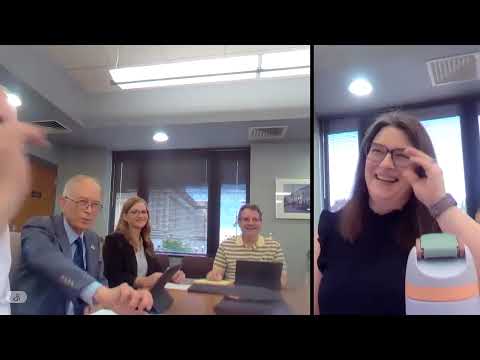
Kenosha Achievement Center has given notice it will end its paratransit (Caravan) service to the city and county in June, county staff told the Kenosha County Human Services Committee, raising concerns about continuity of rides for riders who use the ADA-required service.
Kenosha Achievement Center (KAC) has told both the City of Kenosha and Kenosha County that it will stop providing Caravan paratransit service in June, county staff reported at a Human Services Committee meeting. County staff said they are awaiting the city’s decision on next steps and are weighing plans to contract with KAC for county-only coverage if the city does not continue the joint arrangement.
The notice ‘‘they have given us a notice that they're going to end services’’ was relayed to the committee by Katie Hanks, identified in the meeting as the county’s quality analyst for human services. Hanks said KAC informed officials it is taking a ‘‘substantial loss’’ on the city contract and cannot continue under current terms.
The caravan service, also called paratransit, provides ADA‑required transportation within three quarters of a mile of bus routes; Kenosha County subsidizes similar door‑to‑door service for residents beyond that boundary. Hanks told the committee the county currently pays about 30% of the total Caravan cost while generating only 10–15% of the trips, and that the county’s funding for the service includes approximately $150,000: roughly $120,000 from the state 85.21 grant (Wisconsin Department of Transportation) and about $30,000 of county levy.
Why it matters: losing a single provider could force riders to call different numbers for city vs. county service and create disruptions for people who rely on the rides for medical appointments and other essentials. Hanks said the county prefers a single provider ‘‘for the sake of the people that ride’’ but is preparing alternatives if the city does not reach an agreement with KAC.
County staff outlined two near‑term possibilities: the city could negotiate with KAC to continue the joint coverage, or KAC could contract with the county to continue county‑funded service beyond three quarters of a mile from bus routes. Hanks said the county’s ‘‘plan B’’ would be to contract directly for the county’s portion of service if the city cannot make KAC financially whole.
Committee members pressed for rapid communication to affected riders. A supervisor noted the short notice could affect constituents’ upcoming medical appointments; Hanks said the county had received KAC’s notice on the prior Friday and that the city had met with KAC the same day. She said the county would update the public once the city’s decision is known and that staff expect to have more clarity ‘‘by the end of the month.’’
Context and funding details: committee members were told the county subsidizes roughly $150,000 of the Caravan program, most of which comes via the state 85.21 transit grant; the county’s levy contribution was described as about $30,000. Hanks said county staff could reallocate levy funds to a different model if needed, but emphasized the administrative and practical burden of splitting numbers and providers for riders.
Next steps: county staff are waiting for the City of Kenosha’s response and said they will report back to the committee and to the public. No formal county action or vote on the matter was taken at the meeting; the discussion was informational and flagged for follow up.