Get Full Government Meeting Transcripts, Videos, & Alerts Forever!
Get email alerts on the City Budget topic
No spam. Unsubscribe anytime.
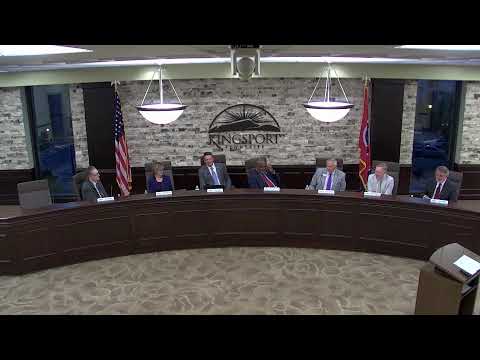
Kingsport adopts FY2026 budget with 33¢ property tax increase after contentious debate
Summary
The Kingsport Board of Mayor and Alderman adopted a $110.9 million general fund budget for fiscal 2026 that includes a proposed 33¢ property tax increase to restore lost revenue and fund paving, employee pay and infrastructure; the measure passed 5-1 following debate about internal cuts and impacts on fixed‑income residents.
The Kingsport Board of Mayor and Alderman adopted a $110,874,600 general fund budget for fiscal 2026 on June 3, approving a property tax increase that the city manager said is necessary to restore lost revenue and fund paving, employee pay and capital projects. The ordinance passed on its first reading by a 5-1 vote.
City Manager Chris, presenting the plan, said the recommended general fund budget “is $110,874,600.” He told the board that the city lost about $3.8 million in revenue after a recent state ratio appraisal and that, with sales tax revenue largely plateaued, “in order to generate that money, there has to be a tax increase.” The budget would reset property-tax revenue for the Kingsport portion of Sullivan County to cover operating needs, preserve the paving program and maintain competitive employee pay.
The vote followed a public hearing that included one speaker, resident Jay Schlage of Lynn Garden, who urged the board to consider impacts on elderly residents and people on fixed incomes if taxes rise. Schlage said many people “may not be able to deal with it” and asked the board to keep those residents in mind.
Alderman Colin Baker cast the lone no vote. Baker said he supports competitive pay and infrastructure but objected to placing a large tax increase on residents before the city demonstrates deeper internal cuts and savings. “If a tax increase is ultimately necessary, we should first demonstrate to the citizens that we've done everything possible to find savings within the existing budget,” Baker said, adding that he believes the board should “start that process before placing this large of a tax increase on our citizens.”
Several other members said the revenue loss left the city with limited options. Vice Mayor Duncan summarized how the 33¢ increase would be allocated: about 15¢ toward paving, roughly 14¢ toward employee pay and the remainder for operations. Mayor Montgomery and other aldermen said choosing not to raise taxes now would force more difficult personnel or service cuts later, and they cited the need to protect schools, public safety and paving.
City staff outlined specific uses for the new revenue: preserving the sustainable paving plan (including $2.5 million for resurfacing and $750,000 for addressing the worst segments), funding for intersection and bridge maintenance projects, and a plan to capture $750,000 to leverage capital bonds for roads, school facilities and bridges. Staff also said no new city positions are included in the budget; 17 new positions requested by departments were not funded.
The city manager and staff told the board that some previously planned capital — more than $19 million — was removed from the proposed bond issuance to reduce the budget impact and that one-time ARPA funding previously used for paving is exhausted. Staff said they expect to identify at least $500,000 in operating savings during FY2026 and will continue to seek further efficiencies to ease pressure in FY2027.
The ordinance was read in full at the meeting and put to a vote on first reading. The motion to adopt the FY2026 budget passed, with Alderman Baker voting no and the remaining six board members voting in favor or present as recorded.
The board scheduled an upcoming second reading of the budget ordinance on June 17, when final tax-rate setting and any technical adjustments will be considered. Staff said the county equalization process is ongoing and the final county equalized rate was expected within days of the meeting.
Why it matters: The budget restores recurring revenue the city says it lost after a state appraisal adjustment and addresses long‑deferred paving and pay pressures. The decision raises taxes for property owners and signals a multi‑year effort to replenish reserves and align pay with regional competitors.
What’s next: The board will consider the ordinance on second reading June 17 and staff will begin implementing provisions of the budget on July 1 if the board finalizes rates.