
House concurs on miscellaneous agriculture bill; extends deadlines for Ryegate biomass milestones
Get AI-powered insights, summaries, and transcripts
Subscribe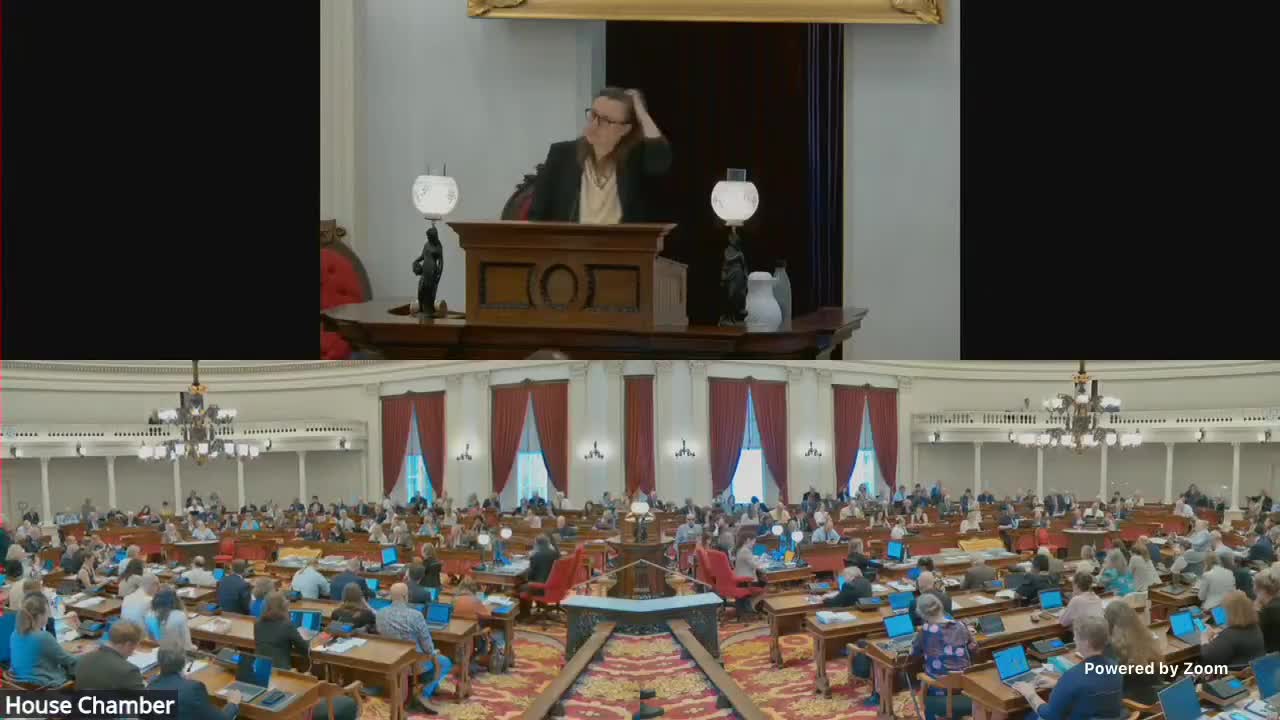
Summary
The Vermont House on the floor concurred in the Senateproposal of amendment to H.484, a multi-part agriculture bill, adopted a further House amendment and sent the measure to the Senate; the bill raises certain pesticide-product fees, expands paint producer-responsibility requirements and moves statutory milestone deadlines for the Ryegate biomass plant by one year.
House members voted to concur in the Senateproposal of amendment to H.484, an act covering multiple agriculture-related topics, and adopted a further House amendment before suspending the rules to message the action to the Senate.
The bill makes a range of changes affecting pesticide disposal fees, extended producer responsibility (EPR) for paint products, definitions of agricultural land for current-use classification, and permitting relief for the Rutland County Fair. It also contains a provision creating a one-year extension pathway for milestones tied to the Ryegate biomass electric plant(Section 16), including new deadlines for contracts, engineering certifications, construction plans, and on-site verification.
H.484 covers many discrete sections. Key provisions reported on the floor include: an increase to the annual fee paid by companies that sell pesticide products (from $200 to $250) to help reimburse solid-waste management entities for disposal of obsolete pesticides, with the Agency of Agriculture, Food and Markets (AAFM), in consultation with the Department of Environmental Conservation, directed to study funding options and the viability of an EPR organization and report to the Legislature by 12/15/2025; a stormwater-permitting change for the Rutland County Fair that retains the requirement for a 3-acre permit but waives a stormwater impact fee and a phosphorus offset where physical constraints prevent compliance; expansion of the existing paint EPR program from "architectural paint" to all "paint products," including aerosol and related coatings, and compensation for solid-waste management entities for collection costs; and changes to the current-use agricultural land definition tied to donation of farm crops thresholds.
On Ryegate (Section 16), the member from Manchester described the plant as a wood-burning biomass generation facility in Caledonia County that "contributes base load power to our grid, totaling about 3% of our state's total electricity consumption." The House heard that Ryegate is under new ownership and that the prior plan to increase efficiency using equipment from Spain is no longer viable because of tariffs and a canceled letter of intent to sell dried wood chips to a Canadian company. The new owners proposed an alternative plan using American-made equipment to capture waste heat to dry wood chips for on-site use; the House bill moves milestone deadlines out by one year to give the new owner time to implement the revised plan. The member from Manchester reported that the committee took "quite a lot of testimony" including from the new owner, the Public Utility Commission, the Department of Public Service, forest-industry representatives and logging contractors, and that the committee approved the requested extension on a straw poll vote.
On the floor the House adopted the further House amendment presented by the committee and concurred in the Senate proposal of amendment with the Housefurther amendment. Following the concurrence vote the House voted to suspend its rules and message H.484 to the Senate forthwith.
Discussion versus decisions: the floor report and votes constituted formal action to concur and send the bill to the Senate; the Ryegate language in H.484 modifies statutory milestone deadlines (creating new deadlines one year later) rather than approving specific construction contracts or equipment purchases. The bill directs studies and sets reporting dates (for example, an AAFM report by Dec. 15, 2025) rather than authorizing specific appropriations on the floor.
Votes at a glance: the clerk recorded the ayes as prevailing when the House concurred in the Senate proposal of amendment with further amendment; the body also voted to suspend rules to message the action to the Senate.
Proper names and statutes referenced in debate are cited in the bill text and calendar; specific certification and PUC verification steps for Ryegate were described without naming specific vendor contracts. The House report lists effective dates in the bill for different sections.