Get Full Government Meeting Transcripts, Videos, & Alerts Forever!
Get email alerts on the K 12 Education topic
No spam. Unsubscribe anytime.
Durham Public Schools asks Durham County for $15.98 million in local funding, cites bus driver shortages and facilities backlog
Summary
Superintendent Anthony Lewis and Durham Public Schools officials presented a request for $15,978,335 in local operating increases and asked the county to maintain an $8 million capital outlay allocation, stressing transportation, teacher pay and long-term facilities needs.
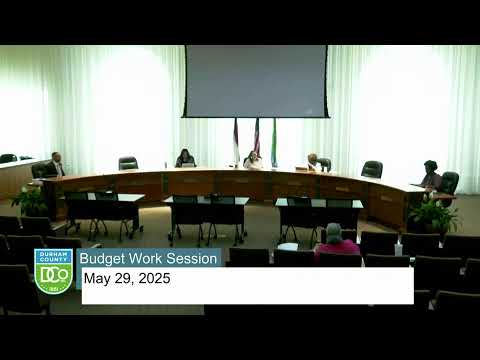
Durham Public Schools Superintendent Anthony Lewis urged the Durham County Board of Commissioners on Tuesday to provide additional local funding to help stabilize staffing and address aging school facilities as the district finalizes its 2025–26 request.
Lewis said the district’s request includes about $15.98 million in local ongoing and expansion items and asked the county to continue an $8 million capital outlay allocation. "Rebuilding trust within the community" and improving transportation, he said, were recurring themes from public listening sessions the district held during Lewis’s first 100 days in office.
The request breaks into three categories, Lewis and Chief Financial Officer Jeremy Teeter told commissioners: continuation costs for operating (their estimate of what it will cost to run the district next year), expansion items for targeted investments and a separate capital outlay ask. Teeter said the district assumed a 3% statewide raise for budget planning, then described how competing state proposals would affect that assumption. "We were dealing with a budget potential budget deficit of almost $34,000,000," Teeter said of conditions the district worked through after arrival of a permanent CFO.
Key local items Lewis and Teeter highlighted include a proposed $700-per-year increase to the local teacher supplement (to keep Durham competitive with nearby districts), a $2,000-per-year supplement for bus drivers to improve retention, continuation of local master’s pay and step funding to close a gap in Exceptional Children (EC) funding. The district asked the county for roughly $1.1 million this year to partially close an EC funding shortfall caused by the state’s 13% cap on EC funding; Teeter said Durham’s EC population is about 16.4% of enrollment and that full state funding of that count would have yielded roughly $5.5 million.
Lewis and Teeter described short-term measures the district has taken to stabilize finances, including a hiring freeze on nonrequired positions, temporary use of one-time resources such as a prior private donation, and a reduction in central-office positions. Teeter said state “trues up” payments tied to enrollment helped in the current year, but he warned county leaders that state budget outcomes sometimes are not finalized until after the county fiscal year begins.
Commissioners asked a range of questions about prioritization if county funding falls short of the full request. Commissioners and district leaders discussed trade-offs and the district’s contingency plans — for example, smaller supplements or phased implementation of some programs — and emphasized that any additional county funding must be shared with charter schools under state law.
Looking ahead, the district said it will continue the board-level prioritization exercise it used earlier this spring to rank expansion requests, and it expects to deliver more complete answers to several commissioner questions before next week’s deadline. Lewis also said the district is pursuing partnerships — including efforts to expand before- and after-school care with community organizations — to reduce transportation pressure and support families.
The commissioners did not take a formal vote on the school request during the session. County staff said the manager’s recommended budget includes a partial increase for the school system and that commissioners will continue to weigh additional options during the budget process.
For now, district leaders stressed maintenance and staffing concerns that they say are already affecting operations: bus routes that require more drivers, school buildings with HVAC systems beyond expected life cycles, and the need to fund a staggered approach to EC and other long-running cost pressures. "Retention is the new recruitment," Lewis said, describing investments intended to hold existing staff and address hard-to-fill roles.
County and school officials agreed to follow up with written answers to outstanding technical questions and to reconvene as the state budget process clarifies obligations that affect local planning.
Ending: Durham Public Schools officials asked the county for a mix of ongoing and one-time local funding next fiscal year, with commissioners saying they would continue to weigh the request alongside competing county funding demands and uncertain state and federal developments. The Board of Commissioners did not take a formal vote on the request during the meeting.