Get AI Briefings, Transcripts & Alerts on Local & National Government Meetings — Forever.
Alcohol board denies Club Astereo renewal, cites public nuisance after repeated police calls
Loading...
Summary
The Marion County Alcoholic Beverage Board voted to deny renewal of Club Astereo's alcoholic beverage permit after hearing evidence of repeated violent incidents, multiple hospital transports and numerous calls for police service tied to the venue.
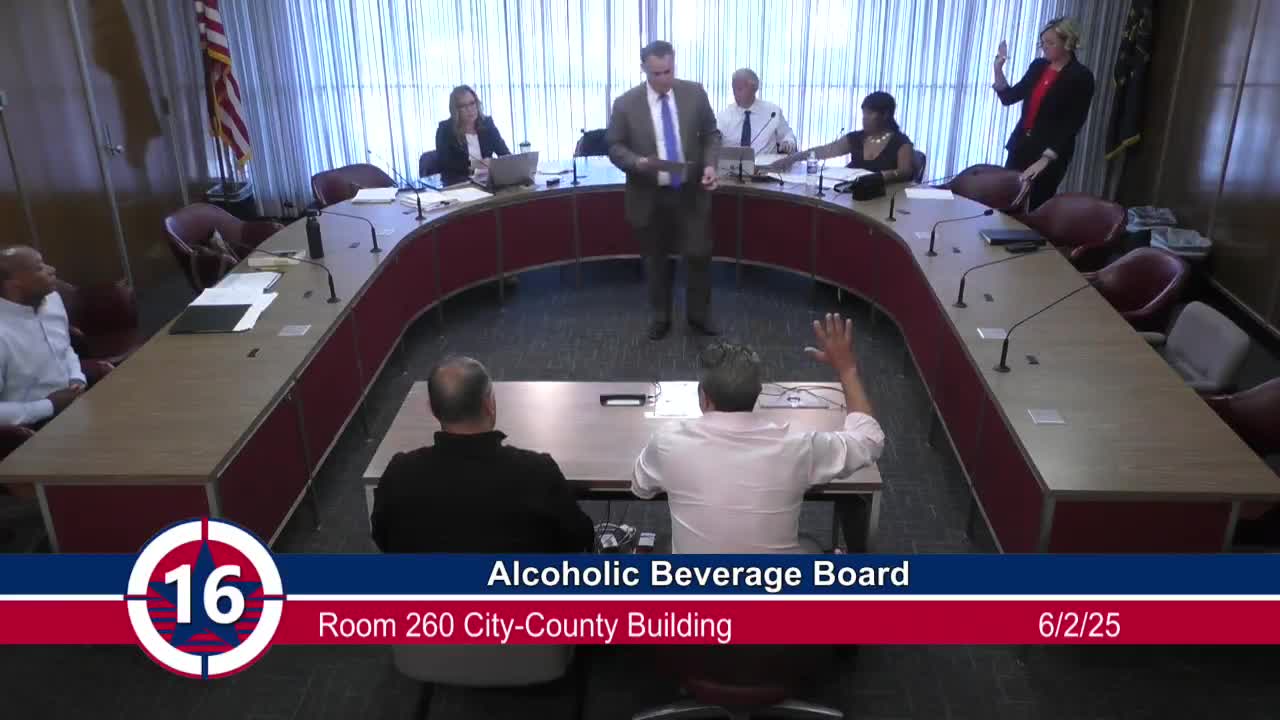
The Marion County Alcoholic Beverage Board on June 2 denied the renewal of Club Astereo's alcoholic beverage permit after an extended hearing in which law enforcement and board members cited a pattern of violent incidents and a steady stream of police contact tied to the club.
The board president, Tyler Graves, said the location had become a public-safety problem. "It has become a nuisance," Graves told the room before the panel voted to deny the renewal.
Detective Carrie Masten of the Indianapolis Metropolitan Police Department told the board the task force and IMPD had documented an escalation of incidents at the club over the past two years, including assaults and at least one event where officers were notified of a firearm threat. "The repeat ask of the business and its leadership has always been: what's the plan to prevent further incidents," Masten said, detailing case reports that listed stabbings or beatings, reports of shots fired, hospital transports and at least one post-arrest report of suspected cocaine recovered from an arrestee connected to an incident tied to the venue.
Clark Kirkman, attorney for OHSR Enterprises LLC (the licensee), acknowledged the February bar fight that led to a settlement and said his clients had taken steps since then: revised security, retraining and a formal corrective-action plan with excise and IMPD. "We implemented a no in-and-out policy, ID scanners, additional training and off-duty officers," Kirkman said, asking the board to give the business more time.
Board members pressed the owners and managers about specifics: how many off-duty officers were scheduled for large nights, how security and doormen were positioned, how intoxication was monitored on the floor and at tables, and whether management had consistent follow-up on incidents and written procedures. Accounts offered by managers and ownership described staggered removal procedures for patrons and new security contracts after the February incident; police and excise officials said the volume and violent nature of incidents nonetheless raised continuing public-safety concerns.
After more than an hour of testimony and back-and-forth between law enforcement and the licensee's representatives, a board member moved to deny the renewal on grounds of public nuisance. The motion was seconded and the board called the vote. The board's public record of the hearing reflects an affirmative vote to deny the renewal.
The board's action is a denial of the renewal application; the licensee may follow the administrative steps available under state law to appeal or to seek reapplication after addressing the concerns noted by the board and by IMPD and State Excise.
The hearing record includes multiple detailed police case reports and emails documenting task-force engagement, and the board specifically cited both the scale of calls for service and the risk to the public and to off-duty officers who had been staffing the location.
The board's ruling came after months of meetings between the licensee and law enforcement and after excise issued a notice of violation in February tied to a large fight that spilled into the parking lot. The board did not impose a shorter renewal or probation; it voted to deny the renewal outright.
What happens next: the denial removes the alcohol permit at the location unless the licensee successfully appeals or a court or the state agency intervenes. Board members said the decision was driven by public-safety judgments and the repeated, documented need for police resources at the site.