Get Full Government Meeting Transcripts, Videos, & Alerts Forever!
Get email alerts on the Mining And Resources topic
No spam. Unsubscribe anytime.
Senate advances bill to expand mineral exploration tax credit aimed at critical minerals production
Summary
The Utah Senate passed legislation expanding a mineral exploration tax credit intended to spur private investment in critical-mineral exploration and production in Utah, after sponsors said the change narrows misuse and excludes sand, gravel and evaporative Great Salt Lake operations.
SALT LAKE CITY — The Utah Senate passed legislation that expands an existing mineral exploration tax credit to encourage private investment in extraction of critical minerals found in the state.
Supporters said Senate Bill 234 broadens the post-production tax credit so companies can only claim it after production begins, reducing risk to taxpayers while making the incentive more usable for private investors.
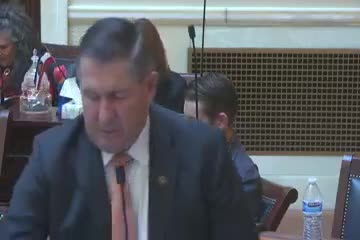
Sen. Jake Owens, the bill sponsor, told the Senate the measure is “a tool” to attract investment in critical minerals and stressed it is post-production: companies must invest millions before claiming the credit. Owens said Utah has “40 of the 50 critical minerals” identified on the federal list and named rare earth elements such as germanium and gallium as items of national interest. He said recent restrictions on Chinese exports increased urgency for domestic production.
The bill includes carve-outs and clarifications the sponsor highlighted during floor debate. Owens said the tax credit does not apply to sand-and-gravel operations and that mining on the Great Salt Lake would only be covered if operators use non-evaporative technologies — language meant to limit water impacts.
Sen. Mike Hinkins spoke in favor, saying the measure could support investment in technologies such as reverse osmosis that might help return water to the Great Salt Lake. Several senators pressed for more representation of Salt Lake County on the advisory commission tied to the program; Sen. Reebie said she would vote no because of concerns about local representation on the Unified Economic Opportunity Commission.
The Senate approved the bill on a roll-call vote. The clerk announced the tally as 25 yea votes, 3 nay votes, 1 absent. The bill will be transmitted to the House for further consideration.
Votes and next steps: The Senate vote sends SB 234 to the Utah House. Any changes there could return the bill to the Senate. The bill’s language attaches eligibility conditions and post-production timing for claiming the tax credit.
Context: Sponsors framed the bill as addressing national supply-chain and national-security concerns by encouraging domestic critical-mineral production. During floor debate proponents emphasized safeguards in the bill to limit water impacts and to exclude nonmetallic operations such as sand and gravel.