Get Full Government Meeting Transcripts, Videos, & Alerts Forever!
Get email alerts on the Education Funding topic
No spam. Unsubscribe anytime.
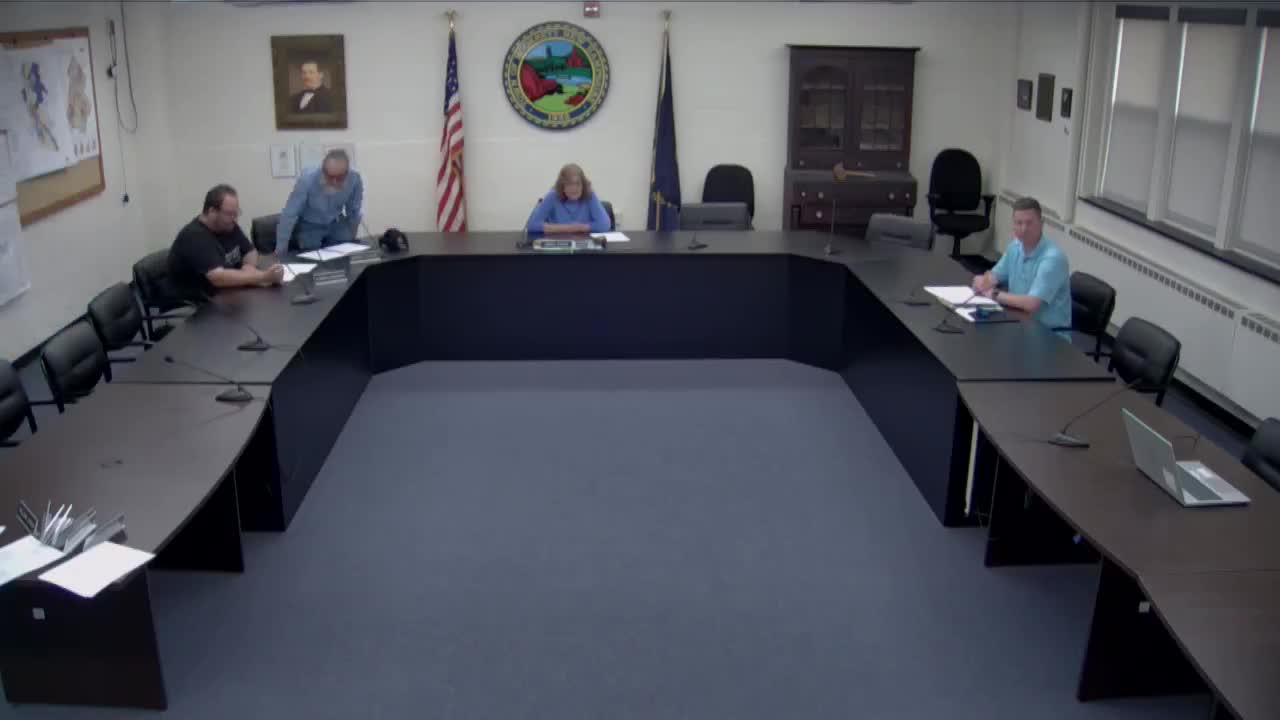
Hooksett school officials warn uncertain federal grants could force staffing, program choices
Summary
Hooksett school leaders told a quorum-lacking meeting that projected federal allocations for IDEA and other Title grants are roughly steady this year but future cuts — especially to Title II and Title IV — could create a roughly $654,000 shortfall and force staffing or program changes.
School officials in Hooksett told a meeting held without a quorum that uncertainty over federal grant allocations — chiefly the Individuals with Disabilities Education Act (IDEA) and Title I, II and IV funds — could force difficult budget choices for staffing and student services.
"We're projected to get a total of $461,436 for this coming year, which is what we were planning on receiving. So, that's, good news for us," said Bill Reerick, SAU 15 superintendent of schools, describing the district's initial IDEA allocation. School administrators cautioned, however, that other federal and state funding streams are in flux and that longer-term cuts could require moving positions currently paid from grants into the general budget or eliminating them.
The federal IDEA allocation funds special education teachers, paraprofessionals, contracted therapy and adaptive equipment, officials said. "All of the supplies that we need, typically come out of the IDEA grant because they're so uniquely customizable to each student," said Christine Osborne, Hooksett director of student services. Kimberly Sarfte, assistant superintendent, said Title II funds specifically support teacher and administrative professional development and mentoring, and that losing Title II would reduce that support.
Why this matters: The district uses federal grant dollars to pay for specialized staff and items not covered by the general fund. Replacing those dollars with local tax funding would require voter action or cuts elsewhere in the operating budget.
Officials described current allocations and recent changes. The district reported an IDEA allocation in the low-$460,000 range (two figures were cited in the meeting: $461,436 and $459,594). Title I funding this year was cited at about $193,176, down from $219,003.51 the prior year. Title IV allocations for the district were described as falling about 46% from roughly $48,000 to about $26,000 year over year. Administrators said the state Department of Education is the pass-through that receives federal ESEA and IDEA dollars and applies an allocation formula to districts in July and again in October for remaining funds.
Administrators warned the district faces a potential multi-fund shortfall if supplemental federal grants are reduced. "If they all go away this next year, then we're looking at roughly a $654,000 ish shortfall of funds," Sarfte said, referring to the combination of Title I, II, IV and IDEA-related supplemental funding that supports positions and programs beyond the district's operating budget.
School leaders described how the grants are used: teachers and paraprofessionals, speech providers, contracted therapeutic services, communication devices, wheelchair supports, sensory equipment, and testing materials. They noted that IDEA is intended to supplement, not supplant, local funding, and that federal funds carry reporting and compliance requirements. Reerick said the district has shifted one grant-funded teacher into the general budget in a prior year to remain compliant and to reduce reliance on volatile grant funding.
Administrators said they will begin budget work in August and present draft budgets to the board in October, but that they will not know final federal allocations for fiscal year 2026 until later. That uncertainty complicates decisions about whether to retain positions funded from grants or move them into the operating budget. The board is scheduled for a retreat on June 3 to consider how to allocate fund balance, including two voter-approved trust funds that officials said must be filled before other uses: a Special Education Trust Fund at $150,000 and a curriculum fund at $100,000.
Officials also raised concerns about a recent reduction in the state's catastrophic special-education aid (reimbursement), which they said dropped from roughly 90% reimbursement in prior years to the low 60% range for the most recent year — a change that lowers projected revenue the district had expected to use toward expenses.
The administrators concluded by thanking attendees and urging awareness: while the IDEA allocation for the coming year appears stable, changes to Title II and Title IV and to state reimbursement programs could create budget pressures in the next one to two years, and the board will need to decide how, or whether, to use reserves or local dollars to replace lost federal funds.
The district's leaders said they will continue reporting details to the board and present budget options in the coming months.