Get Full Government Meeting Transcripts, Videos, & Alerts Forever!
Get email alerts on the Wildfire Mitigation topic
No spam. Unsubscribe anytime.
State Parks outlines boundary vegetation modification permits; homeowners can apply to clear up to 130 feet from structures
Summary
California State Parks said homeowners adjacent to park lands can apply for a 'boundary vegetation modification right of entry' permit allowing modification up to 130 feet from habitable structures; the permit has a $150 fee and requires environmental review and contractor insurance.
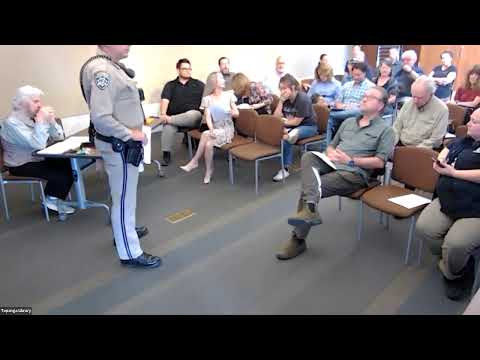
Richard Fink, District Superintendent for the Angeles District of California State Parks, and Noah (natural‑resources staff) briefed the meeting on brush‑management options on state park boundaries.
Noah said the Boundary Vegetation Modification Right of Entry permit allows property owners adjacent to state park land to request fuel‑modification work up to 130 feet from a habitable structure. "If you apply to this right of entry permit, one of our environmental scientists will come out, evaluate the site, provide fuel‑modification guidelines and work with your contractor," Noah said.
Noah and Fink said the permit is intended to protect public natural and cultural resources while enabling homeowners to reduce fire risk next to their properties. The parks representatives said they are expediting the permit process since the recent fire, and several applications are already in progress.
Fees and process: Noah said the permit fee is $150 and can be issued to individual homeowners or to groups such as homeowners' associations. Permittees must supply a contractor with appropriate insurance naming State Parks as additional insured. State Parks staff review the site and give written fuel‑modification guidance tailored to the location.
Why the state generally does not clear adjacent private property: Noah explained that state parks manage lands for the public trust — habitat, cultural resources and visitor access — and that clearing vegetation on private property is the homeowner's responsibility. The right‑of‑entry permit provides a regulatory path for homeowners to undertake boundary work with parks oversight.
Assistance and resources: staff directed residents to contact the Fire Safe Alliance, local Resource Conservation Districts, and the county supervisor's office for potential funding and coordination. Noah asked residents to email her for the application; she provided a phone contact for follow‑up.
Ending: State Parks said it will continue expedited reviews through the coming growing season to identify where active restoration or mechanical fuel modification is appropriate and urged residents to coordinate with the parks team before contracting work adjacent to park lands.