Get Full Government Meeting Transcripts, Videos, & Alerts Forever!
Get email alerts on the Finance Bond Refunding topic
No spam. Unsubscribe anytime.
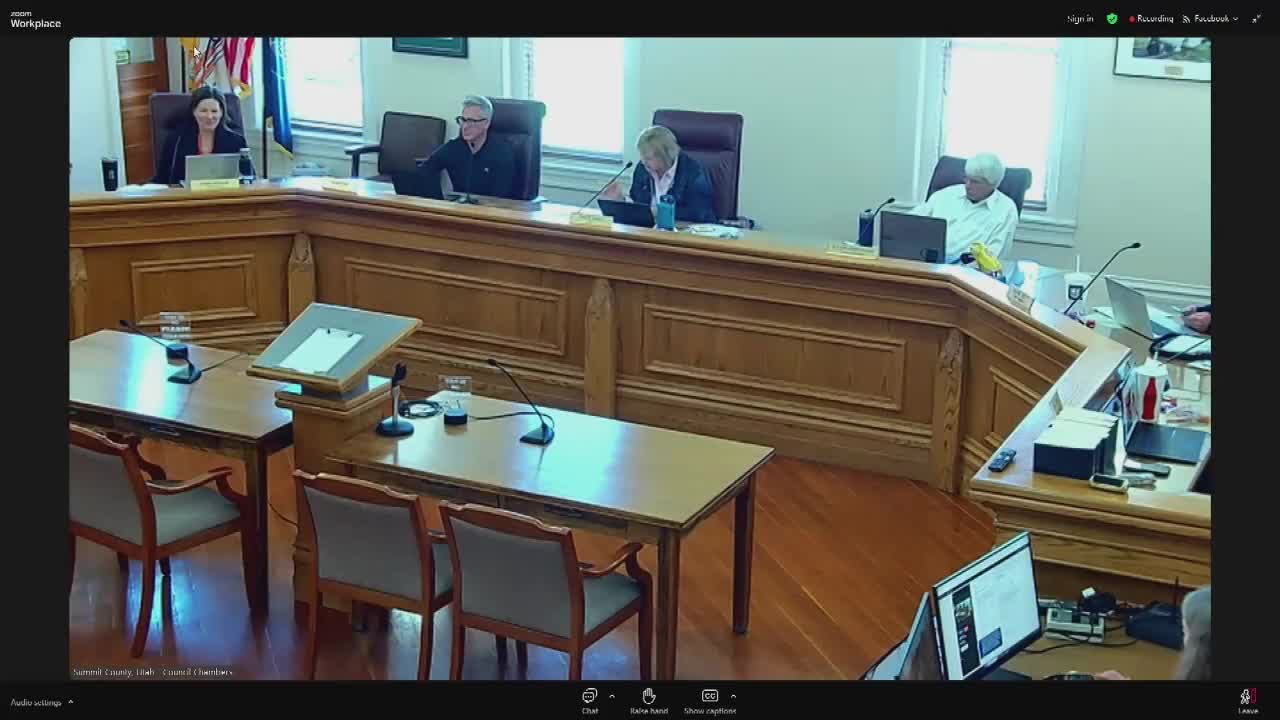
Council debates refunding $30M sales-tax bonds; tables decision for two weeks
Summary
Council members spent more than an hour questioning municipal and legal advisors on a proposal to refinance up to $30 million in sales‑tax revenue refunding bonds that Summit County issued in 2024.
Council members spent more than an hour questioning municipal and legal advisors on a proposal to refinance up to $30 million in sales-tax revenue refunding bonds that Summit County issued in 2024.
The presentation by Marcus Keller of Cruz and Associates and Brad Patterson summarized financial modeling that shows roughly $2.9 million in projected nominal savings (about $2.0 million on an NPV basis, or about 7.165% NPV) if the county sells a public-market refunding now rather than continuing the county's current direct-purchase structure. Advisors said the plan would not extend the term or increase the size of the bonds but would reduce annual debt service.
Why it mattered: Council members said the potential savings are substantial but flagged tradeoffs. The existing 2024 direct-purchase bonds were issued with an anytime-call feature the county paid to receive; several council members, notably Chris and others, warned that giving up the anytime call (or shortening a future call option) transfers a nontrivial value to investors that offsets much of the offered savings. Council members also pressed advisors on whether municipal bond market conditions would improve further, and on the risk that federal changes to tax‑exempt municipal bond treatment could affect pricing.
What advisors said: Marcus Keller and his team described an approach of moving the direct purchase into a public offering to take advantage of the county's strong credit rating and competitive underwriter bids. Marcus said the current true interest cost (TIC) on the outstanding bonds is roughly 4.96% and that current market projections put a refunded TIC near 4.20% (about a 70 basis‑point reduction). He and municipal advisor colleagues said the county's strategy could include running an underwriter RFP with multiple co-managers to push pricing down.
Councillors' concerns and tradeoffs: Council member Chris questioned how much of the projected savings come from surrendering the prior flexibility to call the bonds on short notice. The county had accepted a higher initial rate in 2024 to retain an anytime-call provision; several council members estimated that feature had cost the county roughly 20–50 basis points at issuance, and that restoring similar call flexibility in a refunding would reduce or erase much of the projected savings. Others, including Shane and Matt (county staff), said the parameters resolution before the council would not compel the county to issue bonds immediately; instead it would set limits and allow the county to proceed only if market conditions and savings thresholds were met. Advisors said call feature pricing (5-, 8-, or 10‑year call windows) would be tested in the underwriter RFP and could be included in comparative scales.
Next steps: Council members asked for more time and additional modeling (including how savings change with different call options and updated market prices). The council voted to postpone a decision and asked staff and advisors to return with refined numbers; the matter was pinned for two weeks.
Provenance: The council discussion and presentation began during the docket item on Resolution 2025-513 and extended across the session, including public exchanges with Marcus Keller (Cruz and Associates), Brad Patterson (bond counsel), county staff (Shane, Matt), and multiple council members. The council did not adopt the parameters resolution that day; instead it asked for more information and scheduled the item for reconsideration in two weeks.
Ending: The council left the matter open, instructing advisors to prepare comparative run-sheets for alternative call structures and to clarify the financial impact of preserving the current anytime-call feature versus the projected net present value savings.