Get Full Government Meeting Transcripts, Videos, & Alerts Forever!
Get email alerts on the Zoning Process topic
No spam. Unsubscribe anytime.
Commissioners back ending automatic postponements for zoning hearings to make delays discretionary
Summary
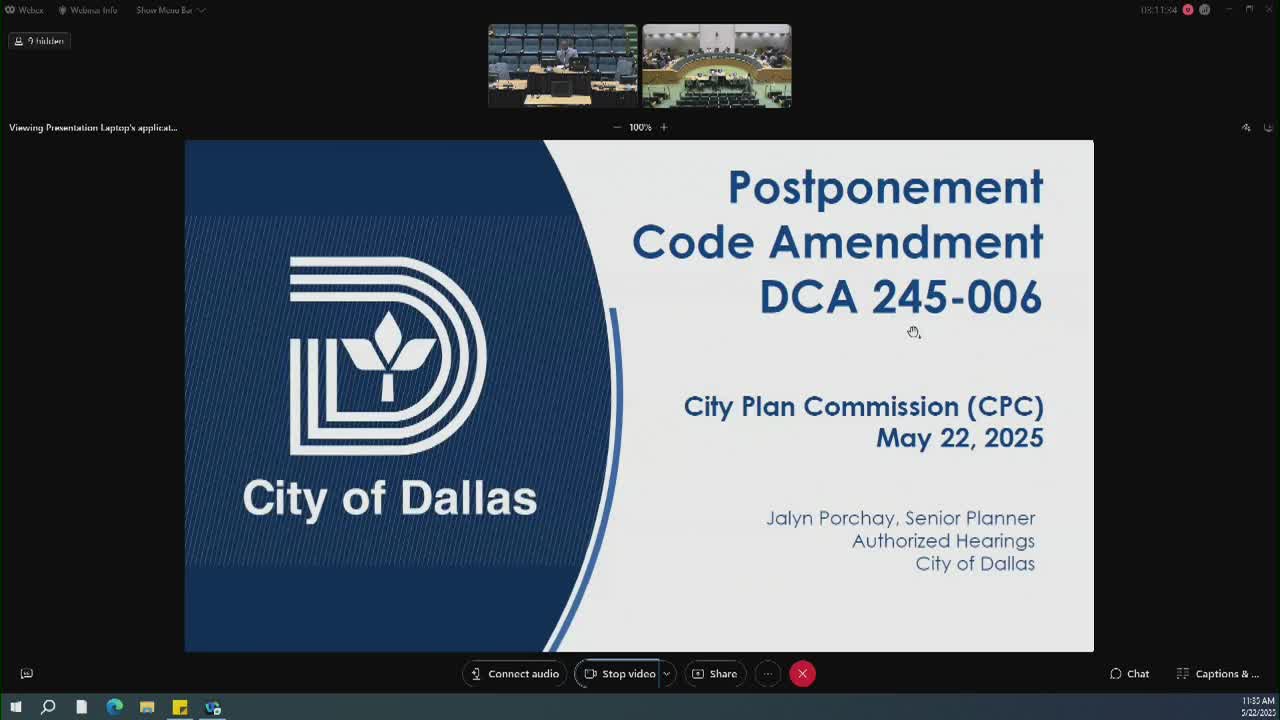
The Planning Department proposed eliminating automatic administrative postponements for zoning hearings. The commission approved the code amendment after debate about equity, costs to re-notice large area cases, and whether authorized hearings and ordinary zoning cases should be treated differently.
City planning staff asked the commission to amend the zoning rules to remove an administrative, non‑discretionary postponement process that allowed an applicant or notified property owner to pay a small fee (currently $150) and force a postponed public hearing. Staff said the re-notification costs for large authorized hearings—sometimes thousands or tens of thousands of dollars—exceed the postponement fee and that discretionary postponements at the hearing would improve transparency and reduce repeated re-noticing costs.
Staff noted that, from 2021–2025, roughly 25 zoning matters had been postponed, and several major authorized hearings had been postponed more than once—triggering costly second mailings and newspaper notices. The proposed change would eliminate the automatic administrative postponement (Section 51A-4.701(e)) and return the decision to the City Plan Commission and City Council as appropriate, who could grant a date-certain postponement on the record. Staff said the amendment matched practices in other cities and had ZOAC’s support.
Commissioners debated equity and process: some said removing the automatic postponement closes an avenue for ordinary citizens or small groups to delay a case; others said the process could be used strategically by opponents and that discretionary, on-the-record requests are more transparent. Several commissioners suggested a middle ground—higher fees scaled to the cost of re-noticing or different rules for large authorized hearings versus standard zoning cases. Staff said some cities require the requester to pay full re-notice costs; other municipalities allow an on‑the‑record request. ZOAC had recommended approval.
Outcome: The commission approved the code amendment to remove the administrative, automatic postponement, returning postponement decisions to the public hearing bodies.
Why it matters: The change shifts control of postponements from an administrative staff action to elected/appointed hearing bodies and is intended to reduce repeated re-notification costs for large-area rezonings and make reasons for postponement part of the public record. Commissioners asked staff to track exceptional costs and consider whether different rules should apply to authorized‑hearing (large area) cases or different fee structures.