Get Full Government Meeting Transcripts, Videos, & Alerts Forever!
Get email alerts on the Pollinator Gardens topic
No spam. Unsubscribe anytime.
City committee advances pollinator‑garden code changes after wide public comment
Summary
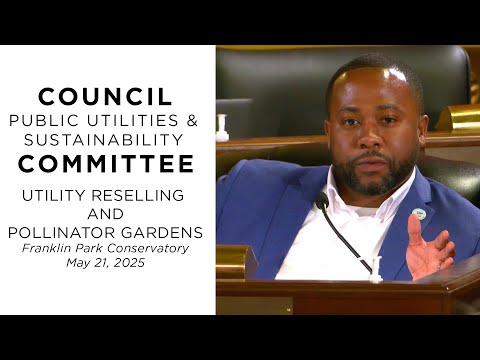
The Columbus City Council Public Utilities and Sustainability Committee heard testimony May 16 on proposed city‑code changes to allow pollinator gardens and clarify noxious‑weed enforcement.
The Columbus City Council Public Utilities and Sustainability Committee heard public testimony May 16 on proposed revisions to city code intended to make pollinator and native‑plant gardens easier to install and to clarify enforcement of the noxious‑weed standard.
Deputy Director Tony Celebrizi of the Department of Building and Zoning outlined revisions made after an earlier hearing. “We went ahead and removed the 50% maximum for the front yard, so the entire parcel can be a pollinator garden,” Celebrizi said. He added that the draft also removes a previously proposed 30‑inch buffer around property lines and removes shrubs from the definition of weeds. The draft retains vision‑triangle and sidewalk safety limits and adds language that distinguishes “live or dormant” plant material to address fall and winter plant appearance.
Advocates and neighborhood volunteers generally supported the changes but urged clearer, less subjective language for enforcement. David Rosemond, vice president of Friends of Allen Creek and Tributaries, asked whether the right‑of‑way or tree lawn between sidewalk and curb would be restricted and requested a clear list or guidance about what is allowed there. “What about green landscaping around the mailboxes that’s fairly typical that you see all over the community?” Rosemond asked. He also asked whether references to “native” plants would mean native to Ohio or to some other region.
Multiple speakers requested that pokeweed (pokeberry) be removed from any city list of “noxious weeds.” “Pokeberry should be removed from the noxious weed list immediately and encouraged as a beneficial and historically significant Ohio plant species,” said Ken Kaizen, who described ecological and avian benefits of the plant.
Local conservation groups praised the proposal while asking for small wording changes to reduce ambiguity. Craig Tuthman, president of Franklin County Pollinator Pathway, told the committee that his organization “finds [the proposal] to be a very positive improvement over the existing code” and urged referencing a dependable external noxious‑weed list so enforcement staff and residents have a single source.
Several residents described direct experience with code enforcement. Committee staff said enforcement is complaint driven: code officers respond to neighborhood complaints, document sites and close cases where a parcel appears to be an intentional pollinator garden rather than simple neglect. Celebrizi said the department will include the item in ongoing training and that officers have access to identification apps and prior inspection records when they review complaints.
Speakers also emphasized benefits for stormwater management, wildlife and children’s connection to nature. “Native plants and pollinator gardens…help to bring nature back into the city,” Bettina Cooper of NatureWise Columbus said, noting educational benefits for children. Former city and environmental practitioners urged the committee to adopt language that distinguishes intentional, maintained naturalized plantings from neglected lots.
The committee did not vote on any ordinance language at the hearing; staff said the draft will be refined based on testimony and circulated before returning to committee or the full council for consideration.
What’s next
Committee staff will post revised code language and written testimony on the council website and schedule follow‑up stakeholder meetings; staff invited residents to provide additional written comments.