Get Full Government Meeting Transcripts, Videos, & Alerts Forever!
Get email alerts on the Utility Reselling topic
No spam. Unsubscribe anytime.
Columbus committee hears residents, advocates on utility reselling, tenant harms
Summary
City committee heard testimony from residents, energy-policy advocates and housing experts describing how third‑party submetering and utility reselling can leave renters without consumer protections, disconnect recourse and access to assistance programs. Committee staff said the draft ordinance remains in revision and will incorporate feedback.
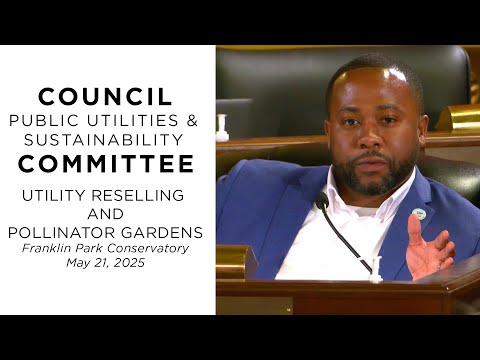
Members of the Columbus City Council Public Utilities and Sustainability Committee heard more than two hours of testimony May 16 on draft legislation to regulate utility reselling and submetering in the city.
The committee’s chair opened the hearing saying the draft remains under revision and that staff are taking testimony to inform the final language. “Everything that has been proposed is still in draft form as we take in additional feedback, before it is brought to the full council for a vote,” the chair said.
The Ohio Environmental Council Action Fund and several tenants and housing advocates urged the committee to tighten protections for renters who receive utility service billed by third‑party resellers rather than the regulated utility. “This proposed ordinance is a positive step towards equitable and transparent access to utilities in Columbus,” Nolan Rutschling, managing director of energy policy for the Ohio Environmental Council Action Fund, told the committee. Rutschling added that submetered customers can lose access to low‑income payment plans, disconnection moratoriums and the complaint process at the Public Utilities Commission of Ohio (PUCO).
Resident witnesses described personal and financial harm. Mark Witt, a regulatory lawyer who said he has litigated submetering cases, called the practice “an outrage” as it currently operates in parts of Central Ohio and warned that submetering companies often decline legal duties to the end‑use customer. “They do not owe any duty legally or otherwise to anyone who pays their bills,” Witt said, summarizing his experience in litigation and enforcement proceedings.
Several residents offered examples of how reselling played out in rental housing. Rachel Wenning read an anonymized tenant letter in which the writer said management applied a water charge against a rent payment and then served an eviction notice; Wenning said the tenant paid contested charges to avoid eviction. Another resident, Shranda Link, said she lost housing after disputed submetered charges affected her rental record. “Now I have bad rental history. When I was perfect before, now I’m homeless living couch to couch,” Link said.
Joe Ritchie, chief executive officer of Community Building Partners, said third‑party billing can undercut affordable‑housing goals by removing transparency and by making tenants ineligible for assistance programs. “Tenants often do not have a choice. They cannot shop for a different provider,” Ritchie said, adding that programs such as HEAP and other assistance often require a direct relationship with a regulated utility provider.
Witnesses and advocates urged the city to act while state legislation remains uncertain. Rutschling said there are competing bills at the Ohio Statehouse; one would remove PUCO jurisdiction over submetering companies while another would explicitly subject resellers to PUCO regulation. “We encourage council to act as if those bills could not move because they very well could not,” he said, and added that the city ordinance would not resolve every statewide issue but could protect vulnerable residents.
Committee staff said the draft ordinance still includes exceptions intended to allow legitimate submetering for common‑area charges and to permit a property owner or operator to participate in energy markets, while preventing price gouging. Staff encouraged residents with experiences to continue providing written testimony and to meet with council offices as draft language is revised.
The committee did not take a vote on the ordinance during the hearing. Members said the testimony would inform additional drafts before any measure is scheduled for a council vote.
What’s next
Committee staff said revisions will be posted and additional stakeholder meetings will be scheduled; the draft will return to the committee before a full council vote. The city encouraged residents with related concerns to contact the council office for follow‑up.