Get Full Government Meeting Transcripts, Videos, & Alerts Forever!
Get email alerts on the Grayson Repower topic
No spam. Unsubscribe anytime.
City approves $30 million contingency boost for Grayson repowering as federal tariffs bite
Summary
Glendale Water & Power won council approval to increase the ARB, Inc. EPC contract contingency by $30 million to cover potential tariffs on battery and equipment imports tied to the Grayson Repower project. The measure passed 4–1 after extensive public comment and debate over costs, timing and alternatives.
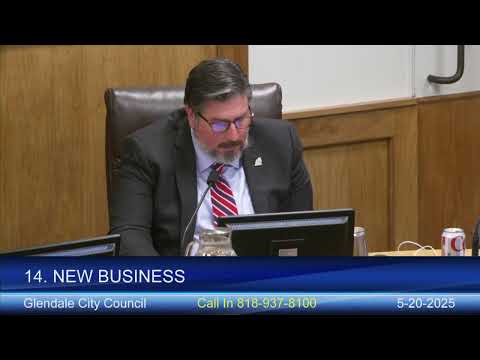
Glendale’s City Council voted 4–1 on May 20 to increase the contingency for the balance-of-site engineering, procurement and construction (EPC) contract with ARB, Inc. by $30,000,000, raising the contingency from $36,270,000 to $66,270,000 to address potential federal tariffs affecting battery and other equipment for the city’s Grayson Repowering project.
The move came after staff said recent and fluctuating U.S. tariff actions on imported equipment — including battery cells and related components — could add tens of millions in unplanned costs. Scott Mellon, acting general manager of Glendale Water & Power (GWP), told council "30,000,000 is an amount that GWP has determined can be funded without an impact on rates." He described three mitigation options under active consideration: add contingency now; modify the battery storage scope; or complete the project and defer battery purchases if tariffs make immediate procurement impractical.
Why it matters: The Grayson repowering effort will replace older generating units and add battery energy storage to support local reliability and greenhouse-gas goals. Council and residents pressed staff on whether the project still delivers the savings and reliability benefits presented when planning began and on the risks of committing to large battery purchases while tariff and supply-chain conditions remain unstable.
Public comment was sharply critical and skeptical. Several residents urged canceling or scaling back the battery element and returning to more gas-fired generation, arguing that the project’s costs have ballooned over time. Other speakers urged completing the project to maintain local reliability and to avoid contract penalties or damage to the city’s procurement queue.
Council debate focused on timing and consequences. Supporters said delaying a commitment now could cost the city its place in the global production queue and make it impossible to meet the project delivery schedule; opponents argued the city should not expand the contingency until tariff outcomes are clearer and suggested pursuing federal relief or tariff waivers.
Final vote: Councilmembers Asatrian, Brotman, Kasakian and Mayor Najarian voted yes; Councilmember Garpetian voted no. The resolution also authorized staff to modify the BEZ (battery energy storage) scope if necessary to remain within the new contingency.
Next steps: GWP will continue negotiations with suppliers, monitor tariff developments and pursue mitigation avenues the council discussed, including outreach to federal representatives and contractual discussions with vendors. Council asked staff to provide updated cost and schedule analyses as new tariff decisions or supplier commitments emerge.