Get Full Government Meeting Transcripts, Videos, & Alerts Forever!
Get email alerts on the Budget And Reorg topic
No spam. Unsubscribe anytime.
Administrative and Regulatory Affairs presents FY‑26 budget, highlights retirements and revenue risks
Summary
Director Tina Paez told the Houston City Council workshop that Administrative and Regulatory Affairs’ FY‑26 proposal relies on savings from recent retirements and reorganizations but faces falling franchise fees and staffing gaps in key frontline programs.
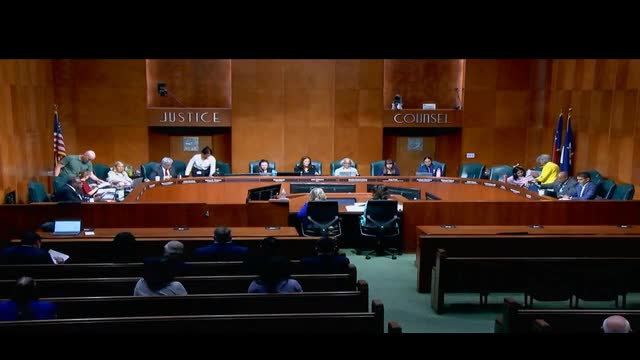
Director Tina Paez of the Administrative and Regulatory Affairs department presented the department’s proposed fiscal 2026 budget and a reorganization plan to the Houston City Council workshop on May 1, outlining personnel changes, one‑time and ongoing savings, and risks tied to declining franchise revenues.
The presentation said ARA will reduce general fund expenditures by about $9.3 million for FY‑26, driven largely by the consolidation of call centers and retirements. "The outcome based budget focuses on strategic objectives of the administration, and we align our programs to those strategic objectives," Paez told council members as she opened the slides on the department’s program and fund breakdowns.
Paez said 83 ARA employees were eligible to retire before April 28; 31 retired on May 1. The department estimates retirement‑related savings in the range reported to finance — roughly $3.3 million to $3.9 million depending on the accounting window — and described additional net savings from operational moves. She told the council that the consolidation of 3‑1‑1 with the Public Works water customer service call center moved staff costs into the central services revolving fund, lowering the general fund burden by nearly $6.8 million and yielding an estimated citywide FY‑26 general fund savings of almost $7 million from that consolidation alone. Paez also attributed about $4 million in FY‑26 savings to a favorable property insurance renewal negotiation.
Paez warned that some frontline and technical positions were hard to replace. "We had 31 employees who retired on May 1. Of those, eight were considered critical according to the city's criteria for critical employees," she said, citing positions such as 3‑1‑1 agents and specialty payroll and permitting roles. Filling call‑center agents, she said, takes two to three months to recruit and another two to three months to train, producing several months of lost capacity for some services.
The department reported specific revenue risks. Paez said franchise fees are projected to fall by roughly $4 million for FY‑26, with electricity franchise fees down about $1.5 million because city kilowatt‑hour usage declined year over year, and telephone and cable franchise fees continuing long‑term erosion because consumers are shifting to mobile and streaming services. She added that burglar alarm permit revenue continues to fall as doorbell camera systems reduce permit demand. Paez noted pending and recent state and federal activity that could further reduce franchise receipts and said litigation and legislative action affect recoveries and future collections.
The proposed FY‑26 ARA general fund budget remains heavily driven by a single transfer: BARC (the animal shelter) receives a planned transfer of $12.9 million that represents about 46% of ARA’s general fund budget, Paez said. Overall, ARA’s combined funds show a small net increase of about 2% citywide for FY‑26 because of cost escalations in restricted accounts and indirect charges.
Councilmembers pressed Paez on contingencies for disaster costs and reimbursements, and on whether declining revenues are being factored into long‑term planning. Paez said FEMA reimbursement has covered eligible expenses after declared disasters historically, but the city is preparing for increasing frequency of heat events and other incidents and will come to council for additional contract approvals when providers exceed $50,000 thresholds.
Paez and council members also discussed an expected $2 million annual revenue stream from asset disposition (vehicle auctions) that may be at risk if staffing reductions are not backfilled; Paez said she will request an exception to the hiring freeze for that unit because it produces general fund revenue the city relies on.
The presentation included program‑level details for ARA’s eight program areas — administrative services, BARC, Park Houston (on‑street parking management), regulatory permitting, risk management, central services revolving funds (including the consolidated call center), debt service/interfund transfers, and executive oversight — and noted changes to several performance measures under an outcome‑based budgeting approach.
Paez also described a department reorganization driven by span‑of‑control considerations and attrition. She said ARA completed a visual reorg exercise using magnets to map roughly 511 positions (including vacancies) and then reduced active roster counts to about 463 before the late‑April retirements, leaving about 432 active positions after May 1 changes. She said no ARA employee is more than five layers removed from the director and that the director’s direct reports were reduced from 12 to eight to meet administration directives.
The department appended restricted account details, demographic data and performance measures to the presentation for council review. Paez closed by noting administrative constraints on future revenue and the need for continuing compliance, auditing, and enforcement to recover delinquent franchise fees; she told council staff the department projects about $890,000 in additional collections in FY‑25 through those efforts.
The workshop moved afterward to more detailed questions about consolidated call centers, Park Houston operations, and BARC funding and operations.