EcoScholars: San Antonio’s $1 million school grants finish with 100 schools funded, 109 projects reported
Loading...
Summary
Solid Waste presented results from the EcoScholars grant program: 100 schools received awards for 109 projects totaling $1,000,000; $907,000 was distributed and 109 projects were substantially complete. The program emphasized simple applications, seed funding and educational outcomes tied to the Climate Action and Adaptation Plan.
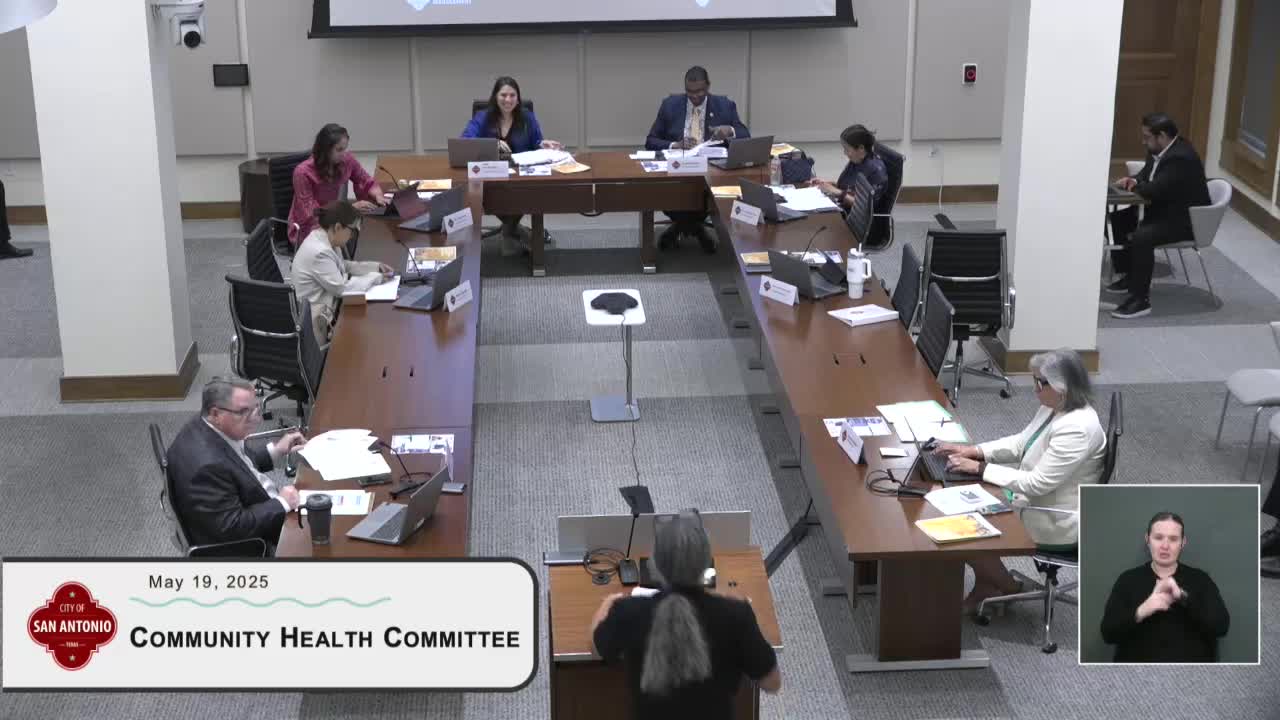
Josephine Valencia, director of Solid Waste, presented the conclusion of the EcoScholars grant program to the Community Health Committee on May 19 and said the city made $1 million available in grants to local schools for projects supporting the Climate Action and Adaptation Plan.
Valencia said Solid Waste designed the program after researching peer programs, consulting teachers and simplifying the application to reduce barriers. Grants were teacher-initiated but awards were issued to school districts with principal approval; the program provided half the award up front as seed funding and released the remainder when projects were substantially complete.
Valencia reported that 100 schools received grant awards covering 109 projects and that the program distributed about $907,000 of the $1,000,000 budget. She said 109 projects were substantially complete; the remaining funds and incomplete projects were mostly affected by school consolidations, closures, teacher retirements and reassignments that interrupted implementation.
Projects spanned food gardens, composting, recycling programs, curriculum purchases in English and Spanish, CO2 sensors and infrastructure improvements such as water cisterns, low-flow toilets and water-filling stations. Valencia said seven schools installed low-cost CO2 sensors designed to contribute data to a national air-quality network and several schools purchased solar- or hydroponic-garden systems and small livestock for educational programs.
Council members praised the program’s simple application, seed-payment structure and city staff support during implementation. Valencia said Solid Waste performed outreach through existing school relationships, provided individual application assistance and combined similar projects at a campus to increase completion rates. She said program staff evaluated projects with three panels of city employees organized by grade level (elementary, middle and high school). Valencia concluded that although the program was a one-year effort, many improvements provide lasting benefits to campuses and communities.
Valencia and committee members said the fund did not come from the Solid Waste operating budget; future replenishment would depend on budget priorities. Committee members asked whether staff had surveyed teachers post-award; Valencia said staff did not perform a formal survey but considered doing so for future iterations.