San Antonio outlines opioid settlement spending plan; city, county coordinate on Narcan, harm reduction and youth prevention
Loading...
Summary
City health officials presented data showing recent declines in fatal overdoses and described planned uses of opioid settlement money including Narcan distribution, harm reduction supplies via the county, youth prevention pilots and expanded medication-assisted treatment for people experiencing homelessness.
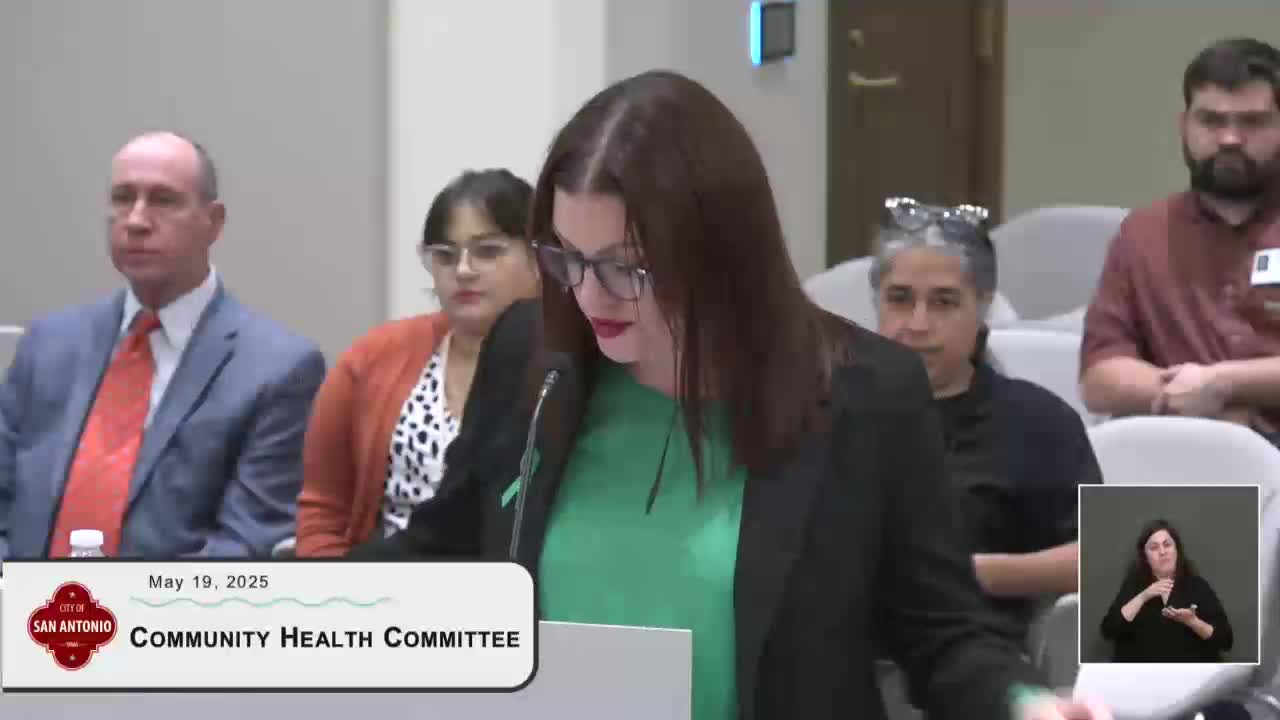
Jesse Higgins, chief mental health officer for Metro Health, told the San Antonio Community Health Committee on May 19 that national and local fatal overdose data show declines into 2024 while local stimulant-related deaths remain a concern. Higgins said the city is using an evidence-informed framework—prevention, harm reduction, treatment and recovery—to develop spending recommendations for opioid settlement funds and will present a spending plan to City Council for approval.
Higgins said Centers for Disease Control data included in the presentation show a continuing decrease in fatal overdoses nationally into 2024, while Bexar County’s stimulant (primarily methamphetamine) overdose deaths outpace state and national levels. She also cited the Bexar County Medical Examiner’s 2023 report showing that polysubstance use is common and that stimulants and opioids both pose local threats.
The presentation summarized the legal and funding context for settlement dollars. Higgins said the state has secured settlement payments and that a portion will be passed through to local governments; the city has been allocated funds from lawsuits it joined directly and has received an initial payment to date. Higgins noted the city is bound by settlement spending restrictions and is creating policy and budget recommendations mapped to the four-part framework.
Planned and existing uses described by Higgins include: an outreach-based medication-assisted-treatment expansion for people experiencing homelessness coordinated by the Department of Human Services; an RFP to procure and package Narcan (naloxone) kits and related training; an interlocal agreement (ILA) with Bexar County supplying harm-reduction supplies (needles, syringes and related items) for nonprofit distribution; a provider-directed animated storytelling campaign to reduce stigma, particularly addressing pregnant people who use substances; and a centralized substance-use resource portal in the San Antonio Community Resource Directory (SACRED).
Higgins said Metro Health executed a recent contract with a nonprofit to produce substance-use disorder and harm reduction guidelines and that Metro Health will serve as fiscal agent and data partner for some projects. She described a $100,000 contract that Metro Health executed with a nonprofit to develop guidelines and an ILA with Bexar County that the county matched, enabling distribution of harm-reduction supplies into the community.
Committee members asked how prevention programs would look, how Metro Health will measure outcomes and whether Narcan distribution will reach encampments, shelters and college campuses. Higgins said prevention work is in early design and described a proposed youth prevention effort that could include an evidence-based curriculum or gap analysis; she said distribution of Narcan kits will be organized through an RFP and that some outreach partners already conduct Narcan training during encampment outreach. Higgins described tracking measures tied to harm-reduction work—syringes returned, repeat clients, and surveys tied to vending-machine-distributed Narcan kits—but said nonfatal overdose tracking remains limited in local data systems.
The presentation stressed coordination with Bexar County, which Higgins said is distributing a larger pool of settlement funds and has adopted a similar resolution declaring overdoses a public health crisis. Committee members encouraged continued coordination with county jail reentry programs and outreach efforts near the county jail and shelters. Higgins said the next step is a formal spend plan to bring to City Council.
Notes and clarifications: presentation materials cited national CDC data and the Bexar County Medical Examiner 2023 report; several numeric figures given on funding in the presentation were not specified with units in the transcript and are recorded here as stated by the presenter rather than converted.