Get Full Government Meeting Transcripts, Videos, & Alerts Forever!
Get email alerts on the School Facilities topic
No spam. Unsubscribe anytime.
Pelham officials outline renovation options and possible May bond for Siwanoy; community voices concern over outdoor space
Summary
Pelham Union Free School District presented options to renovate Siwanoy Elementary and district facilities, including ADA fixes, classroom additions, HVAC upgrades, and possible geothermal; officials plan a May bond; parents urged the district to limit loss of outdoor play space and weigh costs and disruption.
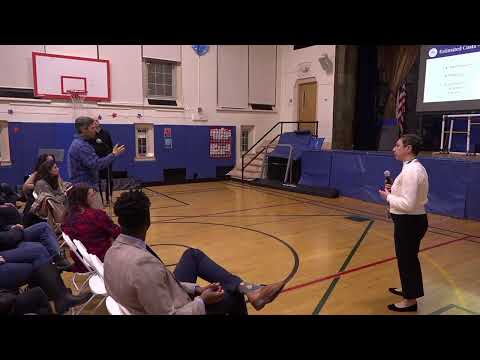
Pelham Union Free School District officials on Tuesday presented preliminary plans and cost ranges for renovating Siwanoy Elementary School and other district buildings and said the board expects to decide by March which projects to put to voters in May.
The district described a range of options for Siwanoy that all would address accessibility and aging infrastructure but vary sharply in scope, cost and construction disruption — from an ADA-only fix to a large-scale addition and partial demolition. Officials also outlined districtwide needs including heating-system replacement, roofing and masonry work, new science labs at Pelham Memorial High School, and possible air-conditioning and geothermal upgrades.
District officials said the building-condition survey and updated demographic studies guided the proposals. The board intends to refine the plans with architects and a newly hired construction manager, circulate a public survey, and present a final scope and budget to voters in May. Construction, if approved, would be staged and is not expected to begin before July 2026.
Why it matters: Siwanoy is one of the district’s oldest buildings and is not yet ADA compliant. Officials argued upgrades are necessary for safety, to reduce the risk of system failures and to provide instructional spaces that match current programs. Residents countered that some options would remove substantial outdoor play and community space and urged a smaller footprint and less disruptive phasing.
Key details and options
- Cost estimates presented by the district’s architects and construction manager put Siwanoy-specific infrastructure work in the roughly $8 million range for a substantial renovation option; other older buildings had estimated needs of about $7 million (Colonial), $11.7 million (Prospect Hill), $2.745 million (middle school masonry/roof) and $24.5 million (high school comprehensive work).
- The Siwanoy options shown ranged from "A" (ADA-only work) to "D" (a full replacement/new building). Two midscale options were highlighted: Option B — a two-story addition and full renovation that would add classrooms and a cafeteria and yield a net gain of about two classrooms after accounting for space lost to new elevator shafts; and Option C — a larger reconfiguration with a bigger addition that would produce a net gain of roughly four classrooms.
- On the high school side, the district showed options to add a student commons connecting the high school and middle school on the Ingalls Field side and to add multiple science labs. Smaller and larger versions were presented; the board estimated a range of roughly $34.5 million to $44 million for the higher-end high-school options shown.
- Heating, ventilation and air-conditioning: The four oldest district buildings use steam systems at or near end of life. The district said replacing in-kind is possible but recommended converting to hydronic (hot-water) systems to support future air-conditioning. Preliminary estimates provided to the community: air-conditioning for the three elementary schools would add just over $14 million; the high school about $15.5 million. Adding a geothermal system was presented as an additive option (rough estimate $12 million) with potential offsets: the architects estimated about $9.5 million of that geothermal cost might be offset by grants, rebates or tax incentives, but noted those revenues are not guaranteed until pursued.
- Debt and tax impact: District staff told the meeting that upcoming reductions in existing debt service create a window to borrow without increasing taxes. The district cited a near-term debt-service drop that could permit up to $10 million of tax-neutral borrowing and a later drop (when the middle-school debt is retired) that could permit about $55 million more, for roughly $65 million of borrowing the district called “tax-neutral” under current forecasts. Assistant Superintendent Jim Ricky said, “the immediate debt service that's dropping off is about a $600,000 amount every year. The second tier is about $2,600,000 per year.”
Community concerns and logistics
Parents and neighbors raised two recurring concerns: loss of outdoor/playground space and construction disruption. Adam (resident) urged the district to prioritize preserving outdoor space, arguing the site is too small for the largest options and suggesting a reduced version of Option B that would add fewer classrooms and preserve playgrounds. “This site is not the right site for” a much larger build, Adam said, urging a smaller footprint.
Several parents said play and outdoor time are especially important for students with special needs; one asked whether moving a high-needs special-education class between buildings would harm continuity. The district noted a plan to design space so that certain special-education programs could remain at Siwanoy rather than move between schools.
Construction timing and phasing questions dominated community remarks. The district’s architect, Walter Hauser of KG and D, said estimates are preliminary but “any addition is gonna take in a minimum probably 16 to 18 months to construct,” and that the larger Option C would require more complex "musical chairs" phasing and could extend the schedule by about 50 percent compared with a B-style addition. District staff and the construction manager said interior renovations would be scheduled for summers when students are not in the building and that exterior work could proceed during the school year behind secured fencing and safety protocols.
Energy and long-term savings
Architects referenced a NYSERDA-funded study and federal incentives in discussing geothermal. Walter Hauser summarized a commonly cited lifecycle view: in some studies geothermal had higher upfront costs but a favorable long-term payback; one example study showed geothermal could be about 10% more expensive over a 25-year window before incentives and about 18% cheaper over that same period if applicable tax incentives were available. The presenters stressed that incentives cannot be guaranteed until pursued through proper applications.
Next steps
District staff said they will incorporate public feedback, update the design options with the architects and construction manager, and publish a survey for broader quantitative feedback. The board expects to narrow the bond scope by late March and, pending that decision, put a proposition before voters in May. If approved, design approvals with the State Education Department and bidding would follow; the earliest construction start projected by presenters was July 2026.
Ending
Board and district officials closed by encouraging continued community input and additional walkthrough sessions. No formal decisions or bond question were taken at the meeting.