Get Full Government Meeting Transcripts, Videos, & Alerts Forever!
Get email alerts on the Portrait Of A Learner topic
No spam. Unsubscribe anytime.
Region 15 board unveils draft 'Portrait of a Learner,' seeks public comment
Summary
The Regional School District 15 Board of Education reviewed an initial draft of a districtwide "Portrait of a Learner" on Jan. 27 and opened the document for public comment; the committee plans to embed the portrait into routine K–12 curriculum review cycles rather than create a standalone policy.
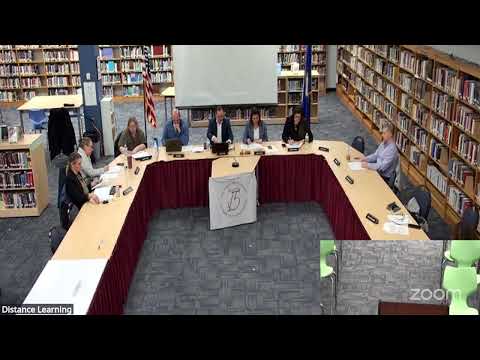
The Regional School District 15 Board of Education reviewed an initial draft of a districtwide “Portrait of a Learner” during its Jan. 27 meeting at the Pomprow High School Media Center and will post the draft for public comment.
Board presentation lead Mr. Smith told the board the portrait is the result of work that began in August, included roughly 600 survey responses, multiple focus groups and a steering committee that met through December. The committee includes teachers, parents, administrators and students; Mr. Smith named Rio Milo, Evan Nelson, Don Rabuano, Jason Zurich and Amy as members who participated in the steering work.
The board heard that the portrait intentionally uses the phrase “learner” rather than “graduate” so it applies to students, staff, parents and community members at every grade level. Mr. Smith described the portrait as centering attributes such as critical thinking, creativity, collaboration, curiosity and ethical contribution, and said the committee added clarifying language to explain what those broad competencies look like in practice.
"We didn't want this to be something that lives on a shelf," Mr. Smith said, describing the committee's intent to make the portrait practical and usable in classrooms and curriculum documents.
The presenter outlined the process that produced the draft: a districtwide survey in the fall that yielded the roughly 600 responses; follow-up focus groups with staff and students; steering-committee meetings to prioritize attributes; and iterative drafting. The facilitator for the process, Dr. Lauren McEwen, is incapacitated and was not at the meeting; Mr. Smith said McEwen synthesized committee input and helped produce draft wording. Committee members confirmed the draft reflects the feedback they reviewed.
Board members asked how the portrait will move from a high-level statement into classroom practice. Mr. Smith said the next step is a public comment period and then development of grade-level progressions and "I can" statements that spell out what each competency looks like at elementary, middle and high school levels. He described the implementation path as tied to the district's normal curriculum-writing cycle — an annual process for some changes and a multi-year review for larger curriculum revisions.
Committee members and board members emphasized that the portrait is intended to be a living document to be embedded into curriculum and policy updates rather than a one-time aspirational statement. The draft will be posted on the district website for public comment; Mr. Smith said the steering committee will review public input before the board considers formal adoption.
The board also heard that the steering committee used a mix of qualitative and quantitative evidence, and that the draft wording was refined with multiple iterations. A student on the committee volunteered to design a logo incorporating the portrait's attributes.
The board was given a one-page PDF of the draft and told the same document will be posted online for comment. After the public comment period, the district plans to develop grade-level competency progressions and identify how the portrait's language should appear in curriculum documents and select policies. No adoption vote was taken on Jan. 27.
Next steps: the draft will be posted for public comment, steering-committee members will review feedback, and the district will begin mapping the portrait into curriculum review cycles and classroom "I can" statements as part of ongoing curriculum work.