Get Full Government Meeting Transcripts, Videos, & Alerts Forever!
Rapid City Area Schools warn state aid could drop $2.2M despite proposed teacher-pay increase; board opposes voucher bill, backs school-lunch funding
Summary
At a board meeting, the district's chief financial officer said state aid could fall roughly $2.2 million next year because of enrollment declines and rising property valuations; the board voted to oppose House Bill 1009 (a voucher proposal) and to support a state bill to cover reduced-price school lunches.
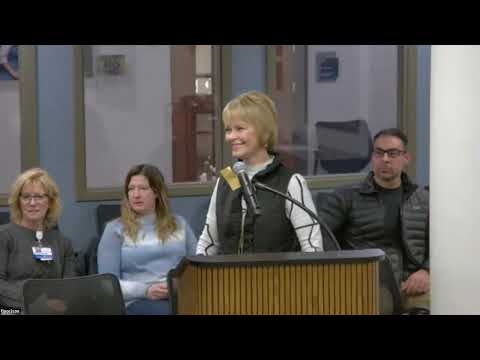
Rapid City Area School District 51-4 Board members heard a detailed budget briefing and legislative update Wednesday in which district officials warned that, under current assumptions, state aid could decline by roughly $2.2 million for fiscal 2026 even as the state's recommended target teacher salary rises.
Chief Financial Officer Mr. Sasse told the board the district budgeted about $37.8 million in state aid for the current fiscal year and that, applying the governor's recommended 1.25% increase to the state's target teacher salary while holding other formula inputs constant, the district's state aid would fall to about $35.6 million next year.
"In the current fiscal year, fiscal year '25, we've budgeted $37,800,000. Under the applied conditions of this formula, we'd be looking at about $35,600,000 in state aid, which is a year over year decrease of about $2,200,000," Mr. Sasse said.
Why it matters
Board members were shown how the state's school funding formula combines enrollment counts, the legislatively-set target teacher salary, overhead rates and local effort (property-tax-derived revenue) to calculate a district's state aid. The district's presentation emphasized that a legislative increase to the target teacher salary does not translate directly into increased state aid for every district because the formula can produce a smaller "total general state aid need" when enrollment falls and property valuation rises.
Mr. Sasse said the district submitted a conservative fall enrollment estimate of 12,195 students for next year, reflecting a continuing enrollment decline. He gave the example of the target teacher salary…
Already have an account? Log in
Subscribe to keep reading
Unlock the rest of this article — and every article on Citizen Portal.
- Unlimited articles
- AI-powered breakdowns of topics, speakers, decisions, and budgets
- Instant alerts when your location has a new meeting
- Follow topics and more locations
- 1,000 AI Insights / month, plus AI Chat