Get Full Government Meeting Transcripts, Videos, & Alerts Forever!
Get email alerts on the Retiree Healthcare Opeb topic
No spam. Unsubscribe anytime.
Consultant tells Hubbardston select board retiree-health liability would show as about $1.2 million; study recommends plan and modest annual funding
Summary
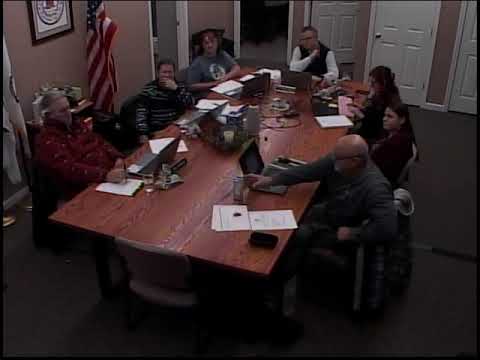
Parker Elmore, president of Odyssey Advisors, told the Town of Hubbardston Select Board on Dec. 16 that if the town were to offer retiree health benefits, “the liability that would go on your books is about a million 2.”
Parker Elmore, president of Odyssey Advisors, told the Town of Hubbardston Select Board on Dec. 16 that if the town were to offer retiree health benefits, “the liability that would go on your books is about a million 2.”
Elmore presented the results of an actuarial study the board authorized using $3,500 in ARPA funds. He said the report is informational only and does not commit the town to adopting a benefit. “These things are not cheap. I mean, I'm not gonna lie to you. They're not cheap,” he said, and urged the board to weigh both the direct cost and the soft-dollar effects of turnover and recruitment.
The study estimated that, if Hubbardston adopted an OPEB benefit, initial annual cash costs in the first 10–12 years would be roughly $50,000 a year and could grow over the long term; Elmore gave an illustration that 30 years out the annual cash cost could be on the order of $83,000 in today’s dollars. He said the study assumed a 60/40 employer/employee cost split similar to many Massachusetts communities and that most retirees (he estimated “80–90%”) elect to keep employer-sponsored coverage after they reach Medicare age.
Board members and staff asked about mechanisms that other towns use to limit costs or eligibility. Elmore said some communities require employees to be enrolled in the town’s active health plan for a set period before they can vest for retiree coverage, but he cautioned that such rules generally do not save much because employees close to retirement often enroll just before they leave. He also said state law limits how much towns can require retirees to pay and noted an industry practice of assuming employees will pay roughly 40% of the premium in his examples.
On funding strategy, Elmore described how establishing a funded OPEB trust lowers the reported liability through a higher assumed discount rate (the report referenced how invested assets change the present value calculation). He recommended the town adopt a written multi‑year plan and suggested a modest starter contribution — “some really neighborhood, you know, $20 to $25,000 a year and find a way to increase that by 4 or 5% a year” — so auditors and rating agencies can see a credible pathway to funding the liability.
Select Board members and staff discussed next steps. Nate (staff member) and Mary (staff member) said the board would digest the report over the coming weeks and consider bringing a policy or warrant article to a future meeting or town meeting for further deliberation. Elmore said the mechanics would include adopting the municipal enabling language (he referenced Section 32B) and establishing a trust; he offered to return if the board wanted more detailed scenarios.
The presentation prompted several practical questions from board members, including how retiree coverage would interact with Medicare at age 65 and whether offering benefits would improve retention for police and other public-safety hires. Elmore emphasized the retention argument: when 98% of peer communities offer retiree health coverage, “it’s very difficult to retain and recruit people if you don't offer these benefits.”
The board did not take a vote on OPEB on Dec. 16. Members indicated they would continue deliberations after the holidays and consider more detailed funding options and policy language at a future meeting.
The study was paid for with board-authorized ARPA funds, and Elmore encouraged officials to contact his firm with follow-up questions.