Get Full Government Meeting Transcripts, Videos, & Alerts Forever!
Get email alerts on the Business Licensing Massage Ordinance topic
No spam. Unsubscribe anytime.
Sacramento County updates massage business rules, tightens distance rules and adds camera, certification requirements
Summary
The Board of Supervisors voted unanimously to introduce changes to the county's massage establishment ordinance and related zoning code, raising provider certification requirements, clarifying inspection powers and narrowing some distance exemptions while adding a new limited pathway for sole providers in business-professional zones.
The Sacramento County Board of Supervisors on Dec. 10 introduced changes to the county's massage-establishment ordinance and approved related zoning amendments aimed at limiting illicit activity tied to some massage businesses while preserving pathways for compliant providers.
The ordinance text forwarded by staff and accepted by the board would require new massage providers to hold certification from the California Massage Therapy Council (CAMTC), tighten distance-separation rules for establishments and permit a single fixed interior security camera aimed at reception areas. The board also approved a zoning-code amendment that creates a limited path for sole practitioners to operate in business-professional (BP) zones in small spaces.
Those changes come after months of outreach between county finance, business licensing, planning staff and local providers and follow a Planning Commission recommendation to approve the zoning updates with some conditions. County staff said the changes respond to a continued, measurable problem: "We have had 33 revocations of massage licenses over the past two years," Finance Director Chad Rindy told the board, using county business-licensing records to justify tighter rules.
Most important changes - Certification: New providers would have to be CAMTC-certified; existing county-licensed providers who lack CAMTC certification would be allowed to continue as "legacy providers" so long as they maintain county licensure, CPR and insurance. Staff said local cities such as Citrus Heights, Rancho Cordova and Roseville already require CAMTC certification. - Distance separation: The ordinance retains a 1,000-foot separation requirement between primarily massage businesses but the board approved language clarifying that the separation does not apply to an establishment in which the owner is the sole provider and no other provider conducts services at that location. Staff said the rule is intended to prevent repeat operators with prior adverse actions from opening new, nearby establishments under different business names. - Cameras and inspections: The board approved language allowing a fixed video device oriented to reception areas for staff safety; the device must be fixed (not mobile or directed to serve as an "early warning" of inspections) and use in that manner would be prohibited. County staff said the change responds to providers' requests for better in-house safety measures while protecting inspection integrity. - Fees and penalties: Staff proposed a revised fee schedule and added the authority to levy administrative penalties (up to $500 per violation) and reinspection fees. Finance staff said the fee proposal was lowered after stakeholder talks and that penalties and reinspection fees should reduce the overall load on compliant businesses. Specific final fee amounts were not finalized on the floor and were set to be returned with the ordinance for second reading. - Zoning carve-out for sole providers: Planning staff presented an amendment to the zoning code that allows a sole practitioner to operate as a primary use in BP zones provided the operation is small (the board asked staff to include a 400-square-foot threshold as the initial guideline and to allow a minor use permit for exceptions).
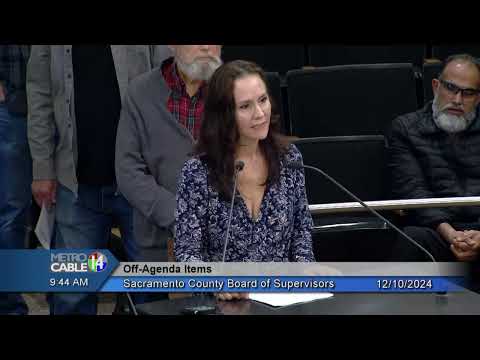
Public comments and industry response Public commenters included practicing massage therapists and representatives of the California Massage Therapy Council (CAMTC). Kim Austin, introduced as an industry representative, said: "We are health care workers. We're not criminals." CAMTC's representative, Beverly May, said the council would support implementation and monitor the changes.
Providers who spoke urged the board to protect pathways for sole proprietors and to avoid imposing requirements that would force small practitioners into larger, more expensive facilities. Several practitioners in public comment requested explicit recognition for sole providers who lease shared suites and have separate treatment rooms; the board directed staff to craft language that allows sole providers to share a building while remaining individually inspectable.
What the board decided and next steps The board directed staff to incorporate the agreed changes (CAMTC requirement for new providers, legacy-provider protections, the revised distance-separation language for sole-owner providers, the fixed-camera language and the BP-zone sole-practitioner pathway) and to return with the ordinance for second reading and final adoption on Jan. 7, 2025. Planning staff will also finalize the zoning-code amendments (which the board approved on a parallel motion) and the county will finalize the fee schedule and enforcement mechanics.
Board members emphasized balancing public safety with the livelihoods of legitimate providers. Supervisor Desmond said he wanted to avoid "hamstringing the legal providers" while seeking tools to drive out illicit actors, and several supervisors pressed staff to ensure inspection and enforcement capacity matched the new rules.
County staff noted they will refine inspection procedures to test that fixed cameras are not being used as remote early-warning devices and said they could return with process-level changes if the technology evolves. The county also said it would coordinate with the California Massage Therapy Council to monitor implementation.
Ending The ordinance and zoning amendments were moved and approved unanimously as the board's first reading actions; staff will return with a second-reading package on Jan. 7, 2025, including finalized fee numbers, implementation details and any technical edits requested by county counsel and planning.