Get Full Government Meeting Transcripts, Videos, & Alerts Forever!
Get email alerts on the Taxation topic
No spam. Unsubscribe anytime.
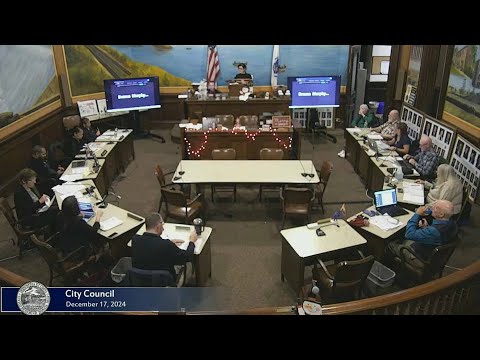
Holyoke council adopts 1.75 tax classification shift, approves stabilization and sewer transfers to balance budget
Summary
The Holyoke City Council voted Dec. 17 to adopt a 1.75 tax classification shift for fiscal 2025 and approved transfers including a $927,778 move from the general stabilization fund to capital stabilization and a sewer budget subsidy. Council debate focused on timing, use of stabilization funds and bond counsel advice.
The Holyoke City Council on Dec. 17 voted to adopt a 1.75 shift in tax classification for fiscal year 2025 and approved a package of transfers the mayor said would balance the budget and avoid raising the overall levy further.
Councilors approved a transfer of $927,778 from the city’s general stabilization fund to the capital stabilization account and separately approved a subsidy to the sewer budget, with the council setting the tax shift that lowers the residential and commercial rates to the levels presented by the auditor and mayor.
The votes came after a lengthy discussion about timing and proper process for setting the levy and classification. Councilor Jourdain urged the council to demand better timing and data from administration in future years, saying the council had been forced to act late in the year because free-cash certification and other financial steps had not occurred on the usual schedule. "We should not set the shift until they give you a levy," Jourdain said, arguing the council was being asked to vote without full numbers.
Councilor Bartley said bond counsel had told him the preference is not to use stabilization funds to cure operating deficits, and he said he had shared that advice with the council president. "She was gracious enough to reply, very quickly, and her reply was her strong preference is not to use stabilization," Bartley said. Bartley nevertheless voted for the sewer subsidy and other measures in the package.
Mayor (name not specified) told the council he did not want to use ARPA funds to reduce the levy: "I have, no interest to, use ARPA dollars to reduce the levy," he said, while explaining that the path approved preserved interest earned in stabilization and avoided a direct tax increase. The mayor also urged continued cooperation between the council and administration.
Councilors ultimately voted to advance the three-item package (transfer to capital stabilization; subsidy to the sewer budget; and setting the FY25 Minimum Residential Factor/shift) and later approved the final tax shift. The council president and auditor explained the mechanics for publishing tax bills on time and said the shift choices presented would reduce residential and commercial rates shown on the estimator while recognizing that property revaluations and budget decisions could still raise average tax bills.
Why it matters: The council’s decision fixes the city’s tax classification for fiscal 2025, adjusts how the city spreads the tax burden between residential and commercial property, and draws on reserves to address a budget shortfall instead of raising the levy further. Councilors repeatedly said the result is painful for residents but reflected difficult trade-offs: higher property values combined with a modest levy increase will raise many homeowners’ bills.
The council also directed administration to pursue options to ease the burden on residents in future budgets, including reviewing retirement funding schedules and exploring neighborhood-targeted relief.
Votes at a glance (selected): - Item 51 — Transfer $927,778 from general stabilization to capital stabilization: adopted (vote recorded by roll call: 11 yes, 1 no). - Item 52 — Subsidy to sewer budget (funding mix described on the floor): adopted (unanimous roll call). - Item 53 — Set FY25 tax classification shift (final adopted shift 1.75): adopted (unanimous roll call).
Ending: The measures adopted on Dec. 17 close the immediate budget gap for FY25 and set the classification the city will use when bills are calculated and mailed. Councilors said the meeting highlighted the need for earlier and clearer financial timelines going into the next budget cycle.