Get Full Government Meeting Transcripts, Videos, & Alerts Forever!
Get email alerts on the Sewer Billing topic
No spam. Unsubscribe anytime.
Baltimore County Board of Appeals upholds about $29,000 sewer charge for 8224 Philadelphia Road
Summary
A three-member Baltimore County Board of Appeals panel denied a motion to reopen and subpoena records and unanimously affirmed a Baltimore County Department of Public Works determination that a property at 8224 Philadelphia Road is responsible for roughly $29,000 in sewer charges, finding the county met its burden of proof.
The Baltimore County Board of Appeals on Oct. 29, 2024 denied a motion to reopen and to subpoena county records and unanimously affirmed a Baltimore County Department of Public Works assessment of sewer charges tied to the property at 8224 Philadelphia Road, owned by Charles Lamaso.
The decision resolves a de novo appeal (Case No. 24-024) of a sewer bill of approximately $29,000. The panel’s chair said, “I would deny the motion,” and explained there was no basis to reopen the hearing or to issue a subpoena for county records related to any “true up” between Baltimore County and Baltimore City. The chair added the 1974 agreement between the two jurisdictions had been referenced in written submissions and that its formal introduction was unnecessary to decide the case.
Why the board said it matters: The panel relied largely on the county’s witnesses and documentary record and found two controlling points. First, a witness identified as Mr. Hahn testified that cooling water “isn't necessarily pure,” and the panel concluded the appellant had not shown the water involved was free of contaminants. Second, a witness identified as Mr. Harmon testified there is no practicable way to distinguish what a single user puts into the county sewer system once flows reach the Baltimore City treatment facility. The chair said the burden of proving the inflow was exclusively clean water rested with the appellant.
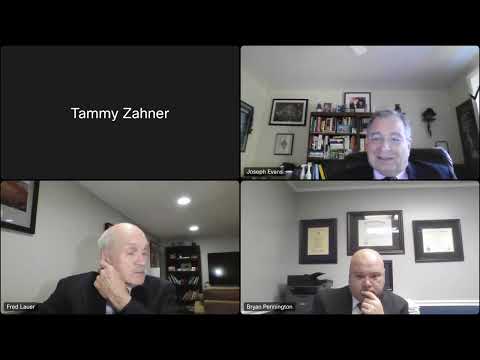
Board members Fred Lauer and Brian Pennington joined the chair in declining to reopen the record. Lauer said he “agree[d] completely” with the chair’s reasoning. Pennington said the county had met its burden, noting the meter readings were in order and that the measured volume of water entering and leaving the property supported the charge.
The panel described the event as a mechanical malfunction of on-site equipment that routed cooling/discharge water into the sanitary sewer. The board noted that even if cooling water were uncontaminated at discharge, it becomes commingled with other wastewater after it enters the sewer system and therefore is treated as wastewater for billing purposes.
Formal action and next steps: The panel’s determination to deny the reopening and to uphold the Department of Public Works’ charges was unanimous. The board said it will issue a written opinion shortly. The chair reminded the appellant that an appeal from the Board of Appeals’ decision may be pursued in the circuit court in accordance with the applicable appellate rules.
Background and context: The appellant sought records and the 1974 agreement between Baltimore County and Baltimore City concerning wastewater treatment and any interjurisdictional true-up calculations. The board concluded those materials had been referenced in filings and were not grounds to reopen the hearing. The panel characterized the quantity of water at issue as small relative to the total wastewater the county sends to the city but acknowledged the cost impact to the property owner.
No subpoenas or additional evidentiary hearings were ordered; the board treated the matter as decided on the existing record and testimony.